
You walk out to your garage one morning and notice something’s off. The door panels look… wavy. Maybe there’s a visible bow in the middle section, or the door isn’t closing flush anymore. That’s panel warping, and if you’ve caught it early, you’re lucky. If not, you’re looking at expensive panel replacement or even a full door swap.
After years of working on garage doors across NYC, I can tell you that panel warping is one of those problems that sneaks up on people. It starts small—barely noticeable. But environmental stress doesn’t stop. Moisture, temperature swings, and sun exposure work on your panels every single day. Without proper protection, warping becomes inevitable.
The good news? Learning how to prevent garage door panel warping isn’t complicated. It requires understanding what causes panels to warp, choosing the right materials for your climate, and following maintenance practices that actually work. Some of this you can do yourself. Other aspects need professional attention from the start—particularly material selection and installation.
This guide covers practical strategies to prevent garage door panel warping based on real-world experience in NYC’s harsh climate. We’re talking about conditions that test garage doors hard—freezing winters, humid summers, coastal salt air, and intense sun exposure. If your panels survive here, they’ll survive anywhere.
What Actually Happens When Panels Warp
Before we get into how to prevent garage door panel warping, let’s understand what’s physically happening when panels deform.
The mechanics of warping: Garage door panels are designed to be flat and rigid. They hang in a track system and need to maintain their shape to operate smoothly. When panels warp, the material bends, twists, or bows out of its original plane. This happens when internal stresses in the material overcome its structural integrity.
What causes those internal stresses:
Moisture absorption and loss is the primary culprit, especially for wood panels. Wood is hygroscopic—it absorbs and releases moisture based on humidity. When one side of a panel absorbs more moisture than the other (say, the exterior is wet while the interior stays dry), the wet side expands while the dry side doesn’t. This differential expansion creates bending stress that warps the panel.
Temperature cycling affects all materials but impacts metal panels particularly. Metal expands when heated and contracts when cooled. In direct sunlight, the exterior surface of a steel panel can reach 150°F+ while the interior stays much cooler. This temperature gradient creates expansion stress. Over thousands of heating and cooling cycles, this fatigues the material and can cause permanent deformation.
UV degradation breaks down the molecular structure of materials over time. For wood, UV exposure destroys lignin, which binds wood fibers together. This weakens the material and makes it more susceptible to moisture damage and warping. For painted or coated panels, UV breaks down protective finishes, allowing moisture and further UV penetration.
Physical stress from improper installation or damage can also cause warping. If panels aren’t properly braced or if the door frame is out of square, panels experience uneven stress during operation. Over time, this can cause them to deform.
Why warped panels are a problem:
Beyond looking terrible, warped panels create operational issues. The door binds in tracks, puts extra stress on the opener, and may not seal properly at the bottom. Gaps created by warping compromise your garage’s insulation and security. Water and pests can enter through those gaps.
Warped panels also transfer stress to adjacent panels and hardware. What starts as one warped section often cascades into multiple panel failures. According to the International Door Association, panel warping is among the top reasons for premature garage door replacement.
Understanding these mechanisms is fundamental to knowing how to prevent garage door panel warping effectively. Now let’s get into prevention strategies.
Material Selection: Your First Defense Against Warping
The single most important decision to prevent garage door panel warping happens before the door is even installed—choosing the right material for your climate and exposure.
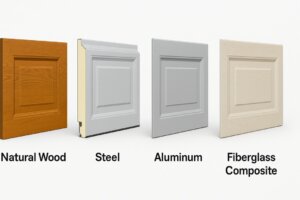
Wood panels: Beautiful but demanding
Wood offers unmatched aesthetic appeal. Nothing else looks quite like real wood. But in terms of preventing panel warping, wood is your highest-maintenance option.
Wood’s enemy is moisture. When humidity rises, wood absorbs water and swells. When conditions dry out, it releases moisture and shrinks. This constant expansion and contraction creates internal stress that leads to warping, especially if moisture absorption is uneven.
If you’re committed to wood panels, here’s how to minimize warping risk:
- Choose wood species naturally resistant to moisture (cedar, redwood)
- Ensure panels are properly sealed on ALL sides before installation
- Plan for regular refinishing every 2-3 years minimum
- Avoid wood entirely if your garage faces south (maximum sun exposure) or if you’re in a humid coastal area
Even with perfect maintenance, wood panels in NYC climate have the shortest lifespan before warping becomes an issue. For more on material selection and durability, exterior door experts consistently recommend alternatives for high-moisture areas.
Steel panels: Durable with caveats
Steel offers excellent strength and resistance to impact damage. Modern steel panels come with protective coatings that resist rust. But steel isn’t immune to warping.
The issue with steel is thermal expansion. In direct sun, steel panels heat up significantly. The temperature differential between the sunny exterior and shaded interior creates expansion stress. Over years of cycling, this can cause bowing, particularly in large, unsupported panel sections.
To prevent steel panel warping:
- Choose insulated steel panels—the insulation layer provides structural support and moderates temperature swings
- Opt for panels with internal bracing or ribbing for extra rigidity
- Ensure panels have quality powder-coat or galvanized finish to prevent rust (rust weakens steel and accelerates warping)
- Consider lighter colors that reflect rather than absorb heat
Steel panels are a solid mid-range choice for preventing warping in most climates, particularly when properly insulated.
Aluminum panels: Lightweight but soft
Aluminum resists corrosion better than steel, making it attractive for coastal areas. It’s also lightweight, putting less stress on opener systems. But aluminum is softer than steel and more prone to denting and bending.
For warping prevention, aluminum’s main advantage is that it doesn’t rust. Corrosion is a major contributor to panel failure in steel doors. Aluminum’s disadvantage is lower rigidity—it needs more support structure to resist warping forces.
If choosing aluminum:
- Get thicker gauge material (lower gauge number = thicker)
- Ensure panels have reinforcement structures
- Choose insulated aluminum for better rigidity
- Be aware aluminum dents more easily from impact
Aluminum works well in salt-air environments where steel would corrode, but it’s not ideal for areas with high impact risk (like alleys or tight driveways).
Fiberglass panels: Moisture champion
Fiberglass is essentially impervious to moisture damage. It won’t absorb water, won’t swell, and won’t rot. For humid climates or areas with frequent rain, fiberglass is excellent for preventing warping caused by moisture.
The downside is UV sensitivity. Fiberglass can become brittle and fade under prolonged sun exposure. Modern fiberglass doors have UV-resistant gel coats, but they still require more sun protection than other materials.
Fiberglass advantages for warping prevention:
- Complete moisture resistance
- Won’t rust or corrode
- Relatively lightweight
- Can be manufactured to look like wood without wood’s maintenance
Fiberglass disadvantages:
- Can crack or splinter on impact
- UV exposure causes yellowing and brittleness over time
- More expensive than steel
- Less available in all styles
Composite materials: Modern solution
Composite panels combine materials—often a steel frame with composite overlay or a fully engineered composite construction. These are designed specifically to resist warping by eliminating the weaknesses of individual materials.
Quality composite panels:
- Won’t absorb moisture like wood
- Don’t suffer thermal expansion like solid metal
- Resist UV damage better than fiberglass
- Maintain appearance longer than any natural material
The tradeoff is cost—composite panels typically run 20-40% more than standard materials. But for long-term warping prevention, they’re often the smartest investment.
My recommendation for NYC:
For most NYC homeowners, insulated steel panels offer the best balance of cost, durability, and warping resistance. In coastal areas (Rockaway, coastal Brooklyn), consider fiberglass or composite. Only choose wood if you’re committed to serious ongoing maintenance and understand you’ll likely need refinishing or replacement sooner.
The right material choice is half the battle in preventing garage door panel warping. Get this decision wrong, and no amount of maintenance will fully compensate.
Installation Quality: Foundation of Warping Prevention
Even the best materials will warp if installed incorrectly. Proper installation is critical to prevent garage door panel warping over the door’s lifespan.
Why installation matters for warping:
Garage doors experience significant stress during operation. The panels, springs, cables, tracks, and opener all work together as a system. If any component is misaligned or improperly installed, it creates uneven stress on panels. Over thousands of cycles, this stress causes deformation.
Critical installation elements:
Frame squareness and level: The door frame (jambs and header) must be perfectly square and level. Even minor deviations create binding points where panels experience extra friction and stress. This accelerated wear leads to warping at stress points.
Professional installers use laser levels and measure diagonals to ensure perfect squareness. DIY installations often skip this step, leading to problems down the road. According to manufacturer installation guidelines, frame alignment within 1/8 inch is required for warranty coverage—that’s how critical this is.
Panel bracing and support: Panels need adequate internal bracing to resist bending forces. Single-layer panels without bracing are most susceptible to warping. During installation, verify that:
- Horizontal struts are properly installed at manufacturer-recommended intervals
- Reinforcement brackets are used at handle and lock locations
- Support bars are properly tensioned (not too tight, not too loose)
Proper sealing: The edges of panels need sealing against moisture intrusion. This is especially critical for wood panels but matters for all materials. Sealant should be applied:
- To panel edges before installation
- Around windows and decorative elements
- At joints between panel sections
- Where panels meet the frame
Moisture that penetrates past seals gets trapped inside panels, creating ideal conditions for warping.
Track alignment and spacing: Tracks guide rollers that support the door panels. If tracks aren’t perfectly parallel and properly spaced, rollers bind and create uneven forces on panels. This leads to stress concentration and eventually warping.
Hardware quality: Using proper grade hardware prevents stress points that lead to warping:
- Heavy-duty hinges rated for your door weight
- Properly sized rollers with sealed bearings
- Adequate spring tension for door weight
- Quality track mounting brackets
Cheap hardware fails prematurely, creating operational stress that warps panels.
Red flags indicating poor installation:
- Door doesn’t operate smoothly from day one
- Visible gaps between panels when door is closed
- Door appears crooked or tilted
- Excessive noise during operation
- Panels flex or bow visibly during operation
If you notice these issues with a newly installed door, address them immediately. Poor installation doesn’t improve with time—it gets worse and accelerates panel warping.
DIY vs. professional installation:
Garage door installation is not beginner-friendly DIY. The spring systems alone are dangerous—they’re under hundreds of pounds of tension and can cause serious injury. Beyond safety, proper installation requires specialized tools, knowledge, and experience.
For warping prevention, professional installation is worth the investment. Installers who do this daily know the nuances that prevent future problems. They have the tools to ensure perfect alignment and proper tension.
If you’re in NYC, professional garage door installation ensures your door is set up right from the start. Licensed installers also provide warranties that protect your investment if issues develop.
Bottom line: You can’t prevent garage door panel warping if the door isn’t installed correctly. This is one area where paying for professional work pays off long-term.
Climate Control Inside Your Garage
Environmental conditions inside your garage directly affect panel warping. Learning how to prevent garage door panel warping requires managing temperature and humidity.
The moisture problem:
Humidity is the enemy of garage door panels, particularly wood but also affecting steel (through rust) and promoting mold growth on all materials. NYC’s humid summers create perfect conditions for moisture-related warping.
How to control garage humidity:
Ventilation is your first defense. Stagnant air traps humidity. Install passive vents (soffit vents, ridge vents, or louvers) that allow air circulation without compromising security. For attached garages, ensure proper venting to the outside, not into your home.
Active dehumidification works when passive measures aren’t enough. A quality dehumidifier rated for your garage’s square footage pulls moisture from the air. Set it to maintain 40-50% relative humidity—low enough to prevent warping but not so dry it causes other issues.
Empty the water reservoir regularly (or use a model with continuous drain option). Run dehumidifiers during humid months—May through September in NYC typically.
Foundation and floor moisture: Water can wick up through concrete floors, raising humidity levels. If your garage has moisture issues:
- Apply concrete sealer to floor and foundation walls
- Fix any drainage problems that allow water pooling
- Ensure gutters and downspouts direct water away from garage
- Consider a vapor barrier if building a new garage
Temperature management:
Extreme temperature swings stress all panel materials. While you can’t control outside temperature, you can moderate conditions inside the garage.
Insulation helps stabilize temperature. Insulated garage doors are the starting point, but wall and ceiling insulation matter too. Better insulation means:
- Smaller temperature swings
- Less moisture condensation
- More comfortable workspace
- Lower stress on panels
For attached garages, insulation also improves home energy efficiency. The investment pays for itself through energy savings while helping prevent panel warping.
Sun exposure management:
Direct sunlight through windows heats garage air and panels. For garages with south or west-facing windows:
- Install blinds or shades to block direct sun
- Use reflective window film to reduce heat gain
- Consider awnings or exterior shading for large door windows
- Plant trees or install shade structures if sun exposure is severe
Seasonal considerations:
Winter: Cold alone doesn’t cause warping, but freeze-thaw cycles do. Water that penetrates panel seals expands when it freezes, creating stress. Prevent this by:
- Ensuring all panel seals are intact before winter
- Keeping garage temperature above freezing if possible
- Clearing snow away from door bottom to prevent melt-water intrusion
Summer: Heat and humidity combine to create maximum warping risk. Combat this by:
- Running dehumidifiers continuously
- Improving ventilation
- Keeping garage door closed during peak heat/humidity hours
- Avoiding water splashing on door (from car washing, rain splash-back)
Coastal considerations:
If you’re near water in areas like Rockaway or coastal Brooklyn, salt air accelerates corrosion and moisture damage. Additional protection needed:
- More frequent inspection and sealing
- Rinse panels with fresh water monthly to remove salt
- Use marine-grade protective coatings
- Consider fiberglass or composite materials inherently resistant to salt
Climate control might seem like overkill for a garage, but it’s highly effective for preventing panel warping. The cost of dehumidification and insulation is far less than replacing warped panels or entire doors.
Protective Coatings and Surface Treatments
Surface protection is one of the most effective ways to prevent garage door panel warping. Quality coatings create barriers against moisture, UV, and environmental damage.
For wood panels:
Wood needs the most intensive surface protection. Without it, warping is virtually guaranteed.
Sealers penetrate into wood fibers, blocking moisture from entering. Apply clear sealer to all surfaces—front, back, edges, and ends. Unsealed areas will absorb moisture, creating differential swelling that warps panels. Reapply sealer every 1-2 years or when water no longer beads on the surface.
Stains provide both color and protection. Oil-based stains penetrate deeper and last longer than water-based options. Semi-transparent stains offer good UV protection while showing wood grain. Solid stains provide maximum UV and moisture protection but hide the wood appearance.
Paint offers the most complete moisture barrier for wood. Use exterior-grade acrylic latex paint over quality primer. Paint creates a film that blocks moisture effectively, but it requires maintenance—repaint every 3-5 years as the film degrades.
Application technique matters: Clean surfaces thoroughly. Sand to create proper adhesion. Apply in proper temperature and humidity conditions (follow product specs). Use multiple thin coats rather than one thick coat. Don’t skip primer—it’s essential for adhesion and protection.
For steel and aluminum panels:
Metal panels need protection against corrosion. Rust weakens steel structure and creates failure points that lead to warping.
Powder coating is factory-applied and provides excellent durability. It’s baked onto the metal, creating a hard, protective shell. If your panels came powder-coated, maintain that coating by:
- Washing panels annually with mild soap and water
- Touching up any chips or scratches immediately
- Avoiding abrasive cleaners that scratch the coating
Paint works for touch-ups or full refinishing. Use paint formulated for metal surfaces. Automotive paint provides excellent durability. Clean metal thoroughly, remove any rust, prime bare metal, then apply paint in thin, even coats.
Rust inhibitors and protective sprays add extra protection, especially in coastal areas. Products like Fluid Film or Boeshield T-9 create a waxy barrier against moisture and salt. Apply annually, particularly to areas prone to water exposure.
For all materials:
UV-protective clear coats can be applied over existing finishes to enhance UV resistance. This is particularly valuable for south-facing doors that get maximum sun exposure. Marine-grade UV protectants work well—they’re designed for harsh outdoor conditions.
Maintenance schedule for coatings:
- Monthly: Visual inspection for coating damage
- Quarterly: Cleaning with appropriate products
- Annually: Thorough inspection, touch-ups as needed
- Every 2-5 years: Reapplication of protective coatings (timing depends on product and conditions)
Signs your coating needs attention:
- Water doesn’t bead on surface anymore
- Visible fading or chalking
- Peeling or flaking
- Rust spots appearing
- Wood grain raising or feeling rough
Address coating failure immediately. Once moisture penetrates, panel damage accelerates quickly. According to wood protection experts, maintaining protective coatings is far cheaper than replacing warped panels.
Proper surface protection is one of the most cost-effective ways to prevent garage door panel warping. A $50 can of sealer and few hours of work can prevent thousands in panel replacement costs.
Regular Maintenance That Actually Prevents Warping
Knowing how to prevent garage door panel warping requires establishing maintenance routines that address warping causes before damage occurs.
Monthly inspection routine:
Visual panel check: Walk the length of your door looking for:
- Any bowing, bending, or waviness in panels
- Gaps between panels or between door and frame
- Cracks or splits in panel surfaces
- Peeling or failing protective coatings
- Rust spots or corrosion on metal panels
- Water stains or mold growth
Catch these early and they’re cheap fixes. Miss them for months and you’re looking at panel replacement.
Hardware check: Verify all mounting hardware is tight. Loose hardware allows panels to shift and flex, creating stress that leads to warping. Tighten:
- Hinge bolts
- Track mounting brackets
- Roller brackets
- Handle and lock hardware
Weather stripping: Check seals at door bottom and sides. Replace if cracked, compressed, or missing. Good seals prevent moisture intrusion that causes warping.
Operation test: Open and close the door, watching for smooth operation. Binding, jerking, or unusual resistance indicates problems developing. Address these before they stress panels.
Quarterly maintenance:
Deep cleaning: Remove dirt, grime, and salt residue that trap moisture against panels:
- Wash with mild soap and water
- Rinse thoroughly
- Dry completely with towels (don’t let panels air-dry)
- Avoid pressure washers—they can damage seals and coatings
Lubrication: Apply appropriate lubricant to all moving parts:
- Hinges
- Rollers
- Tracks (light coating only)
- Springs (be careful—these are under tension)
Proper lubrication reduces operational stress on panels. For more on proper lubrication techniques, using the right products and methods makes a significant difference.
Balance test: Disconnect opener and manually lift door to chest height. A properly balanced door stays in place. If it drops or rises, springs need adjustment. Imbalanced doors put extra stress on panels during operation.
Coating inspection: Closely examine protective coatings. Look for:
- Areas where coating is wearing thin
- Cracks or peeling
- UV fading
- Water penetration
Address coating failures before moisture reaches panel material.
Annual professional service:
Even with diligent DIY maintenance, annual professional inspection catches issues you’ll miss. Technicians check:
- Spring tension and condition
- Cable wear and fraying
- Track alignment precision
- Opener force settings
- Safety feature functionality
- Hidden damage not visible to homeowners
They also have tools to measure panel alignment and stress points that predict where warping might develop. This diagnostic capability helps prevent warping before it starts. For comprehensive maintenance, professional garage door services provide thorough inspection and adjustment.
Seasonal maintenance:
Spring (March-April): Clean winter grime, inspect for ice damage, apply fresh protective coating if needed, lubricate all moving parts.
Summer (June-July): Check dehumidifier operation, verify ventilation is adequate, inspect for UV damage, tighten hardware loosened by expansion.
Fall (September-October): Clean and inspect before winter, replace weather stripping if needed, verify seals are intact, apply rust inhibitor to exposed metal.
Winter (December-January): Remove snow/ice from door area, check for water infiltration, ensure garage temperature stays moderate, test emergency operation in case of power outages.
Maintenance log:
Keep a simple log of maintenance performed. Note:
- Date of inspections
- Issues found
- Repairs made
- Products applied
- Professional service dates
This record helps you stay on schedule and provides documentation if warranty issues arise.
The time investment is modest—maybe 30 minutes monthly, an hour quarterly, and one professional visit annually. This routine maintenance dramatically reduces the risk of panel warping and extends your door’s lifespan significantly.
When DIY Isn’t Enough: Recognizing Professional-Level Issues
You can do a lot to prevent garage door panel warping through proper maintenance, but some situations require professional intervention.
Signs you need professional help:
Active warping in progress: If panels are visibly bowing or twisting and continuing to worsen, professional assessment is needed. Techs can determine if the issue is fixable (improper bracing, fixable moisture source) or if panel replacement is necessary.
Structural installation problems: If your door was installed improperly—frame not square, tracks misaligned, inadequate bracing—fixing this requires specialized knowledge and tools. Attempting DIY correction often makes problems worse.
Spring system issues: Anything involving springs is professional territory. Springs are under extreme tension and can cause serious injury. If your door isn’t balancing properly (a major cause of panel stress), call a pro to adjust spring tension.
Multiple panels showing damage: If warping has progressed to multiple panels, you’re likely looking at systemic issues—material failure, severe environmental conditions, or fundamental installation problems. Professional diagnosis determines the root cause and best solution.
Moisture problems you can’t solve: If your garage has persistent humidity or water intrusion despite your efforts, you might need professional moisture remediation. This could involve drainage work, foundation repair, or ventilation system installation.
What professionals bring to warping prevention:
Diagnostic tools: Laser levels for perfect alignment, moisture meters to detect hidden water damage, thermal imaging to identify temperature issues, specialized equipment for measuring spring tension and door balance.
Experience: They’ve seen hundreds of warping cases and know what causes what. They can predict where problems will develop and address them proactively.
Access to quality materials: Professional installers have relationships with manufacturers and access to commercial-grade materials not available to homeowners. Better materials mean better warping resistance.
Warranty protection: Professional installation and service often comes with warranties covering both parts and labor. This protects your investment if issues develop.
When to call for emergency service:
- Panel has cracked or split completely
- Door won’t open or close at all
- Panel has separated from hardware
- Visible damage from storm or impact
- Safety features have failed
For emergency situations in NYC, having a reliable service provider available makes the difference between minor inconvenience and major problem. Emergency garage door service responds quickly when urgent issues arise.
Preventive professional services worth the investment:
Pre-winter inspection: Have a tech verify your door is ready for harsh weather before winter hits. They’ll check seals, adjust settings, and address any vulnerabilities.
Post-storm inspection: After major storms (nor’easters, hurricanes, severe thunderstorms), professional inspection ensures no hidden damage that will cause warping later.
Installation quality check: If you recently had a door installed, consider having an independent tech verify installation quality. Better to catch problems during warranty period than discover them years later.
Material consultation: Before buying a new door, consult with experienced installers about best material choices for your specific situation. They know what works in your area’s climate and can steer you away from materials likely to warp.
The key is knowing your limits. DIY maintenance is great and necessary. But recognizing when professional expertise is needed prevents small issues from becoming expensive disasters. The cost of a service call is trivial compared to replacing an entire garage door because warping went unaddressed.
NYC-Specific Challenges for Panel Warping
New York City’s unique environment creates specific challenges for preventing garage door panel warping. The urban climate and conditions require adapted approaches.
Weather extremes:
NYC hits you with everything. Humid summers with temperatures in the 90s and humidity above 70%. Winters with sub-freezing temps and nor’easters bringing snow, ice, and wind. This temperature range (potentially 100+ degree swing over a year) stresses materials constantly.
Spring and fall bring rapid temperature swings—40-degree changes within 24 hours aren’t unusual. These cycles are particularly hard on metal panels that expand and contract significantly.
Coastal salt exposure:
Areas near water—Rockaway, coastal Brooklyn, parts of Staten Island—deal with salt air constantly. Salt accelerates corrosion of metal panels and hardware. Even inland areas get salt exposure from winter road treatments.
To combat salt damage:
- Rinse panels monthly with fresh water during winter
- Apply rust inhibitors more frequently than manufacturer recommends
- Choose materials resistant to salt corrosion (fiberglass, composite, or marine-grade coatings on metal)
- Inspect hardware frequently for corrosion
Urban density challenges:
Limited sun and air circulation: Buildings close together means many garages don’t get direct sun or good air flow. This creates persistent moisture problems. Garages stay damp longer after rain, humidity doesn’t dissipate as quickly.
Solution: More aggressive dehumidification and ventilation than suburban settings require.
Pollution and grime: NYC air carries more particulates, soot, and pollutants that settle on garage doors. This grime traps moisture against panels and degrades protective coatings faster.
Solution: More frequent cleaning, more frequent coating renewal.
Brownstone and townhouse specific issues:
Many NYC garages are built into first floors of attached homes. This creates issues:
Shared walls: Moisture from adjacent properties can transfer through shared walls, raising humidity in your garage even if your building envelope is tight.
Street-level exposure: Garages opening directly onto streets get more weather exposure—rain, snow, road spray, pollution.
Old construction: Many brownstones are 100+ years old. Moisture barriers, insulation, and ventilation weren’t designed for modern garage doors. Retrofitting proper environmental controls can be challenging in old structures.
Historic district limitations: If you’re in a landmarked building or historic district, you may face restrictions on door materials, colors, and styles. Work with preservationists to find warping-resistant options that meet requirements. The NYC Landmarks Preservation Commission provides guidelines for approved modifications.
Winter-specific challenges:
Freeze-thaw cycles: Water penetrates small cracks or worn seals, freezes overnight (expanding), then thaws during the day. This cycle literally tears panels apart from inside.
Ice dams: Poor drainage or gutter issues can create ice buildup against door bottom. Melting ice infiltrates seals and bottom panels.
Snow loading: Heavy snow piled against door creates moisture contact for extended periods.
Parking garage salt: If you’re in a building with shared parking, de-icing salt used inside the garage creates corrosive environment year-round.
Solutions for NYC conditions:
Choose materials suited to harsh urban climate—insulated steel with quality coatings, fiberglass in coastal areas, composite for maximum durability.
Implement more aggressive maintenance schedule than manufacturers recommend. Their guidelines assume moderate suburban conditions.
Budget for more frequent coating renewal. NYC environment degrades protective finishes faster.
Install quality dehumidification and ventilation beyond minimum recommendations.
Establish relationships with reliable local service providers who understand NYC-specific challenges. National chains often lack the local knowledge that matters for preventing warping in urban conditions.
For NYC homeowners, preventing garage door panel warping requires recognizing these unique challenges and adapting your approach accordingly. What works in moderate climates isn’t enough here.
Bottom Line: Preventing Panel Warping Long-Term
After covering everything about how to prevent garage door panel warping, here’s what actually matters:
Material selection is foundational. Choose materials appropriate for your climate and exposure. In NYC’s harsh conditions, insulated steel, fiberglass, or composite typically offers the best warping resistance. Wood requires intense ongoing maintenance most homeowners underestimate.
Professional installation sets you up for success. Proper installation—frame square, panels properly braced, tracks aligned, hardware correct—prevents stress that causes warping. DIY installation saves money upfront but often costs more long-term.
Climate control inside your garage matters more than most realize. Managing humidity through ventilation and dehumidification addresses a primary warping cause. The investment in environmental controls pays for itself in extended panel life.
Surface protection is cheap insurance. Quality sealers, paints, and protective coatings cost far less than replacing warped panels. Maintain those coatings religiously.
Regular maintenance catches problems early. Monthly inspections, quarterly service, and annual professional assessment identify issues before they become panel replacement projects.
Know when to call professionals. Some aspects of warping prevention—particularly anything involving springs, structural issues, or systemic problems—require expert intervention. Trying to DIY everything often makes problems worse.
NYC-specific conditions require adapted approaches. Urban density, pollution, salt exposure, and weather extremes mean you need more aggressive prevention strategies than moderate-climate recommendations suggest.
Start by assessing your current situation:
- What material are your panels?
- How’s your garage climate control?
- When was the last professional inspection?
- Are protective coatings in good condition?
- Is humidity under control?
Identify your biggest vulnerabilities and address those first. For most NYC homeowners, improving climate control and establishing regular maintenance routines provides the best immediate improvement in warping prevention.
Then consider longer-term upgrades:
- Better materials when replacement time comes
- Improved ventilation and insulation
- Quality protective coatings
- Professional installation for any new doors
The goal is proportional response. You don’t need to implement every strategy immediately, but you should have a plan for systematically improving your door’s warping resistance.
Finally, remember that prevention is always cheaper than repair. The time and money invested in preventing garage door panel warping pays for itself many times over by avoiding premature replacement. A quality garage door should last 20-30 years. With proper warping prevention, yours can reach that lifespan.