
Your garage door refuses to budge at 7 AM when you’re already running late. Sound familiar? Garage door problems never seem to happen at convenient times. The good news is that you can fix common garage door issues quickly with the right knowledge—many problems have simple fixes you can handle yourself.
This troubleshooting guide walks you through the most frequent garage door problems NYC homeowners face and shows you exactly how to diagnose and fix common garage door issues quickly. Whether you’re dealing with a door that won’t close, strange grinding noises, or a temperamental remote, knowing how to fix common garage door issues quickly can save you time, money, and frustration.
How to Fix Common Garage Door Issues: Door Won’t Open or Close
What You’ll Notice: You press the button, but nothing happens. Or the door starts moving then stops immediately.
Quick Diagnosis Steps:
- Check the power source first. This sounds obvious, but unplugged openers account for countless service calls. Look for tripped circuit breakers or a cord that’s come loose from the outlet.
- Test the wall switch. If the wall button works but your remote doesn’t, you’ve narrowed down the problem. If neither works, the issue is likely with the opener itself or the power supply.
- Look for obstructions. Walk the entire length of your door’s path. Even a small object in the track can prevent operation.
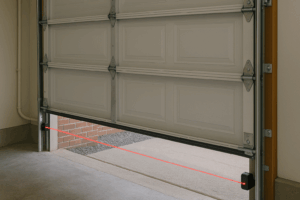
- Inspect the photo-eye sensors. These safety sensors sit about six inches off the ground on either side of your door. If they’re misaligned, dirty, or blocked, your door won’t close. You’ll typically see a blinking light on the sensor when there’s an alignment issue.
Quick Fixes:
- Clean sensor lenses with a soft cloth
- Adjust sensor alignment until both indicator lights are solid
- Replace remote batteries
- Reset your opener by unplugging it for 30 seconds
When these basic fixes don’t work, you might be dealing with a more complex issue requiring professional same-day garage door repair. Problems with the motor, circuit board, or internal wiring need expert diagnosis.
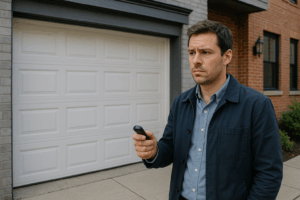
Fix Common Garage Door Issues: Excessive Noise Problems
What You’ll Notice: Grinding, squeaking, rattling, or scraping sounds during operation. The noise might be constant or occur only at certain points in the door’s travel.
Quick Diagnosis Steps:
- Identify when the noise occurs. Does it happen throughout the entire cycle or just when opening/closing? This helps pinpoint the source.
- Listen for the type of sound:
- Grinding or scraping: Usually indicates metal-on-metal contact from worn rollers or hinges
- Popping or cracking: Often means loose hardware
- High-pitched squeaking: Typically a lack of lubrication
- Rattling: Suggests loose parts or hardware
- Perform a visual inspection. Look for worn rollers (they should roll smoothly, not wobble), loose bolts, or damaged hinges.
Quick Fixes:
- Tighten all hardware. Use a socket wrench to snug up every bolt and screw on the door, tracks, and roller brackets. Don’t overtighten—you want them firm but not stripped.
- Lubricate moving parts. Apply a silicone-based or lithium-based garage door lubricant to:
- Rollers (around the bearing only, not the track)
- Hinges
- Springs (be careful—these are under tension)
- Top of the chain or screw drive
Skip the WD-40—it’s a solvent, not a lubricant, and will attract more dirt.
- Replace worn rollers. Metal rollers typically last 10-15 years, but in high-traffic NYC areas, they may wear faster. Nylon rollers are quieter and last longer.
If the noise persists after these fixes or you notice the door shaking violently during operation, contact a technician for a thorough inspection.
How to Fix Common Garage Door Issues: Door Reverses When Closing
What You’ll Notice: Your garage door starts closing, gets halfway down (or just a few inches), then suddenly reverses and opens back up.
Quick Diagnosis Steps:
- Check the photo-eye sensors first. This is the most common culprit. The sensors prevent the door from closing on people, pets, or objects.
- Look for the telltale signs:
- Blinking opener light (usually indicates sensor issues)
- Dirty sensor lenses
- Spider webs between sensors
- Direct sunlight hitting the sensors
- Misalignment (sensors not facing each other perfectly)
- Test the door balance. Disconnect the opener by pulling the emergency release cord. Manually lift the door halfway. If it doesn’t stay in place, the springs may need adjustment—a job for professionals due to the extreme tension involved.
- Inspect the tracks. Look for dents, bends, or debris that could obstruct the door’s path.
Quick Fixes:
- Clean both sensor lenses thoroughly with a damp cloth
- Adjust sensor alignment by loosening the mounting bracket and repositioning until the indicator lights are solid
- Shield sensors from direct sunlight with cardboard temporarily to test if that’s the issue
- Clear any debris from tracks with a damp cloth
- Check that the close limit setting hasn’t been accidentally adjusted on your opener
When to Call for Help: If you’ve eliminated sensor issues and the door still reverses, you might have track problems or spring tension issues that require professional adjustment.
Fix Common Garage Door Issues: Remote Control Not Working
What You’ll Notice: Your remote works intermittently, doesn’t work at all, or you need to be very close to the door for it to function.
Quick Diagnosis Steps:
- Test the wall button. If it works fine, the problem is definitely with the remote, not the opener.
- Check the obvious: Dead batteries cause 90% of remote problems. Replace them even if they seem fine.
- Look for interference. LED bulbs in or near your garage opener can interfere with radio signals. So can certain electronic devices.
- Evaluate signal range. If you need to be within 10-15 feet for the remote to work, the signal strength is weak.
Quick Fixes:
- Replace batteries with fresh ones (some remotes are picky about battery brands)
- Reprogram the remote:
- Locate the “Learn” button on your opener motor
- Press and release it
- Within 30 seconds, press and hold the button on your remote until the opener lights blink
- Replace the opener light bulb with a garage door opener-rated LED bulb designed not to cause interference
- Check the antenna wire on the opener—it should hang down, not be coiled up or damaged
Upgrade Consideration: Modern smart garage door openers offer smartphone control, which eliminates many remote-related issues. They also provide security features like activity notifications and temporary access codes.
How to Fix Common Garage Door Issues: Broken Springs
What You’ll Notice: The door feels extremely heavy when you try to lift it manually, opens very slowly, the opener strains or won’t lift the door at all, or you heard a loud bang recently (that’s the sound of a spring breaking).
Quick Diagnosis Steps:
- SAFETY FIRST: Do not attempt to open or close a door with a broken spring. The door could fall suddenly and cause serious injury or property damage.
- Visual inspection from a distance:
- Torsion springs (mounted above the door): Look for a gap in the spring coil
- Extension springs (along the tracks): Check if one is hanging loose or appears stretched
- Identify the type: Torsion springs typically last 10,000-20,000 cycles (5-7 years of normal use). Extension springs have a shorter lifespan.
What NOT to Do:
- Never attempt to replace springs yourself—they’re under extreme tension and can cause severe injury
- Don’t try to force the door open with a broken spring
- Avoid using the opener if you suspect spring damage
Professional Solution Required: Broken spring repair is one of the most dangerous DIY garage door repairs. The springs are under hundreds of pounds of tension. Professional technicians have the proper tools, training, and experience to replace springs safely.
Same-day service is typically available for spring repairs, as this is considered an emergency that leaves your home vulnerable.
Problem #6: Garage Door Opener Runs But Door Doesn’t Move
What You’ll Notice: The motor runs, you hear the normal operating sounds, but the door stays put.
Quick Diagnosis Steps:
- Check if the emergency release is engaged. The red cord might have been pulled, disconnecting the trolley from the opener arm. This is the most common cause.
- Look at the trolley. If there’s a gap between the trolley and the opener arm, they’re not connected.
- Inspect the chain or belt. Is it loose, sagging, or broken?
Quick Fixes:
- Reconnect the trolley by pulling the emergency release toward the motor, then manually push the trolley until it clicks back into place
- Adjust chain/belt tension according to your owner’s manual (typically should sag about 1/2 inch when properly tensioned)
- If the chain or belt is broken, it needs replacement—this requires professional service
Problem #7: Garage Door Closes Too Fast or Slams Shut
What You’ll Notice: The door drops quickly instead of closing smoothly, or it closes with a bang.
Quick Diagnosis Steps:
- Test door balance. Disconnect the opener and manually move the door. It should move smoothly and stay in place when left halfway open.
- Check for spring issues. A door that closes too fast often indicates broken or worn springs that aren’t providing proper counterbalance.
Quick Fix:
- Adjust the close force setting on your opener (consult your manual for location)
- However, if the door physically drops fast when manually operated, this indicates spring problems
Safety Warning: A fast-closing door is dangerous and should be addressed immediately. Don’t use the door until the spring tension is properly adjusted by a professional.
Preventive Maintenance: Stop Common Garage Door Issues Before They Start
Most garage door issues develop gradually. Regular maintenance catches small problems before they become expensive emergencies. Here’s how to prevent the most common garage door issues:
Monthly Visual Checks (5 minutes):
- Watch the door in operation—look for jerky movement, hesitation, or unusual sounds
- Test the auto-reverse safety feature by placing a 2×4 on the ground in the door’s path
- Check weatherstripping for wear or damage
Quarterly Maintenance (15 minutes):
- Tighten all hardware
- Lubricate moving parts
- Clean photo-eye sensors
- Test door balance
Annual Professional Inspection: Even if everything seems fine, annual professional maintenance is worthwhile. Technicians can spot worn components before they fail and make adjustments that extend your door’s lifespan. This is especially important in NYC, where weather extremes, salt exposure, and frequent use accelerate wear.
When to Call a Professional
While many garage door problems have DIY solutions, some situations always require professional help:
- Broken springs or cables (extremely dangerous)
- Structural damage to the door itself
- Bent or damaged tracks
- Motor or circuit board failure
- Complex electrical issues
- Door that’s significantly off-track
- Recurring problems that “fixes” don’t resolve
For NYC homeowners in Queens, Brooklyn, the Bronx, and Long Island, having a reliable repair service on speed dial prevents small issues from leaving you stranded. Professional technicians have the tools, parts, and expertise to diagnose problems accurately and fix them right the first time.
Bottom Line: Fixing Common Garage Door Issues Fast
Most common garage door problems have straightforward solutions you can implement in minutes. The key to successfully fixing common garage door issues is systematic troubleshooting: identify the symptom, narrow down potential causes, then apply the appropriate fix.
However, recognize your limits. Safety always comes first—spring repairs, major track work, and electrical issues belong in professional hands. When you need expert help, choose licensed, insured technicians who offer same-day emergency service.
Regular maintenance, quick attention to minor issues, and knowing when to call for professional garage door repair keeps your garage door operating smoothly for years to come. Don’t wait until a minor annoyance becomes an expensive emergency or safety hazard.
Having persistent garage door problems? Contact H&O New York Garage Door Repair for fast, professional service throughout Queens, Brooklyn, the Bronx, and Long Island. Same-day service available for emergencies.