
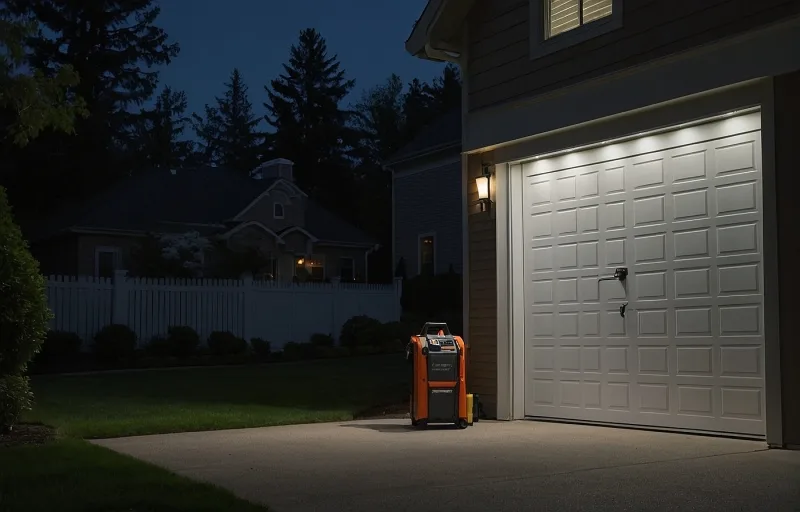
The lights just went out. Your garage door opener is dead. And you’re suddenly wondering—can someone just walk in through my garage right now?
Power outages are getting more frequent in NYC. Between summer storms, winter weather, and an aging power grid, blackouts aren’t a question of “if” but “when.” And here’s the uncomfortable truth: most garage doors become vulnerable security points the moment the power cuts out. That emergency release cord hanging there? It’s designed for you to get out during emergencies, but it can also let intruders in if they know what they’re doing.
After working on garage doors across New York for years, I’ve seen firsthand what happens when people don’t know how to secure garage doors during blackouts. I’ve also helped hundreds of homeowners prepare so they’re not scrambling in the dark when the power fails. This guide covers practical, tested solutions to secure garage doors during blackouts—from simple manual locks to battery backup systems.
Whether you’re in a brownstone in Brooklyn, a house in Queens, or an apartment building in the Bronx, these strategies work. Some you can implement right now. Others require planning and investment. All of them are better than hoping your garage stays secure by luck.
Why Garage Doors Become Vulnerable During Blackouts
Before we get into how to secure garage doors during blackouts, let’s understand what actually happens when the power goes out.
The automatic opener stops working. This seems obvious, but the implications aren’t always clear. Your opener can’t respond to remotes, wall buttons, or any automated closing schedules. If your door was open when power failed, it stays open. If it was closed, it stays closed—until you manually override it.
The emergency release mechanism becomes a weak point. Every automatic garage door has a manual release—that red cord hanging from the trolley. It’s designed to let you disconnect the opener so you can manually operate the door during power failures or emergencies. But here’s the problem: if someone can reach that cord from outside, they can release your door and open it manually. According to FBI property crime statistics, garage entry is one of the most common break-in methods.
Security systems may fail. If your garage has sensors, cameras, or alarms connected to your home security system, those might go down too during extended outages, especially if they lack battery backup.
Lighting disappears. No power means no automatic lights. A dark garage is both a safety hazard and a security invitation. Intruders prefer working in darkness where they’re less visible to neighbors.
Manual operation requires knowledge. If you’ve never practiced operating your garage door manually, a blackout is a terrible time to learn. People struggle, leave doors partially open, or can’t secure them properly.
Understanding these vulnerabilities is the first step to knowing how to secure garage doors during blackouts effectively. Now let’s get into solutions.
The Emergency Release Cord: Security Risk and Solution
That red handle hanging from your garage door opener? It’s both essential for emergencies and a potential security vulnerability during blackouts. Let’s talk about how to secure garage doors during blackouts by addressing this specific issue.
How the emergency release works: The cord connects to a trolley that links your opener to the door. Pull it, and the trolley disconnects, allowing manual door operation. It’s critical for safety—if the opener fails or power goes out, you need to be able to open the door from inside.
The security problem: Skilled intruders know about this mechanism. Using a coat hanger or similar tool slipped through the top of the door, they can hook and pull the release cord from outside. Once disconnected, the door can be lifted manually. This technique, sometimes called “fishing the release,” takes seconds if you know what you’re doing.
How to secure the emergency release:
The simplest solution is a zip-tie. Thread a zip-tie through the release lever mechanism so it can’t be pulled by someone fishing from outside. You can still break the zip-tie in a true emergency by pulling hard, but casual fishing won’t work. This costs $1 and takes 2 minutes.
A more sophisticated solution is installing a shield over the trolley and release mechanism. Several companies make covers that prevent external access to the release while still allowing you to operate it from inside. These run $20-40 and provide solid protection.
Some newer opener models have release mechanisms that can be disabled electronically when the system is armed. If you’re upgrading your opener, look for this feature—it’s excellent for security during blackouts when you want to lock down completely.
When to disengage the release: During a blackout, if you’re home and want maximum security, consider disengaging the release after you’ve secured the door closed. This prevents any external manipulation. Just remember to re-engage it before trying to use the opener once power returns.
Important safety note: Never permanently disable or remove the emergency release. It’s required by safety codes and essential for emergencies. The goal is to make it inaccessible from outside while keeping it functional from inside.
This is one of the most effective things you can do to secure garage doors during blackouts without spending much money. It addresses a specific vulnerability that many homeowners don’t even know exists.
Manual Locking Systems: Your First Line of Defense
Want to know the most reliable way to secure garage doors during blackouts? A good old-fashioned manual lock. No batteries, no electronics, no failure points. Just mechanical security that works regardless of power status.
Types of manual locks:
Slide bolt locks are the simplest and most common. These mount on the inside of the door and slide into brackets mounted on the tracks. When engaged, they physically block the door from moving. They’re cheap ($15-30), easy to install, and absolutely effective. The downside? You need to be inside the garage to lock or unlock them.
Deadbolt locks through the track are another popular option. You drill a hole through the track when the door is closed, then slide a bolt or padlock through. This physically prevents the roller from moving in the track. It’s incredibly secure but requires you to be inside to set it. These run $10-25 depending on how fancy you get.
Handle locks and T-handle replacements turn your garage door’s existing handle into a keyed lock. These are great because you can lock and unlock from outside without needing remote access. They cost $30-80 depending on quality and security rating.
Garage door defender bars are heavy-duty bars that mount to the floor and brace against the door. When the door is closed, the bar prevents it from being lifted. These are serious security—often used in commercial settings or high-crime areas. They run $100-200 but provide maximum protection.
What I recommend:
For most homeowners, a combination approach works best. Install slide bolts on both sides of the door (about $30 total). This gives you reliable security when you’re home during a blackout. Add a T-handle lock if you want the ability to lock from outside. This lets you secure the garage when leaving during an extended outage.
Installation is straightforward for slide bolts and T-handles—basic DIY with a drill and screwdriver. For deadbolt-through-track systems, be careful about drilling—you don’t want to damage rollers or create sharp edges. If you’re not comfortable with installation, it’s worth having a professional do it. The cost is modest and the peace of mind is significant.
Testing your manual locks: Once installed, test them during normal conditions. Practice engaging and disengaging them. Make sure everyone in your household knows how they work. A lock you can’t operate quickly in an emergency isn’t providing real security.
This mechanical backup is fundamental to knowing how to secure garage doors during blackouts. It works when everything else fails, requires no maintenance, and provides serious security against forced entry.
Battery Backup Systems: Keep Your Opener Working
One of the best solutions to secure garage doors during blackouts is ensuring your opener keeps working. Battery backup systems let your automatic opener function even when power is out. This means you maintain remote access, automatic closing, and all the convenience features you’re used to.
How battery backups work: These systems connect to your garage door opener and continuously charge from your home’s power. When power fails, they automatically kick in, providing enough juice to cycle your door multiple times—typically 20-50 full open/close cycles depending on the system and door weight.
Why this matters for security: A working opener means your door can automatically close if left open when power fails. It means you can use your remote to check door status and close it from your car. It means the door doesn’t become manually operable to anyone who knows how to disengage the trolley. Essentially, battery backup maintains your normal security protocols during outages.
Types of battery backup systems:
Built-in backup: Many modern garage door openers come with integrated battery backup. Brands like LiftMaster, Chamberlain, and Genie offer this on mid to high-end models. If you’re buying a new opener, get one with backup—it’s worth the extra $50-100.
Add-on battery systems: If your current opener doesn’t have backup, you can often add an external battery system. These connect to your existing opener and provide emergency power. Compatibility varies, so you need to verify your opener model can work with add-on systems. These run $100-200 plus installation.
Standalone battery systems: Some solutions involve replacing your entire opener with a newer model that includes backup capability. This is more expensive ($300-500 installed) but gives you a completely updated system with modern safety and security features.
What to look for in battery backup:
Cycle capacity: How many times can the door open and close on battery power? More is better, but 20+ cycles is typically sufficient for residential use during outages lasting hours to a few days.
Recharge time: How quickly does the battery recharge once power returns? Faster is better—you want to be ready for the next outage.
Battery life and replacement: Batteries eventually wear out. Look for systems with easily replaceable batteries and check replacement costs upfront. Most last 3-5 years before needing replacement.
Alert features: Better systems include LED indicators or audible alerts when running on battery power or when battery is low. This keeps you informed about system status.
Soft start/stop: Quality backup systems maintain the opener’s soft start and stop features, which reduce noise and wear. Cheaper systems might operate more roughly on battery.
Installation considerations: Built-in systems are DIY-friendly if you’re comfortable with basic wiring. Add-on systems can be trickier and might require professional installation. If you’re not confident working with electrical systems, hire someone. Improper installation can damage the opener or create safety hazards.
Maintenance: Battery backups require minimal maintenance—mainly ensuring the battery stays charged and replacing it when needed. Test your system monthly by unplugging the opener and verifying it operates on battery. This ensures it’ll work when you actually need it.
For NYC residents dealing with increasingly frequent power disruptions, battery backup is one of the smartest investments you can make to secure garage doors during blackouts. The convenience alone justifies the cost, and the security benefit is significant.
Reinforcing Physical Security: Doors, Panels, and Tracks
Knowing how to secure garage doors during blackouts isn’t just about locks and backup systems—physical reinforcement matters too. A weak door is vulnerable regardless of your locking mechanisms. Let’s talk about strengthening the door itself.
Why reinforcement matters during blackouts: Without power, your automatic opener isn’t adding any resistance to forced entry attempts. The door’s physical security becomes the only barrier. If panels are weak, tracks are loose, or mounting hardware is compromised, someone with basic tools and determination can breach your garage.
Reinforcing door panels:
Older garage doors, especially single-layer steel or aluminum, can be surprisingly easy to bend or punch through. If you’re in a high-risk area or want maximum security, consider upgrading to insulated, double-layer doors. These are much more rigid and resistant to forced entry.
For existing doors, you can add horizontal struts or bracing bars across the back of panels. These prevent bending and distribute stress across a wider area. They’re relatively inexpensive ($50-100 for materials) and significantly increase door strength.
Securing tracks and mounting hardware:
Loose tracks allow doors to be forced off their guides. Check all mounting brackets, lag bolts, and fasteners. Tighten everything. If hardware is old or corroded, replace it with heavy-duty alternatives.
Consider upgrading to commercial-grade tracks if you’re in a high-crime area. These are thicker gauge metal and much harder to bend or break. The cost difference is modest ($100-200 more during installation) but the security improvement is substantial.
Bottom bracket security: The bottom brackets where cables attach are under tremendous tension from spring force. These can be points of failure during forced entry attempts. Ensure brackets are properly bolted with large washers to distribute force. Never use just screws—always use bolts that go completely through the door.
Weatherstripping and seals: This seems unrelated to security, but gaps around your door allow light to be visible from outside, advertising when you’re home or away. Good weatherstripping also makes it harder to slip tools under the door to manipulate internal mechanisms. Replace worn weatherstripping—it’s cheap and provides both security and energy efficiency benefits.
Windows in garage doors: If your door has windows, they’re potential weak points. Someone can break glass to see inside or reach through to manipulate controls. Consider:
- Installing window bars or security film
- Using frosted or tinted glass so interior isn’t visible
- Ensuring no controls or release mechanisms are reachable through windows
- In high-risk areas, replacing windowed panels with solid ones
The door-to-frame connection: Where your door meets the frame at the sides and top, make sure weatherstripping is secure and there’s no gap large enough to insert pry tools. Even small gaps can allow levering that forces the door open.
For those with side-entry doors: Many garages have a regular door for pedestrian entry. This often becomes the weakest link. Ensure it has a quality deadbolt lock, solid core or metal construction, and can’t be easily kicked in. A chain-link gate or security door adds another layer.
Physical reinforcement isn’t sexy and doesn’t involve high-tech solutions, but it’s fundamental to knowing how to secure garage doors during blackouts. A mechanically strong door is much harder to compromise, regardless of power status.
Smart Security Integration with Backup Power
Modern smart home security can actually help you secure garage doors during blackouts—if you set it up right. The key is ensuring your smart systems have their own backup power so they keep working when the grid doesn’t.
Smart garage door controllers: Devices like MyQ, Chamberlain Home Bridge, or Tailwind let you monitor and control your garage door via smartphone. During a blackout, if your opener has battery backup and your home internet stays up (which it often does with cable or fiber), you can:
- Check if your door is open or closed from anywhere
- Close it remotely if left open when power failed
- Get alerts if the door opens unexpectedly
- Grant temporary access codes to family or service people
For this to work during blackouts, you need:
- Battery backup on your garage door opener
- Internet modem/router with UPS (uninterruptible power supply) backup
- Smart controller connected to backed-up systems
The investment runs $150-300 total but gives you remote security monitoring and control during outages. For people who travel or work long hours, this peace of mind is invaluable.
Security cameras with backup: Installing cameras in or around your garage creates deterrence and documentation. For blackout security, choose cameras with:
- Local battery backup or Power over Ethernet (PoE) with UPS
- Local storage option (not just cloud) in case internet goes down
- Night vision or infrared for seeing in darkness
- Motion-activated recording to conserve battery
Brands like Ring, Arlo, and Wyze offer battery-powered options. More robust solutions use PoE cameras connected to a Network Video Recorder (NVR) with UPS backup. The latter is more expensive ($300-600 installed) but more reliable during extended outages.
Smart locks with backup power: If you have a side door from your garage into your house or a pedestrian entrance to the garage, smart locks with battery backup add another security layer. Brands like August, Schlage, and Yale offer battery-powered smart locks that work during blackouts. You get:
- Keyless entry (useful when fumbling in the dark)
- Remote locking/unlocking capability
- Access logs showing who entered when
- Temporary access codes you can grant and revoke remotely
Most use standard AA or 9V batteries that last 6-12 months, so blackouts don’t disable them.
Motion-sensor lighting with battery backup: Good lighting deters intruders and makes your garage functional during blackouts. Battery-backed motion lights inside and outside your garage provide:
- Automatic illumination when someone approaches
- Extended battery life (since they’re not continuously on)
- Deterrence value against would-be intruders
- Safety for your family navigating in the dark
Solar-charged motion lights on the exterior require no backup power system at all—they just keep working. Interior lights need either battery backup or connection to a UPS system.
Integrating everything: The real power comes from connecting these systems. A smart home hub (like SmartThings, Home Assistant, or Apple HomeKit) can coordinate:
- Camera recordings triggered by garage door opening
- Lights turning on automatically when garage door opens during blackout
- Smartphone notifications if unusual activity detected
- Automatic door closing on a schedule or when you leave a geofence
For this integration to survive blackouts, your hub needs UPS backup. A small UPS ($50-100) can keep a hub, router, and modem running for hours during outages.
The practical setup: For most homeowners, a practical smart security setup to secure garage doors during blackouts includes:
- Smart garage controller with opener battery backup ($150-200)
- One or two battery-powered cameras ($100-200 each)
- Motion-sensor lights ($30-60)
- Small UPS for networking equipment ($50-100)
- Optional: Smart lock on pedestrian door ($150-250)
Total investment: $430-810 depending on choices. This gives you monitoring, control, and deterrence that works during power outages. It’s not cheap, but for security-conscious homeowners or those in areas with frequent outages, it’s a sound investment.
Important note: Smart systems add convenience and capability, but they’re not replacements for physical security. Always have manual locks as backup. Technology can fail, batteries can die, and internet can go down. Multiple layers of security—mechanical, electrical, and smart—provide the best protection to secure garage doors during blackouts.
Emergency Preparedness: Planning for Extended Outages
Knowing how to secure garage doors during blackouts requires more than just installing equipment—you need a plan. When power goes out, especially during severe weather, you need to know exactly what to do without fumbling in the dark.
Create a garage security checklist: Write down specific steps for blackout situations and post it somewhere visible. Include:
- Verify garage door is closed (or close it manually if needed)
- Engage manual slide bolts if installed
- Check emergency release cord is secured (zip-tied or shielded)
- Turn on battery-backed emergency lights
- Verify side/pedestrian doors are locked with deadbolts
- Check security system status and switch to battery backup if needed
- Test that you can still manually operate door if evacuation needed
Print this list and keep it in your garage. In an actual emergency, stressed people forget simple things. A checklist ensures nothing gets overlooked.
Practice manual operation: At least twice a year, practice operating your garage door manually. Pull the emergency release cord, lift the door by hand, close it, and re-engage the opener. This serves two purposes:
First, you verify the door is properly balanced and can be manually operated. A properly balanced door should stay in place when you let go halfway up. If it drops or shoots up, springs need adjustment—a safety and security issue.
Second, everyone in your household learns how to do this. Don’t be the only person who knows. Show family members, especially teenagers or elderly relatives who might be home alone during an outage.
Emergency lighting strategy: Stumbling around a dark garage during a blackout is dangerous. Have a plan for lighting:
- Keep flashlights or headlamps in easy-to-find locations (not just “somewhere in a drawer”)
- Install battery-backed LED lights that automatically turn on when power fails
- Consider solar-powered motion lights on the exterior
- Keep extra batteries for all flashlights
Communication plan: During widespread outages, cell networks often get overloaded. Have a family communication plan that doesn’t rely solely on phones. Establish meeting points, check-in procedures, and alternate contact methods.
Document your systems: Take photos of your garage door setup, including:
- Emergency release mechanism and how to re-engage it
- Manual lock locations and how to operate them
- Backup battery indicator lights and what they mean
- Security camera locations and how to check recordings
Store these photos on your phone and in a physical folder. When you’re stressed during an emergency, having visual references helps.
Supplies to keep on hand:
- Spare batteries for all battery-powered devices
- Replacement fuses/bulbs for lighting
- Basic tools (screwdriver, pliers, flashlight)
- Manual lock keys if you use keyed locks
- Emergency contact numbers (including your garage door service provider)
- Instructions for your specific opener model
Neighborhood awareness: Talk to trusted neighbors about mutual security checking during outages. If you’re away when power fails, having someone who can verify your garage is secure provides peace of mind. Return the favor when they’re traveling.
Special considerations for extended outages: If you’re facing a multi-day blackout:
- Plan for how to get vehicles in/out without draining opener battery backup
- Consider parking outside if possible to reduce door cycling
- Have a way to manually secure the door that doesn’t depend on battery systems
- Know where you can get ice for refrigerated garage storage
- Have alternate power sources (generator) if you must maintain certain systems
Test everything regularly: Quarterly, run through your entire blackout security protocol:
- Test manual locks and emergency releases
- Verify battery backup works on opener and security systems
- Check that smart systems function during simulated power loss
- Replace any batteries showing weakness
- Update your plan based on what you learn
This seems like a lot, but establishing these practices takes just a few hours total. Once systems are in place, maintenance is minimal. The confidence of knowing exactly how to secure garage doors during blackouts is worth the investment.
NYC-Specific Considerations for Blackout Security
Living in New York City creates unique challenges for garage security during blackouts. The urban density, older infrastructure, and specific weather patterns all affect how you should secure garage doors during blackouts.
Power grid vulnerabilities: NYC’s grid faces stress from:
- Summer heat waves causing brownouts and rolling blackouts
- Winter storms downing power lines
- Aging infrastructure prone to localized failures
- High demand during peak hours
This means outages, while often short, happen more frequently than in many areas. Having robust backup systems isn’t paranoid—it’s practical urban living.
Crime considerations: During widespread blackouts, crime rates historically spike. Opportunistic burglaries increase when:
- Alarm systems are down
- Street lighting fails
- Police resources are stretched responding to emergencies
- Neighbors are less able to observe suspicious activity
Your garage becomes an attractive entry point—especially in attached homes where garage access means house access. Extra precautions to secure garage doors during blackouts make sense in urban environments.
Brownstone and townhouse challenges: Many NYC homes have garages at street level with living spaces directly above. This creates issues:
- Direct pedestrian traffic passes your garage constantly
- Limited space between garage and street makes security cameras essential
- Shared walls mean your garage security affects neighbors too
- Older construction may have weaker doors and mounting points
For these properties, physical reinforcement and multiple lock points are particularly important. The street-level exposure requires better deterrents than homes with garages set back from public access.
Apartment building garages: If you’re in a building with shared garage space:
- Building management should have backup power for common area lighting
- Verify that entrance doors have battery-backed keypad systems
- Your individual garage space needs its own security measures
- Coordinate with neighbors on security cameras (legal considerations for shared spaces)
- Know building protocols for blackouts
Weather-specific preparations:
Nor’easters and blizzards: Heavy snow can prevent doors from operating even with backup power. Before storms:
- Clear snow buildup around door bottom and sensors
- Have manual operation plan if ice prevents normal opening
- Keep salt/ice melt accessible to clear door area
Hurricane preparations: If evacuation is ordered:
- Secure garage door with manual locks before leaving
- Disconnect and secure emergency release cord
- Move vehicles and valuables to higher ground if flooding possible
- Know how to override systems for emergency evacuation
Heat waves: Extended high temperatures stress both power grids and backup batteries:
- Keep garage as cool as possible (affects battery performance)
- Check battery backup capacity before peak heat season
- Have multiple cooling options if you shelter in place
Infrastructure age: Many NYC garages are in buildings 50-100+ years old. This creates special concerns:
- Mounting points may be in brick or masonry, requiring specific anchors
- Door tracks may be non-standard sizes
- Electrical systems might not support modern backup power systems
- Weight capacity of doors/openers might be limited
Renovating older garages to modern security standards often requires professional assessment. Don’t assume modern equipment will simply bolt onto old infrastructure.
Local regulations: NYC has specific codes for garage doors, especially regarding:
- Fire safety and emergency egress
- Building code requirements for automatic openers
- Modifications in landmark districts
- Permits required for significant security upgrades
Check with building department before major modifications. NYC Department of Buildings has resources on requirements.
Service provider access: When selecting security systems and backup power:
- Ensure you can get service quickly in your borough
- Major brands have better local support networks
- Keep relationships with reliable service providers for emergencies
For professional help securing your garage, H&O New York Garage Door Repair serves all five boroughs with licensed, bonded, and insured technicians who understand NYC-specific challenges.
The urban environment requires more robust security measures than suburban settings. But with proper preparation, you can secure garage doors during blackouts as effectively as anywhere else—maybe even better, since NYC residents tend to take security seriously.
Bottom Line: Securing Your Garage During Power Outages
After everything we’ve covered about how to secure garage doors during blackouts, here’s what actually matters:
Layer your security. Don’t rely on one system. Combine manual locks, battery backup, physical reinforcement, and smart monitoring. Each layer compensates for the others’ weaknesses.
The fundamentals work. A simple slide bolt lock provides reliable security that never needs batteries or maintenance. Start with these basics before adding sophisticated systems.
Battery backup is worth it. Keeping your opener functional during outages maintains all your normal security features and convenience. For the cost ($100-300), it’s one of the best investments you can make.
Practice makes perfect. Knowing theoretically how to secure garage doors during blackouts is useless if you can’t do it quickly when power actually fails. Practice your procedures and teach your family.
Plan for the worst. Extended outages happen. Have backup plans for backup plans. Multiple manual locking points, emergency lighting, and communication strategies all matter when things go really wrong.
NYC requires extra attention. Urban density, older infrastructure, and higher crime risk during outages mean NYC residents should invest more heavily in garage security than suburban homeowners might need.
Start with a security assessment. Walk around your garage and identify vulnerabilities:
- Can the emergency release be accessed from outside?
- Do you have any manual locks installed?
- Would your door be easy to force open?
- Can you operate it manually if needed?
- Do you have emergency lighting?
Address the biggest gaps first. For most people, that means adding manual slide bolts ($30) and securing the emergency release ($1 for zip-ties). These simple fixes dramatically improve security during blackouts.
Then consider upgrades based on your situation:
- If you’re often away from home, battery backup and smart monitoring make sense
- If you’re in a high-crime area, physical reinforcement and better locks are priorities
- If you have elderly family at home, easier manual operation might be most important
The goal is proportional response. You don’t need Fort Knox security, but you also shouldn’t be an easy target during power outages. Find the balance that gives you confidence without breaking your budget.
Finally, remember that garage security during blackouts is part of overall home security. Securing your garage means nothing if your other entrances are vulnerable. Take a holistic approach to home security, with garage door protection as one important element.
Power outages will keep happening. Knowing how to secure garage doors during blackouts puts you in control instead of leaving things to chance. The time to prepare isn’t during the next blackout—it’s now, while you have power to read this and implement these strategies.