
Service Areas: Queens · Brooklyn · Bronx · Long Island
How Do Garage Doors Affect Fire Safety in NYC & Long Island Homes?
Garage doors act as a critical fire barrier in NYC homes, slowing fire and smoke spread from attached garages into living spaces.
When most homeowners think about fire safety, they focus on smoke detectors, fire extinguishers, and escape routes. But in New York City and Long Island homes, where garages often connect directly to living spaces, the garage door itself plays a critical role in preventing fire spread. Understanding how your garage door functions as a fire barrier can help protect your family and property.
Why Is Garage Fire Safety Especially Important in NYC Homes?
Many NYC homes have attached garages storing flammable materials, allowing fires to spread rapidly into living areas without proper fire barriers.
The dense housing patterns throughout Queens, Brooklyn, and the Bronx create unique fire safety challenges. Unlike suburban developments with freestanding garages, many NYC homes feature attached garages that share walls with living areas.
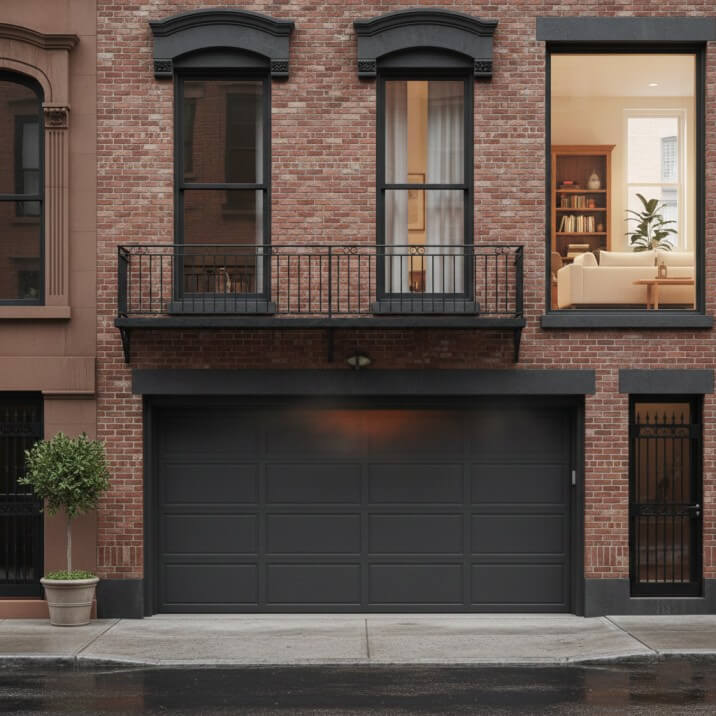
Townhouses in Park Slope, brownstones in Bedford-Stuyvesant, and detached homes across Long Island commonly include garages that open directly into the home or sit beneath living quarters.
These attached garages store more than just vehicles. Gasoline cans, power tools with lithium batteries, paint thinners, propane tanks, and increasingly, e-bikes with high-capacity batteries all create potential ignition sources. When a fire starts in a garage, it can spread to living spaces in minutes—unless proper fire barriers are in place. In urban neighborhoods where homes sit mere feet apart, a garage fire can also threaten neighboring properties.
The combination of combustible materials, aging electrical systems, and direct access to living spaces makes the garage one of the most vulnerable points in fire safety planning. This is particularly true in older housing stock, where original construction may not have included modern fire separation requirements.
How Do Garage Doors Prevent Fire From Spreading Into Homes?
Properly installed garage doors slow fire spread by resisting heat, blocking smoke, and maintaining separation between garages and living spaces.
A properly installed garage door does more than secure your vehicle—it acts as a critical thermal barrier between the garage and the outside environment, and when designed correctly, helps contain fire and smoke.
What Makes a Garage Door Fire-Rated?
Fire-rated garage doors are engineered to withstand high temperatures and slow fire spread. Unlike standard doors, these are tested to maintain their integrity under extreme heat for specific time periods, typically 20 to 90 minutes. This containment time can be the difference between a garage fire and a whole-home disaster.
Steel doors generally outperform wood or composite materials in fire situations. A steel door with polyurethane insulation creates a more effective barrier against heat transfer than an uninsulated wooden door. The insulation doesn't just provide energy efficiency—it also slows thermal conduction, preventing the exterior surface from heating up quickly enough to ignite adjacent materials.
Why Do Seals and Gaps Matter for Fire Safety?
Even the most fire-resistant door fails if gaps exist around its perimeter. Weather seals at the bottom and sides of a garage door aren't just for keeping out drafts—they prevent smoke and superheated gases from escaping the garage and entering living spaces through wall cavities or ceiling voids.
In our inspections of older NYC homes, approximately 60% of garages have gaps of one inch or more between the door and frame due to settling foundations, improper installation, or worn weatherstripping. These openings create pathways for smoke and fire to bypass the door entirely.
How Does Hardware Perform Under High Heat?
Track systems, hinges, and mounting brackets are often overlooked in fire safety discussions, but they're essential. If tracks warp or brackets fail under high heat, the door can fall out of alignment or collapse, eliminating the fire barrier entirely. Professional-grade hardware designed for high-temperature stability helps ensure the door remains in place during a fire event.
What Are NYC Fire Code Requirements for Garage Doors?
NYC fire codes require fire separation between attached garages and homes, typically using fire-rated doors and fire-resistant wall assemblies.
Local fire safety regulations typically require a fire separation between attached garages and living spaces. This usually means a fire-rated door on any passage between the garage and home, and in many cases, fire-resistant construction for shared walls and ceilings.
Older homes in Brooklyn and the Bronx often predate modern building codes. Brownstones converted to include ground-floor garages, or homes built before stricter fire codes were adopted, may lack proper fire separation.
Requirements can vary between New York City proper and Nassau or Suffolk counties on Long Island. Multi-family properties and rental units typically face stricter scrutiny than single-family homes.
It's worth noting that meeting code is a minimum standard, not necessarily optimal protection. Consulting with professionals who understand both local requirements and best practices helps homeowners make informed decisions.
What Are the Most Common Garage Fire Risks in NYC Homes?
Common NYC garage fire risks include wooden doors, unsealed gaps, non-insulated panels, aging wiring, and improper DIY installations.
Working throughout the five boroughs and Long Island, certain patterns emerge in garage fire safety weaknesses.
Older wooden garage doors, common in pre-war construction, often lack any fire resistance. These doors may be charming and match a home's historic character, but they offer minimal protection in a fire scenario. Worse, if they've been painted multiple times with oil-based paint, they can actually accelerate fire spread.
Gaps between the garage structure and the main house create hidden vulnerabilities. In attached garages, even small openings in the shared wall allow smoke infiltration. In older housing stock, deteriorated mortar, shifted framing, or previous DIY modifications often create these pathways.
Worn garage door components present indirect fire risks. While these don't involve the door itself, they're often discovered during comprehensive garage door fire safety inspections in Queens and throughout the metro area.
Non-insulated doors in attached garages fail to provide a thermal barrier. Even if the door itself doesn't burn, heat conducts through the metal, raising temperatures in adjacent rooms. This radiant heat can ignite materials on the other side of a wall before flames ever breach the door.
DIY installations frequently compromise fire safety. Improperly hung doors leave gaps, use inadequate mounting hardware, or omit fire-rated materials where needed. A door designed to be fire-resistant only performs as intended when installed correctly.
How Can You Tell If Your Garage Door Is a Fire Safety Risk?
Visible gaps, damaged panels, missing weatherstripping, poor closure, or non-rated doors signal that a garage door may compromise fire safety.
Several warning signs indicate your garage door may not provide adequate fire protection:
- The door doesn't close flush against the floor or frame. If you can see daylight around the edges, smoke and heat can pass through.
- Visible warping, cracks, or deterioration in door panels weakens structural integrity.
- Damaged or missing weatherstripping eliminates the seal that prevents smoke infiltration.
- Gaps around the frame or between the door and wall structure create bypass routes.
- No fire separation door between garage and home. Entry doors from attached garages should be solid-core or fire-rated, with self-closing mechanisms.
What Garage Door Upgrades Improve Fire Safety the Most?
Steel insulated doors with fire-resistant seals and professional installation provide the most significant fire safety improvements for NYC garages.
Upgrading garage fire safety doesn't always require complete door replacement, but knowing when replacement makes more sense than repair requires professional assessment.
Steel insulated doors offer the best combination of fire resistance, durability, and thermal performance for NYC and Long Island climates. A quality steel door with polyurethane insulation provides substantially better fire protection than older wooden or single-layer doors.
Fire-resistant seals represent a relatively simple upgrade that significantly improves fire safety. Modern intumescent seals expand when exposed to heat, actively blocking gaps that would otherwise allow smoke and flame through.
Professional installation ensures proper fit, adequate sealing, and correct hardware placement. Even the best fire-rated door underperforms if improperly installed.
Annual inspections catch deterioration before it becomes a safety issue. Regular professional safety inspection identifies these issues early. For local inspections, see: Bronx Safety Inspection or Long Island Safety Inspection.
When Should You Call a Garage Door Fire Safety Professional?
Call a professional after electrical work, code inspections, home renovations, or if your garage connects directly to living spaces.
Following fire code inspections or violations, especially during property sales or rental certification, professional garage door fire safety services in the Bronx or other boroughs can ensure you're addressing actual safety gaps rather than just achieving minimum compliance.
Garage door safety inspections on Long Island and throughout NYC examine not just the door itself, but the entire garage-to-home interface, checking for proper fire separation, adequate sealing, and potential ignition sources.
Frequently Asked Questions About Garage Door Fire Safety
What fire rating should a garage door have in NYC?
Garage doors in attached NYC garages should typically have a 20-minute fire rating minimum, though 90-minute ratings provide better protection.
Are older garage doors compliant with modern NYC fire codes?
Most pre-1980s garage doors lack fire ratings and do not meet current NYC fire separation requirements for attached garages.
Can a steel garage door withstand fire better than wood?
Steel insulated garage doors resist fire significantly better than wood, providing both heat resistance and structural integrity during fires.
Do fire-rated garage doors need special maintenance?
Fire-rated doors require the same maintenance as standard doors, but damaged seals or panels must be replaced to maintain fire protection.
How long does a fire-rated garage door delay fire spread?
Fire-rated garage doors delay fire spread for 20 to 90 minutes depending on rating, providing critical evacuation and firefighter response time.
Final Thoughts: Protecting Your Home Starts at the Garage
Fire safety is never about a single element—it's about layers of protection working together. Your garage door represents one of those layers, particularly in the dense urban environment of New York City and Long Island where attached garages are common and homes sit close together.
Understanding how your garage door contributes to fire safety helps you make informed decisions about maintenance, upgrades, and when to seek professional help. If you're unsure whether your garage door meets current fire safety standards, a professional inspection can help identify risks before they become serious.