
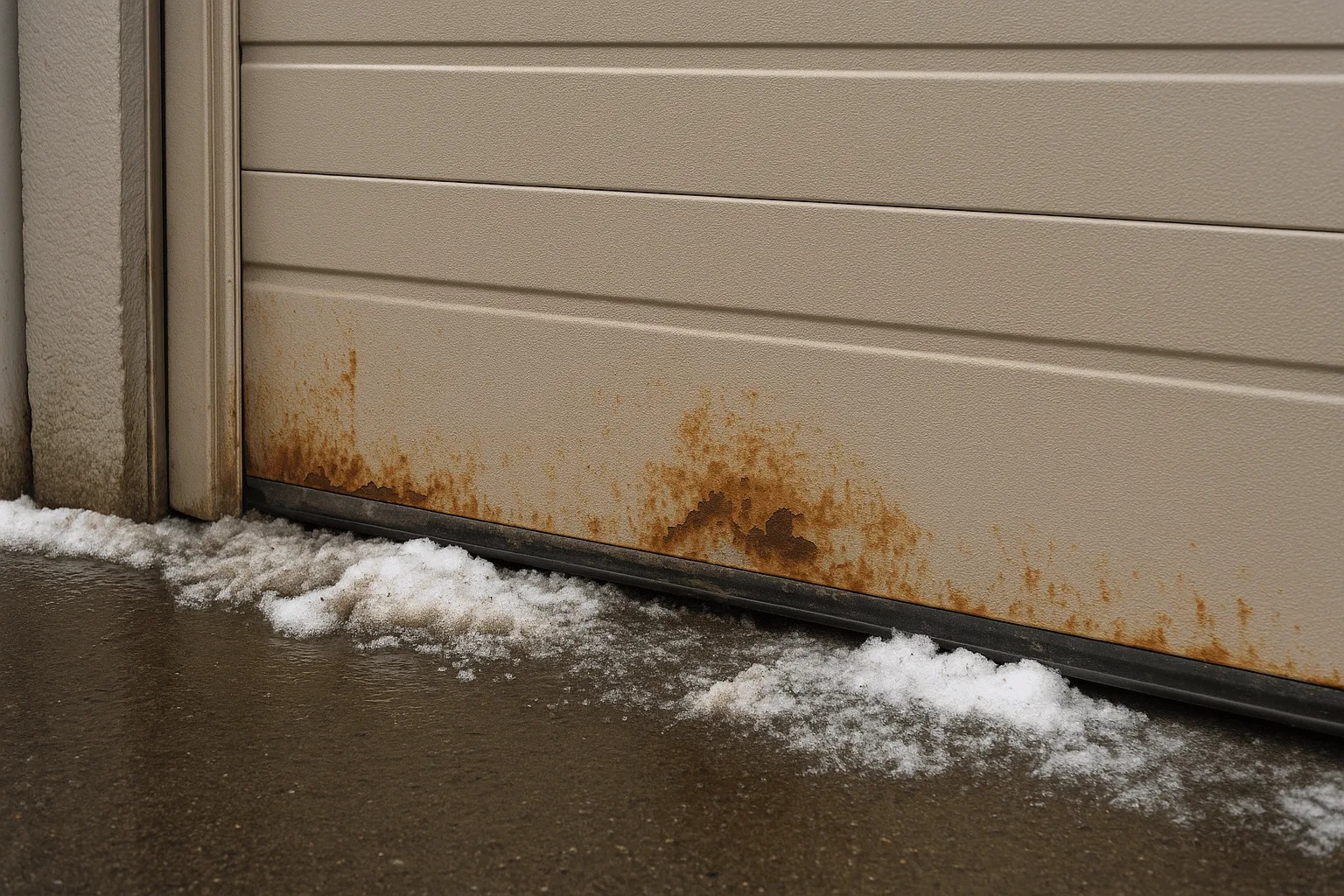
Winter in New York City brings more than just snow and cold temperatures—it unleashes a silent destroyer on your garage door: corrosive road salt and chemical de-icers. Every time you drive in and out during winter months, your vehicle tracks salt-laden slush directly onto your garage floor and against your door panels. This relentless exposure to sodium chloride and calcium chloride accelerates metal corrosion, turning minor surface rust into structural damage that compromises both appearance and functionality. The good news is that with the right preventive measures, you can prevent garage door rust winter NYC conditions from destroying your investment. This comprehensive guide shows Manhattan, Brooklyn, Queens, Bronx, and Staten Island homeowners exactly how to protect their garage doors from salt damage, maintain peak performance through harsh winters, and avoid costly repairs down the road. Don’t wait until rust takes hold—request anti-rust treatment in NYC before winter’s first snowfall.
Why Winter Causes Rust in NYC Garages
Understanding the science behind winter corrosion helps you appreciate why garage door rust prevention NYC requires proactive measures rather than reactive repairs. New York City’s winter maintenance strategy creates the perfect storm for metal deterioration.
The Salt and Chemical Attack
The Department of Transportation deploys thousands of tons of road salt across NYC streets each winter. When you drive through treated roads, your tires pick up concentrated brine solutions mixed with industrial de-icing chemicals. This corrosive cocktail gets deposited directly on your garage floor, where it:
- Splashes onto lower door panels during entry and exit
- Creates a humid, salt-saturated environment inside the garage
- Evaporates and settles as fine particulate matter on all metal surfaces
- Penetrates protective paint coatings through chips, scratches, and seams
- Accelerates oxidation at an exponential rate compared to normal atmospheric exposure
Moisture and Condensation Cycles
NYC’s fluctuating winter temperatures compound the problem. When your warm vehicle enters a cold garage, rapid temperature changes create condensation on metal surfaces. This moisture combines with salt residue to form an aggressive electrolytic solution that literally eats through steel. Frequent freeze–thaw cycles mean your garage door experiences hundreds of corrosion events each winter.
Hidden Damage Beyond Appearance
- Weakens structural integrity of door panels and frames
- Damages internal hardware including springs, cables, and rollers
- Corrodes electrical connections in opener systems
- Creates gaps in weather sealing that reduce energy efficiency
- Compromises the door’s ability to provide security and insulation
The Energy Efficiency Connection
As rust breaches coatings and creates pinholes, your garage loses thermal stability. Cold air infiltration increases heating costs, while compromised insulation forces HVAC to work harder. Winter garage door maintenance NYC is about performance and energy savings—not just looks.
Common Signs of Winter Rust Damage
Visual Rust Indicators
- Surface rust spots or bubbling paint—early oxidation beneath coatings
- Orange/brown streaking—active corrosion near seams or hardware
- White crystalline residue—dried salt buildup along bottom panels
- Dark pitting or holes—advanced corrosion with accelerated spread
Mechanical Performance Issues
- Noisy rollers, hinges, or tracks
- Stiff or jerky movement from corroded components
- Increased opener strain and slower travel
Environmental Clues
- Musty/metallic smell from active oxidation
- Persistent condensation patterns
- Rust staining on the concrete beneath the door
Catching these signs early enables targeted intervention. Once identified, you can protect garage doors from salt damage with specific treatments before minor surface rust becomes structural failure.
How to Prevent Garage Door Rust During Winter in NYC
Proactive protection strategies form the foundation of effective garage door rust prevention NYC programs. Combine cleaning, coatings, lubrication, and ventilation for layered defense.
Regular Rinsing to Remove Road Salt
Weekly cleaning protocol:
- Timing: rinse above freezing (afternoons) to avoid ice.
- Focus low: thoroughly rinse the bottom 2–3 feet of the door.
- Flush the tracks: spray into vertical tracks on both sides.
- Mild detergent: use non-abrasive car soap for stubborn deposits.
- Rinse & dry: remove all residue; towel horizontal edges.
Floor tip: squeegee/mop salt water toward the drain; place an absorbent mat at the entrance.
Apply Anti-Rust Coatings or Sealants
- Silicone-based sealants: hydrophobic barrier; reapply every 3–4 months.
- Automotive wax: sacrificial layer; reapply every 4–6 weeks in winter.
- Industrial polymer coatings: pro-only; 12–18 months durability.
- Rust inhibitor primers: convert surface rust; base for topcoats.
Best window: late fall, before salt season; proper prep (degrease, rust removal) is crucial.
Lubricate All Moving Parts
- Lithium grease: hinges, bearings, springs (cold-resistant).
- PTFE dry lube: track surfaces—won’t attract grit/salt.
- Silicone spray: weather seals and plastics.
- Avoid: generic petroleum oils (gum up in cold).
Apply every 4–6 weeks in winter, then cycle the door to distribute. For pro servicing, book a garage door tune-up NYC.
Touch Up Paint and Metal Protection
- Prep: remove loose paint/rust; clean with degreaser.
- Convert: rust neutralizer on oxidized spots.
- Prime: rust-inhibiting metal primer.
- Topcoat: color-matched exterior paint; optional clear sealant.
Keep the Garage Well-Ventilated
- Air out after parking wet vehicles (10–15 min open).
- Use exhaust fans/dehumidifiers; target <50% RH.
- Keep temp ~35–40°F to minimize condensation spikes.
Professional Anti-Rust Garage Door Treatments in NYC
DIY helps, but professional garage door maintenance service New York delivers deeper protection:
- Deep cleaning & salt dissolution (safe on coatings)
- Surface prep: rust removal, conversion primers, paint repair
- Industrial anti-corrosion systems (epoxy/PU; 12–24 months)
- Hardware protection, anti-seize, spring/system treatment
- Seam/joint sealing + calibration (balance, force, limits, sensors)
Request anti-rust treatment in NYC before salt season for maximum ROI.
Why Prevention Costs Less Than Repair
- Annual pro treatment: $250–400 vs panels $400–800 each; full door $2,500–6,000.
- Safety: rusted cables/springs = sudden failures.
- Energy: corrosion gaps increase heat loss.
- Value: visible rust can cut home value by thousands.
Compare against garage door panel replacement to see how prevention pays for itself.
Winter Garage Door Maintenance Checklist for NYC Homes
Before Winter (Oct–Nov)
- Power wash door/tracks; clean floor and walls
- Apply coatings; seal seams and joints
- Cold-weather lubrication; check balance; replace worn seals
- Tighten hardware; inspect springs/cables/rollers; verify sensors
During Winter (Dec–Mar)
- Rinse bottom panels/tracks weekly; more often after storms
- Bi-weekly inspections for rust/paint damage
- Monthly lubrication and safety tests; keep floor salt-free
- Never force a frozen door; avoid floor de-icers
After Winter (Apr–May)
- Deep clean door, tracks, hardware; flush salt deposits
- Assess damage; treat/touch up; replace seals
- Re-lube; recalibrate opener force/limits; verify balance
- Plan and schedule next fall’s anti-rust treatment
Conclusion
Protecting your garage door from NYC winter conditions isn’t optional—it’s essential. With systematic care—cleaning, coatings, lubrication, and ventilation—you can prevent garage door rust winter NYC and avoid costly replacements. For the strongest protection, schedule professional anti-rust treatment before salt season.
Protect your garage from NYC winter rust—request anti-rust treatment now.
Frequently Asked Questions
How often should I clean salt off my garage door during NYC winters?
Weekly during active salting; 2–3× per week after major storms. Focus on the bottom panels and track areas.
Can I use regular car wax to protect my garage door from salt?
Yes—car wax helps for 4–6 weeks, but pro coatings last 12–18 months and protect seams/hardware more effectively.
What’s the best way to remove existing rust before winter?
Brush/sand loose rust, apply rust converter primer, then prime and topcoat. Deep pitting warrants professional treatment.
Do aluminum garage doors rust in NYC winters?
Aluminum oxidizes (white powder/pitting) and hardware still corrodes. It still needs winter protection.
Should I heat my garage to prevent rust?
No—high heat + wet car = heavy condensation. Keep ~35–40°F and ventilate to control humidity.