
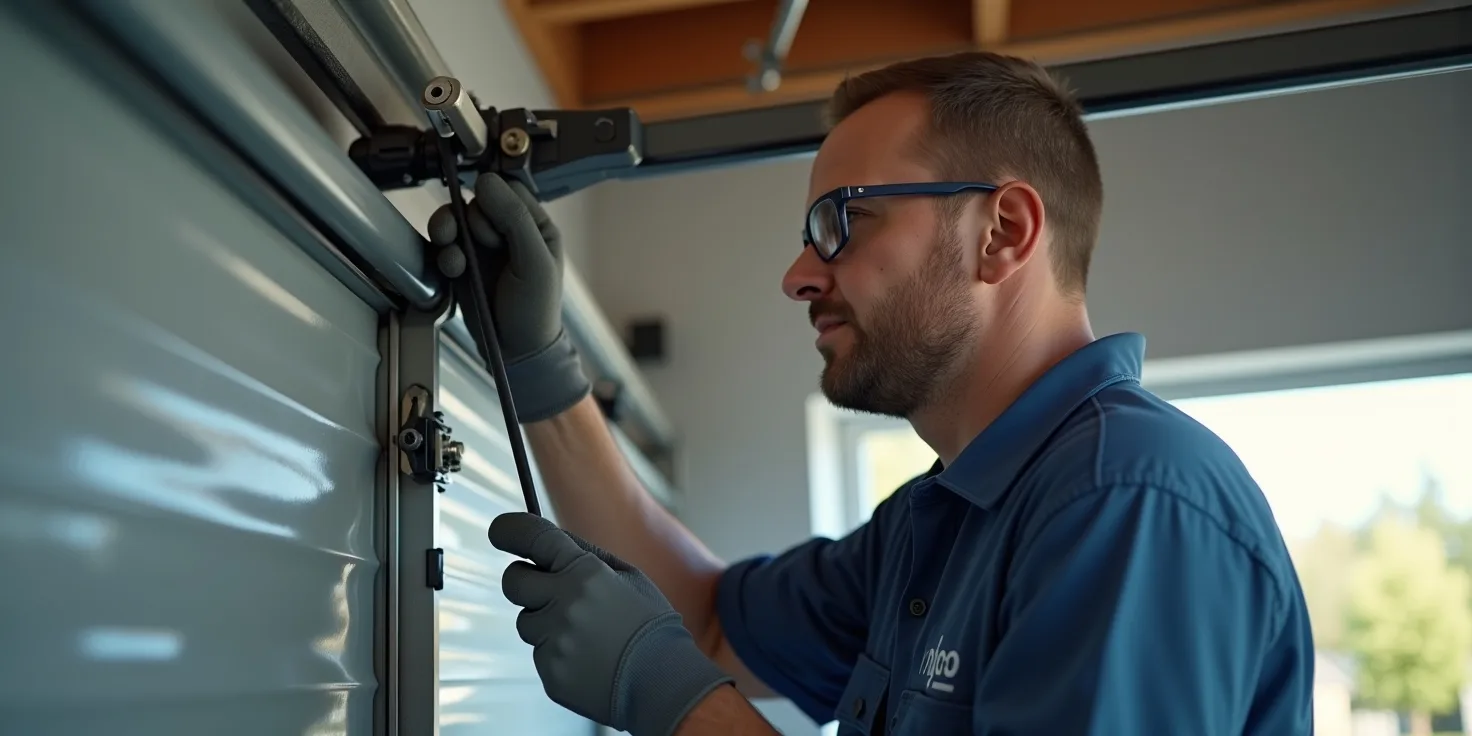
Your garage door opens and closes smoothly—until one day it doesn’t. You hear a loud snap, the door lurches to one side, or worse, it comes crashing down. Nine times out of ten, the culprit is garage door cable wear that went unnoticed until it was too late.
If you live in Queens, Brooklyn, Bronx, or anywhere across Long Island, your garage door cables face some of the harshest conditions in the country. NYC’s humidity, temperature swings from below zero to 90°F+, road salt in winter, and coastal salt air all accelerate cable deterioration. What might last 10 years in a milder climate can fail in 5-7 years here.
I’m going to walk you through everything you need to know about garage door cable wear: what causes it, how to spot it early, and most importantly, how to prevent catastrophic failure. This isn’t just about avoiding repair costs—it’s about safety. A snapped cable can turn a 300-pound garage door into a deadly projectile.
At H&O New York Garage Door Repair, we’ve responded to hundreds of emergency cable failure calls across NYC. Most could have been prevented with basic awareness and maintenance. Let’s make sure you’re not the next emergency call.
⚠️ Noticed fraying cables or unusual garage door behavior? Don’t wait for complete failure. Call H&O New York Garage Door Repair for same-day cable inspection and repair in Queens, Brooklyn, Bronx, and Long Island.
Understanding Garage Door Cable Wear in NYC Homes
Before we dive into prevention and maintenance, let’s understand what garage door cables actually do and why they’re so critical.
The Role of Garage Door Cables
Garage door cables are the unsung heroes of your door system. They work in tandem with torsion springs to lift and lower the door smoothly and safely. Think of them as the safety net—if your springs break, properly functioning cables prevent the door from free-falling.
There are two main types of cable systems in residential garage doors:
Torsion Spring System Cables: These run from the bottom corners of the door up through the track system to cable drums mounted on the torsion spring shaft. They’re typically 3/32″ to 1/8″ diameter aircraft-grade galvanized steel cable. Most homes in Queens, Brooklyn, and Long Island use torsion systems.
Extension Spring System Cables: These work with extension springs mounted along horizontal tracks. They have safety cables running through the spring center to contain the spring if it breaks. Extension systems are common in older homes and garages with low headroom.
Both systems rely on cables that are under constant tension—typically several hundred pounds of force. This tension, combined with daily use, creates significant wear over time.
Why Garage Door Cable Wear Happens Faster in NYC
Living in New York means your garage door components face environmental challenges that accelerate wear:
Humidity and Moisture: NYC’s average humidity runs 60-70%, and coastal areas like parts of Brooklyn, Queens, and Long Island see even higher levels. Moisture is cable’s worst enemy—it causes rust and corrosion that weaken cable strands from the inside out.
Temperature Extremes: Our winter lows hit single digits while summer highs push 95°F. This temperature cycling causes metal expansion and contraction, creating micro-fractures in cable strands. Over thousands of cycles, these fractures propagate until strands start breaking.
Road Salt Exposure: During NYC winters, road salt gets tracked into garages on vehicles. Salt is incredibly corrosive to steel cables. I’ve seen cables in coastal areas completely rust through in just 3-4 years due to combined salt air and road salt exposure.
High Usage Patterns: Urban dwellers often use their garage doors more frequently than suburban homeowners—parking on the street when home, constant errands, multiple vehicles. More cycles mean faster cable wear.
A Real Brooklyn Cable Failure Story
Last winter, we got an emergency call from a homeowner in Park Slope, Brooklyn. She pressed her garage door opener to leave for work, heard a loud bang, and the door dropped violently on one side, coming completely off track.
The cause? One lift cable had frayed through about 70% of its diameter and finally snapped under the door’s weight. When I examined the other cable, it showed similar wear—we were probably days away from complete failure on both sides.
Here’s what made it worse: the homeowner had noticed the door operating “a bit rough” for several weeks but figured it just needed lubricant. She didn’t realize that rough operation often indicates cable or roller wear. By the time she called us, what should have been a $300 preventive cable replacement turned into a $1,200 repair involving new cables, track realignment, roller replacement, and spring adjustment.
The lesson? Garage door cable wear gives you warning signs—if you know what to look for.
For comprehensive garage door diagnostics in Brooklyn, our professional safety inspection catches cable wear before it becomes dangerous.
Common Signs Your Garage Door Cables Are Wearing Out
The good news about garage door cable wear is that it rarely happens without warning. Cables deteriorate gradually, giving you time to catch the problem before catastrophic failure—if you know what to look for.
Fraying and Visible Cable Damage
This is the most obvious sign and the easiest to check yourself.
Lift cables run from the bottom corners of your door up to the cable drums near the ceiling. Take a flashlight and visually inspect the entire length of both cables. What you’re looking for:
- Fraying: Individual wire strands separating from the main cable body. Even a few frayed strands indicate the cable is weakening and needs replacement soon.
- Broken strands: You might see individual wires that have completely separated and are sticking out from the cable. This is serious—the cable has lost structural integrity.
- Rust or corrosion: Brown or orange discoloration isn’t just cosmetic. Rust weakens steel significantly. If you see rust, especially near cable end fittings, the cable is compromised.
- Kinking: Cables should run smooth. Any bends, kinks, or loops indicate improper installation or damage from the door going off track.
- Wear patterns: Shiny or flattened sections where the cable runs over pulleys suggest excessive friction and accelerated wear.
Pro Tip: Check cables every 3 months. Set a recurring reminder on your phone for the first of each season. It takes 5 minutes and could save you thousands in emergency repairs or property damage.
Loose or Slack Cables
Garage door cables should always be under tension when the door is closed. If you notice cables hanging loosely or appearing slack, something is wrong.
Loose cables usually indicate:
- Broken or weakened springs: If your torsion spring breaks or loses tension, cables lose their taught appearance. This is dangerous—the door has lost counterbalance support.
- Cable slipping on drum: The cable may have come partially unwound from the drum due to loose set screws or improper winding.
- Stretched cables: Cables can stretch over time, especially if the door has been out of balance. Stretched cables need replacement.
- Broken cable strands: As strands break, the remaining strands stretch under increased load, creating visible slack.
Never operate a garage door with loose cables. The door is unbalanced and can fall unexpectedly. This is emergency territory—call for professional same-day repair in Brooklyn or Queens immediately.
Uneven Door Movement
A properly functioning garage door rises and lowers evenly, staying level throughout its travel. Uneven movement is one of the clearest indicators of cable problems.
Watch your door operate and look for:
- One side rising faster than the other: If the door tilts as it opens or closes, one cable is likely more worn or has lost tension compared to the other side.
- Door hanging at an angle when stopped: Stop the door midway through opening. If it’s not level, cable tension is unequal.
- Jerky or stuttering movement: The door should move smoothly. Jerking or catching during operation often indicates cables binding or slipping on drums or pulleys.
- Door shifting sideways in track: Cables help keep the door centered in its tracks. If the door drifts left or right, cable issues may be the cause.
Uneven operation accelerates wear on everything—cables, rollers, tracks, springs, and opener. Address it quickly before one problem cascades into multiple failures.
Grinding, Popping, or Unusual Noises
Your ears can detect garage door cable wear before your eyes do.
Listen for these sounds:
Grinding or scraping: This often indicates cables rubbing against track edges or door panels due to misalignment or worn rollers. The friction accelerates cable wear dramatically.
Popping or snapping sounds: Individual cable strands breaking make small popping sounds. If you hear popping during door operation, inspect cables immediately—you’re hearing them fail in real-time.
Squeaking from pulley areas: While squeaking often just needs lubrication, it can also indicate cables wearing on pulleys due to rust or debris buildup.
Rubbing or scraping from cable drums: If cables aren’t winding properly on drums, you’ll hear rubbing from the spring area when the door moves.
⚠️ Safety Warning: If you see any of these signs—fraying, slack cables, uneven movement, or unusual noises—don’t continue operating your garage door. A failing cable can snap without warning, causing the door to fall violently. This can crush vehicles, cause serious injuries, or create thousands in property damage.
If you see these signs, book a garage door cable inspection in Brooklyn, Queens, or Bronx today. Same-day service available.
Garage Door Cable Maintenance Tips for Brooklyn, Queens & Bronx Homeowners
Preventing garage door cable wear isn’t complicated, but it does require consistent attention. Here’s exactly what you need to do—and how often—to maximize cable life in NYC’s harsh climate.
Regular Visual Inspections (Every 3 Months)
This is the single most important thing you can do, and it takes less than 10 minutes.
Quarterly Inspection Checklist:
- ☐ Inspect entire cable length on both sides for fraying, broken strands, or rust
- ☐ Check cable tension —cables should be taught when door is closed
- ☐ Look at cable drums (near ceiling)—cables should be winding evenly with no overlaps
- ☐ Examine cable end fittings —check for rust, damage, or loose connections
- ☐ Inspect pulleys (if extension spring system)—should spin freely without wobbling
- ☐ Watch door operate —should move evenly without tilting or jerking
- ☐ Listen for unusual sounds during operation
- ☐ Document with photos —helps track deterioration over time
If you find anything concerning during your inspection, don’t wait for the next quarterly check. Call a professional immediately.
Proper Lubrication (Every 6 Months Minimum)
Lubrication reduces friction, which is one of the primary causes of garage door cable wear. But you need to do it right—wrong lubricants actually attract dirt and accelerate wear.
What to Use:
- ✅ Silicone-based garage door lubricant
- ✅ Lithium-based garage door grease
- ✅ White lithium grease (for cables in high-moisture areas)
- ❌ WD-40 (not a lubricant—it’s a solvent that dries out)
- ❌ Motor oil (attracts dust and creates gummy buildup)
- ❌ 3-in-1 oil (too thin, doesn’t last)
How to Lubricate Properly:
- Clean cables first: Use a clean rag to wipe away dirt, dust, and old lubricant. Don’t use solvents unless cables are extremely dirty.
- Apply lubricant sparingly: Spray or apply lubricant lightly along the cable length. You want a thin coating, not dripping wetness.
- Lubricate pulleys: If your system has pulleys, apply lubricant to the pulley axles (not the wheel surface).
- Lubricate cable drums: Apply light lubricant where cables wind onto drums.
- Operate the door several times: This works lubricant into cable strands and distributes it evenly.
- Wipe excess: Remove any dripping or pooled lubricant—it will just attract dirt.
In NYC’s humid climate, lubrication is especially important. Properly lubricated cables resist rust and corrosion much better than dry cables.
Cleaning Dirt and Debris
Urban garages accumulate amazing amounts of dirt, dust, road salt, and debris. All of it ends up on your garage door components, including cables.
This matters because:
- Dirt mixed with moisture creates abrasive paste that grinds away at cable strands
- Road salt accelerates rust formation dramatically
- Debris can jam in pulleys or between cable wraps on drums
- Grime prevents lubricant from reaching cable surfaces
Seasonal Cleaning Protocol:
Spring (After Winter): This is critical. Winter leaves your garage door components coated in road salt residue. Thoroughly clean all cables, pulleys, drums, tracks, and rollers. Use a mild degreaser if needed, then rinse with clean water and dry completely before lubricating.
Summer: Dust accumulation peaks in dry summer weather. Wipe down cables and components, paying special attention to areas near doors and windows where airborne dust enters.
Fall (Before Winter): Clean and lubricate extra thoroughly. Good pre-winter prep helps components survive salt exposure better.
Winter: Periodic checks for ice buildup or salt accumulation, especially after major snowstorms.
Checking and Maintaining Door Balance
An unbalanced garage door puts excess strain on cables, dramatically accelerating wear. Most homeowners never check door balance, but it’s simple and critical.
How to Check Door Balance:
- Disconnect the automatic opener (pull the red emergency release handle)
- Manually lift the door about halfway up (3-4 feet)
- Let go of the door
What Should Happen: A properly balanced door stays roughly where you leave it. It might drift down a few inches over several minutes, but it shouldn’t fall or rise.
Warning Signs:
- Door falls rapidly when released = springs have lost tension
- Door rises when released = springs are over-tensioned
- Door won’t stay in place at any height = severe imbalance
An unbalanced door means cables are working harder than designed, which causes premature garage door cable wear. This is especially hard on the cable on the heavy side of an unbalanced door.
Important: If your door is unbalanced, do NOT attempt to adjust springs yourself. Torsion springs contain enormous stored energy—hundreds of pounds of force. Improper adjustment can cause springs to break violently, resulting in serious injury or death.
Call H&O New York Garage Door Repair for professional spring adjustment and balancing throughout NYC.
Why DIY Cable Repair Is Dangerous
I need to be absolutely clear about this: garage door cable replacement is not a DIY project.
Here’s why:
Extreme Tension: Garage door cables are under constant tension from torsion springs. A standard two-car garage door weighs 300-400 pounds. Springs and cables support this weight. When you disconnect or work on cables, you’re dealing with forces that can easily cause severe injury.
Spring Danger: Cable replacement often involves working near or around torsion springs—the single most dangerous garage door component. Torsion springs store energy equivalent to a loaded catapult. If a spring breaks or releases unexpectedly during cable work, it can cause fatal injuries.
Specialized Tools Required: Proper cable replacement requires winding bars, special wrenches, cable drums, and other tools most homeowners don’t have. Using improvised tools multiplies the danger.
Precise Installation Critical: Cables must be wound onto drums in exactly the right direction, with precise tension, and proper cable-to-spring coordination. Get it wrong, and the door won’t operate safely—or at all.
Warranty and Liability: DIY cable installation typically voids any existing warranties and creates liability issues if the door fails and causes injury or property damage.
I’ve seen the aftermath of DIY cable “repairs”—crushed fingers, broken bones, and in one case, a door that fell on a vehicle causing $8,000 in damage. The homeowner’s insurance denied the claim because unlicensed work voided coverage.
Professional garage door cable repair in Queens, Brooklyn, or the Bronx costs $150-350 typically. Is saving that money worth risking serious injury? Never.
Need a professional tune-up for your garage door? Our comprehensive maintenance service includes cable inspection, lubrication, balance check, and safety testing. Available throughout Queens, Brooklyn, Bronx, and Long Island.
When to Call Professional Garage Door Cable Repair in NYC
Some garage door issues can wait for your next scheduled maintenance. Cable problems aren’t among them. Here’s when you need to call a professional immediately.
Visible Cable Damage or Fraying
The moment you spot frayed strands, rust holes, or broken wires in your garage door cables, schedule professional replacement. Don’t wait to “see if it gets worse”—it will, and it will fail when you least expect it.
How Quickly Should You Act?
- Minor fraying (1-3 strands): Schedule repair within 1-2 weeks
- Moderate fraying (4-8 strands): Schedule within days
- Severe fraying (9+ strands or visible core wire): Emergency service—same day if possible
- Any rust holes or complete strand breaks: Emergency service
Don’t gamble with “maybe it’ll hold a bit longer.” Cable failure is sudden and can cause thousands in damage plus serious injuries.
Door Stuck or Won’t Open Properly
If your garage door won’t open, opens only partially, or gets stuck midway, cable problems are a likely cause.
Common scenarios:
Door opens 6-12 inches then stops: Often indicates a cable has come off the drum or broken. The opener’s safety sensor detects resistance and stops operation.
Door extremely heavy to lift manually: If cables have failed, you’re lifting the door’s full weight without spring assistance. A 300-pound door feels impossible to lift.
Door won’t close all the way: Cables may be binding in tracks or on pulleys, preventing full closure.
Opener runs but door doesn’t move: Cable may have snapped, disconnecting the door from the opener’s lifting mechanism.
In any of these situations, stop attempting to operate the door. Forcing it can cause additional damage to cables, springs, opener, tracks, and rollers.
Strange Noises During Operation
We covered warning sounds earlier, but it bears repeating: unusual noises demand professional attention.
Popping or snapping sounds: This is literally the sound of cable strands breaking. Each pop is one or more strands failing. Call immediately—you’re hearing real-time failure.
Grinding from spring area: Indicates cables binding on drums or rubbing against the torsion spring shaft. This accelerates both cable and spring wear.
Scraping along tracks: Cables may be rubbing track edges due to misalignment, worn rollers, or cable damage causing door to shift.
Loud banging when door opens/closes: Could indicate cable slack allowing the door to jerk or fall briefly before catching.
None of these sounds are normal. All indicate problems that will worsen if ignored. Professional diagnosis identifies the root cause before minor issues become major failures.
Emergency Situations Requiring Immediate Service
These situations require same-day emergency service—don’t wait:
🚨 Call Emergency Service Immediately If:
- Cable has snapped completely: Door is unsafe to operate and may be impossible to move
- Door fell or slammed down: Indicates catastrophic cable or spring failure
- Door hanging at severe angle: One cable has likely failed; other cable under extreme stress
- Door completely off track: Often caused by or causes cable damage
- Visible cable damage with door stuck open: Security risk—your home is exposed
- Any situation preventing vehicle access: Car trapped in or out of garage
We offer same-day garage door cable repair in Queens, Brooklyn, Bronx, and Long Island. Our emergency response typically arrives within 2-4 hours, and we carry common cables on our service vehicles for immediate replacement.
Call H&O New York Garage Door Repair’s 24/7 emergency line for urgent cable failures throughout NYC and Nassau County.
Why Choose H&O New York Garage Door Repair for Cable Repair & Maintenance
When garage door cables fail, you need service you can trust. Here’s what sets H&O apart in the crowded NYC garage door repair market.
Licensed, Bonded, and Insured
We’re fully licensed to operate in New York State, bonded for your protection, and carry comprehensive liability insurance. This isn’t just paperwork—it protects you.
Why this matters: If an unlicensed contractor damages your property or causes injury during repairs, you have limited legal recourse. Your homeowner’s insurance may deny claims for work performed by unlicensed contractors. Our licensing and insurance mean you’re protected if anything goes wrong.
Always verify your garage door repair company’s licensing and insurance before allowing them to work on your property. It’s not paranoia—it’s smart homeownership.
Parts and Labor Guaranteed
Every H&O repair comes with our parts and labor guarantee:
- Parts warranty: We use high-quality cables rated for residential use. All parts are warrantied against defects.
- Labor warranty: Our work is guaranteed. If a cable we install fails due to installation error (not normal wear), we’ll fix it at no charge.
- Workmanship guarantee: If any component we service fails prematurely due to our error, we make it right.
We stand behind our work because we do it right the first time. Period.
Same-Day Emergency Service Throughout NYC
Garage door cable failures don’t wait for convenient times. They happen early morning when you’re rushing to work, late evening when you’re getting home, or on weekends when you’re running errands.
That’s why we offer same-day emergency service 7 days a week across:
- Queens: Astoria, Flushing, Jamaica, Forest Hills, Bayside, and all Queens neighborhoods
- Brooklyn: Park Slope, Williamsburg, Bay Ridge, Flatbush, Brighton Beach, and throughout Brooklyn
- Bronx: Riverdale, Pelham Bay, Fordham, and all Bronx areas
- Long Island: Great Neck, Valley Stream, Plainview, and Nassau County
Our average emergency response time is 2-4 hours. We prioritize cable failures because we know they’re safety-critical and often prevent vehicle access.
Local NYC Expertise
We’re not a national chain with franchises staffed by contractors who just learned garage doors last month. H&O has served NYC homeowners for years. We understand:
- NYC’s climate challenges: How humidity, salt air, and temperature extremes accelerate cable wear
- Local building configurations: NYC’s unique garage layouts, from attached single-car garages in Queens to basement garages in Brooklyn brownstones
- Urban access challenges: We navigate NYC traffic, parking restrictions, and tight urban spaces daily
- Code compliance: We know New York’s building codes and safety requirements
Local expertise means faster, more effective service tailored to NYC conditions.
Request Professional Garage Door Cable Service Today
Don’t wait for cable failure to become a crisis. Whether you need emergency repair, routine maintenance, or a comprehensive safety inspection, H&O New York Garage Door Repair has you covered.
Same-day service available throughout Queens, Brooklyn, Bronx, and Long Island.
📞 Call for immediate assistance
🌐 Visit hogaragedoorrepair.com
Licensed, Bonded & Insured | Parts & Labor Guaranteed | Serving NYC Since [Year]
Conclusion: Prevention and Professional Service Keep Cables Safe
Garage door cable wear is inevitable, but catastrophic cable failure isn’t. With quarterly inspections, proper lubrication, seasonal cleaning, and attention to warning signs, you can catch problems early when they’re still cheap and easy to fix.
The key takeaways:
- Inspect cables every 3 months for fraying, rust, and visible damage
- Lubricate properly every 6 months with silicone or lithium-based products
- Clean thoroughly after winter to remove corrosive road salt
- Check door balance annually to prevent excess cable strain
- Never attempt DIY cable repair—it’s genuinely dangerous
- Call professionals immediately when you spot warning signs
Living in Queens, Brooklyn, Bronx, or Long Island means your garage door components face some of the toughest conditions in the country. Regular professional maintenance isn’t an expense—it’s insurance against expensive emergency repairs and dangerous failures.
At H&O New York Garage Door Repair, we’ve seen what happens when garage door cable wear goes unchecked. We’ve also seen how simple preventive maintenance keeps doors operating safely for decades. The choice is yours, but the smart money is always on prevention.
For expert garage door cable repair, maintenance, and emergency service in NYC, call H&O New York Garage Door Repair. Same-day service available throughout Queens, Brooklyn, Bronx, and Long Island.
📞 Call now for immediate assistance | 🌐 Visit hogaragedoorrepair.com
Frequently Asked Questions About Garage Door Cable Wear
What causes garage door cables to wear out?
Garage door cable wear is caused by multiple factors: friction from daily use (cables rub against pulleys and drums during each cycle), environmental conditions in NYC (humidity, temperature fluctuations, road salt exposure), rust and corrosion from moisture, improper door balance putting extra strain on cables, lack of lubrication, and age (most cables last 7-10 years with proper maintenance). In NYC’s harsh climate, cables can deteriorate faster due to salt air in coastal areas like parts of Brooklyn and Queens, and extreme temperature swings between winter and summer. High-usage patterns common in urban environments also accelerate wear—more cycles mean faster degradation. Regular inspection and maintenance significantly extend cable life.
How much does garage door cable repair cost in NYC?
Garage door cable repair in NYC typically costs $150-350 for single cable replacement, or $250-500 for both cables (which we always recommend—if one fails, the other is usually similarly worn). Emergency same-day service may add 25-50% premium. Costs vary based on cable type (extension vs torsion system), door size (single vs double), and accessibility. The price includes labor, new cables, and safety inspection. Replacing cables proactively during routine maintenance is cheaper than emergency repairs after cable failure, which often includes additional damage to tracks, rollers, or panels. Most reputable NYC garage door companies like H&O offer free estimates and parts/labor warranties. Factors affecting cost: door weight, cable length needed, and whether other components (springs, rollers) need simultaneous replacement.
Can I replace garage door cables myself?
No, garage door cable replacement is not a DIY project and attempting it is genuinely dangerous. Cables are under extreme tension (hundreds of pounds of force) and connected to torsion springs—one of the most dangerous garage door components. Torsion springs store enormous energy equivalent to a loaded catapult; if a spring breaks or releases unexpectedly during cable work, it can cause fatal injuries. Professional technicians have specialized tools (winding bars, cable drums, tension gauges), extensive safety training, and proper equipment to handle cable replacement safely. Improper cable installation can result in serious injury, door collapse, or property damage. Even experienced DIYers should leave cable work to licensed professionals. In NYC, using unlicensed contractors for cable repair can void warranties and create liability issues. The cost of professional cable repair ($150-350) is far less than medical bills from injury or property damage from failed DIY attempts. For safe, guaranteed cable replacement in NYC, always use licensed professionals.
Do you offer same-day garage door repair in Queens or Brooklyn?
Yes, H&O New York Garage Door Repair offers same-day emergency service throughout Queens, Brooklyn, Bronx, and Long Island. For urgent issues like broken cables, snapped springs, or doors off track, we prioritize emergency calls and typically arrive within 2-4 hours. Our technicians carry common parts including various cable types on their service vehicles, allowing most repairs to be completed on the first visit without return trips. Same-day service is available 7 days a week including weekends and holidays (holiday service may include premium rates). We serve all Queens neighborhoods (Astoria, Flushing, Jamaica, Forest Hills, Bayside), all Brooklyn areas (Park Slope, Williamsburg, Bay Ridge, Flatbush), throughout the Bronx, and across Long Island including Nassau County. We’re licensed, bonded, and insured, with all work backed by parts and labor guarantees. Emergency service rates may include urgency premiums, but we provide upfront pricing before beginning work. Call our emergency line for immediate assistance with cable failures or other urgent garage door issues.
How often should I inspect my garage door cables?
Inspect garage door cables every 3 months (quarterly) through visual examination. Look for fraying (individual wire strands separating from main cable), rust or corrosion (especially near end fittings), loose or slack cables, kinking or unusual bends, and any visible damage or wear patterns where cables contact pulleys. Professional inspections should occur every 6-12 months as part of comprehensive garage door maintenance. In NYC’s harsh climate, quarterly inspections are especially important due to accelerated wear from humidity, salt exposure (both road salt and coastal salt air), and extreme temperature fluctuations. Set seasonal reminders: inspect in March (after winter salt exposure), June (before summer humidity), September (before winter prep), and December (mid-winter check). If you notice any concerning signs between inspections—fraying, unusual sounds, uneven door operation, or visible damage—call a professional immediately rather than waiting. Prompt attention to early warning signs prevents catastrophic cable failure. Inspection takes only 5-10 minutes but can save thousands in emergency repairs and prevent dangerous door failures.
What should I do if my garage door cable snaps?
If a garage door cable snaps, follow these steps immediately: 1) Do not operate the door—attempting to open or close it can cause severe damage, door collapse, or injury. 2) Keep people and vehicles away from the door area—it’s unstable and dangerous. 3) Do not attempt DIY repair—snapped cables mean extreme tension on remaining components. 4) Disconnect the automatic opener if safe to do so (pull red emergency release handle) to prevent accidental operation. 5) Call professional emergency garage door repair immediately—this is a same-day emergency situation. A snapped cable means the door is severely unbalanced and extremely dangerous. The remaining cable (if only one snapped) is under double its designed load and could fail at any moment. Door springs are also under abnormal stress. In NYC, H&O Garage Door Repair offers same-day emergency cable replacement throughout Queens, Brooklyn, Bronx, and Long Island with typical 2-4 hour response times. Never try to force a door with broken cables open or closed—the remaining components are under extreme stress and can fail catastrophically, potentially causing thousands in damage or serious injury. For emergency cable repair in Queens or Brooklyn, call immediately.