
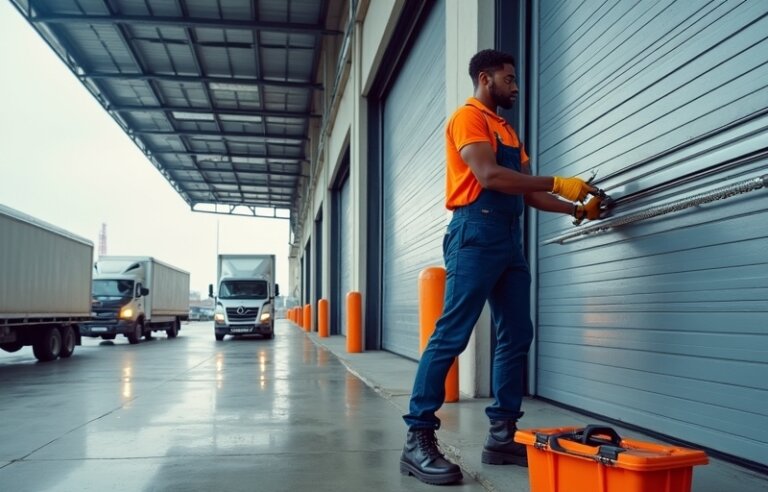
Look, I'm going to level with you—garage doors in high-traffic commercial settings take an absolute beating. I've seen loading dock doors in Brooklyn that cycle 80+ times a day, multi-family building garages in Queens where residents are constantly coming and going, and commercial facilities across the Bronx where a broken door means lost revenue.
The difference between a residential garage door and a high-traffic commercial garage door? It's like comparing a family sedan to a delivery truck. Both get you from point A to B, but one is built for constant, heavy-duty use.
If you're managing commercial properties in New York City—whether that's Queens, Brooklyn, Bronx, or Long Island—understanding commercial garage door maintenance isn't optional. It's the difference between smooth operations and costly emergency repairs that always seem to happen at the worst possible time.
Table of Contents
- → Why High-Traffic Garage Doors Need Different Maintenance
- → Garage Door Cycle Ratings Explained
- → Daily Garage Door Maintenance Checklist for Commercial Use
- → Weekly Commercial Garage Door Maintenance Tasks
- → Monthly Professional Maintenance Protocol
- → Emergency Warning Signs Requiring Immediate Garage Door Repair
- → NYC Seasonal Garage Door Maintenance Guide
- → When to Call Professional Garage Door Services in NYC
- → Preventive vs Reactive Maintenance Cost Analysis
Why High-Traffic Garage Doors Need Different Maintenance
Commercial garage door maintenance in NYC differs dramatically from residential upkeep. Here's why high-traffic environments demand specialized attention:
Usage Intensity
Standard residential garage doors see 3-5 cycles per day—maybe 1,500-2,000 cycles annually. High-traffic commercial doors? We're talking 50-100+ cycles daily, which translates to 10,000-25,000+ cycles per year. Some loading dock doors hit 50,000 cycles annually.
Every cycle puts stress on springs, cables, rollers, tracks, and opener mechanisms. At high volumes, component fatigue accelerates exponentially.
NYC Environmental Challenges
Operating commercial garage doors in New York City adds extra complications:
- Road salt exposure during winter months causes accelerated corrosion
- Temperature fluctuations (from below zero to 90°F+) affect metal expansion and contraction
- Urban pollution and particulates accumulate in tracks and mechanical components
- Humidity levels near coastal areas (Long Island, parts of Brooklyn) accelerate rust formation
- Constant vehicle traffic introduces debris into door mechanisms
Commercial Liability Concerns
High-traffic areas mean more people near operating doors. A malfunctioning commercial garage door in a busy facility presents significantly greater liability than a residential failure. Professional garage door safety inspections become critical for protecting employees, customers, and business assets.
For businesses operating in New York's demanding environment, understanding these factors isn't academic—it directly impacts your bottom line and operational continuity.
Garage Door Cycle Ratings Explained
Before implementing any maintenance schedule, you need to understand cycle ratings and your actual usage patterns.
What Are Cycle Ratings?
Every garage door component has a cycle rating—the number of open/close operations it's designed to handle before failure. This isn't a suggestion; it's engineering reality.
| Component | Standard Rating | Heavy-Duty Rating | High-Traffic Lifespan |
|---|---|---|---|
| Torsion Springs | 10,000 cycles | 25,000-50,000 cycles | 6-12 months (standard) / 2-4 years (heavy-duty) |
| Extension Springs | 10,000 cycles | 25,000+ cycles | Similar to torsion |
| Steel Rollers | 10,000 cycles | N/A | 1-2 years |
| Nylon Rollers (sealed bearings) | 20,000+ cycles | N/A | 3-5 years |
| Standard Opener | 15,000 cycles | N/A | 3-5 years |
| Commercial Opener | 50,000+ cycles | 100,000+ cycles | 7-15 years |
Calculate Your Annual Cycles
Here's how to determine your actual usage:
- Count total door operations for one full week
- Multiply by 52 for annual estimate
- Compare against component ratings
- Plan replacement before failure occurs
For commercial garage door installation in NYC, choosing components rated for your actual usage (plus 25% buffer) prevents premature failures and reduces emergency repair costs.
Daily Garage Door Maintenance Checklist for Commercial Use
In high-traffic commercial environments, daily visual inspections catch problems before they cascade into complete failures. This isn't about being paranoid—it's about being proactive.
Morning Opening Inspection Protocol (2-3 minutes)
Visual Assessment
- ☐ Check for obvious damage to panels, hardware, or weather sealing
- ☐ Look for obstructions in door path or on tracks
- ☐ Verify bottom seal contact with ground (gaps indicate balance issues)
- ☐ Inspect area around door for debris that could cause tracking problems
Operational Testing
- ☐ Listen during door operation for new or unusual sounds (grinding, squeaking, clicking)
- ☐ Observe door movement—should rise evenly without jerking or hesitation
- ☐ Test safety sensor system with obstruction before facility opens
- ☐ Verify remote control and wall button functionality
End-of-Day Closing Verification (1 minute)
- ☐ Confirm door closes completely and seats properly
- ☐ Test auto-reverse by placing obstruction in path
- ☐ Verify lock mechanism engages (if applicable)
- ☐ Check that emergency release functions properly
Documentation Requirements: Maintain a simple maintenance log noting: date and time of inspection, any unusual sounds or visual changes, performance issues (slow operation, inconsistent speed), and safety system test results.
This documentation helps identify patterns and justifies proactive component replacement to management. When you can show "this component has been deteriorating for three weeks," getting approval for scheduled maintenance becomes much easier than explaining an emergency breakdown.
For businesses managing multiple properties, commercial garage door services in NYC often include documentation systems and reporting that simplifies multi-location management.
Weekly Commercial Garage Door Maintenance Tasks
Weekly maintenance for high-traffic garage doors takes 15-25 minutes but dramatically extends component lifespan. Here's what actually matters:
Lubrication Protocol for High-Cycle Doors
High-traffic doors require more frequent lubrication than residential units. Heat, friction, and constant movement cause lubricants to break down faster.
What to Lubricate:
- Torsion springs (full coating on all coils)
- Roller bearings and stems (both sealed and unsealed types)
- Hinge pivot points (every single hinge)
- Track vertical sections (light coating only—too much attracts debris)
- Opener chain or belt drive mechanism
- Lock mechanism (if equipped)
✓ Use the Right Lubricant
- ✅ Silicone-based garage door lubricant
- ✅ Lithium-based garage door grease
- ✅ White lithium grease for extreme cold
✗ Avoid These Products
- ❌ WD-40 (attracts dust, creates gummy buildup)
- ❌ 3-in-1 oil (too thin, doesn't last)
- ❌ Petroleum-based products (degrade in NYC weather)
Track Cleaning and Alignment
Dirty tracks are one of the most common causes of high-traffic door failures. Debris accumulates quickly in commercial settings.
Weekly Track Maintenance:
- Remove loose debris with stiff brush
- Wipe rails clean with solvent or degreaser
- Check track alignment with level (vertical and horizontal)
- Inspect mounting brackets for looseness or damage
- Verify track spacing matches door width specifications
Misaligned tracks cause uneven wear on rollers and cables. In high-traffic settings, minor misalignment becomes major failure within weeks.
Hardware Inspection and Tightening
Constant vibration loosens hardware. This isn't speculation—it's physics.
Check and Tighten:
- All visible bolts and screws (don't over-tighten)
- Cable drum set screws (critical safety component)
- Roller bracket bolts
- Track mounting brackets
- Spring anchor plates
- Opener mounting hardware
Inspect for Wear:
- Cables (any fraying requires immediate replacement)
- Rollers (flat spots, cracks, or wobbling)
- Springs (gaps between coils indicate stretching)
- Pulleys (should spin freely without resistance)
Safety System Testing
Commercial garage door safety sensors must function perfectly, every time. Test weekly, minimum.
Safety System Checklist:
- Photo-eye sensor alignment and cleanliness
- Auto-reverse function (test with obstruction)
- Emergency release mechanism operation
- Manual operation capability (if applicable)
- Backup power system (if installed)
For comprehensive safety protocols, review our guide on garage door safety for NYC families—the same principles apply to commercial settings, just with higher stakes.
Monthly Professional Maintenance Protocol
Monthly deep maintenance takes 30-45 minutes but catches issues before they require emergency garage door repair in NYC.
Comprehensive Cleaning
Panel and Hardware Cleaning:
- Wash door panels with mild detergent and water
- Remove built-up grime that hides rust formation
- Clean and condition weather stripping (prevents cracking)
- Remove debris from bottom seal channel
- Clean operator housing and sensor lenses
Mechanical Systems Assessment
Spring Condition Evaluation
Springs are the most critical component. In high-traffic applications, spring failure isn't "if" but "when."
Warning signs of impending spring failure:
- Gaps developing between coils
- Rust or corrosion on spring surface
- Unusual stretching or deformation
- Door becoming harder to lift manually
- Door falling faster than normal when lowered
Important: Spring tension measurement requires specialized training and tools. This is one area where DIY maintenance stops. Professional garage door spring repair services should handle spring assessment and replacement.
Cable and Pulley System
- Inspect cables for fraying (even minor fraying = immediate replacement)
- Check cable drum condition and cable winding pattern
- Verify all pulleys spin smoothly without wobbling
- Look for rust or wear on pulley grooves
Track and Roller Assessment
- Measure track-to-roller clearance
- Check for track warping or damage
- Inspect rollers for wear pattern consistency
- Test roller bearing smoothness
Opener System Maintenance
Commercial garage door openers work harder than residential units. Monthly attention prevents premature failure.
Opener Checklist:
- Test force settings (door should stop on resistance)
- Verify travel limits (proper fully-open and fully-closed positions)
- Inspect opener mount for vibration damage
- Check drive chain/belt tension
- Test remote control range from multiple distances
- Verify wall button functionality
Opener Performance Indicators:
- Operation should be smooth and consistent
- No excessive noise or vibration
- Same speed opening and closing
- Stops promptly when limit reached
For businesses with multiple locations, professional garage door maintenance services can manage scheduled service across all properties, ensuring consistency and documentation.
Emergency Warning Signs Requiring Immediate Garage Door Repair
Some issues demand immediate professional attention. Operating a door with these problems risks injury, property damage, and liability.
Critical Emergency Situations
⚠️ Broken Springs (STOP OPERATION IMMEDIATELY)
- Door drops rapidly when opening
- Loud bang or snap sound
- Visible gap in spring coils
- Door won't stay open without opener
Springs under tension contain enormous force. Broken springs make doors extremely dangerous. Do not attempt operation. Do not attempt DIY repair. Call emergency garage door repair in Brooklyn, Queens, or your area immediately.
⚠️ Frayed or Broken Cables
- Visible cable strands separated from main cable
- Cable hanging loose from drum
- Door hanging at angle (one side higher than other)
- Snapping or popping sounds during operation
Broken cables can cause door to fall unexpectedly. This is immediate-stop-everything territory.
⚠️ Door Off Track
- Roller has jumped out of track
- Door stuck partially open at angle
- Visible gap between roller and track
- Grinding metal-on-metal sound
Operating off-track door causes catastrophic damage to tracks, rollers, panels, and potentially the opener. Stop operation, call professionals.
⚠️ Opener Overheating
- Burning smell from opener motor
- Opener shutting off mid-cycle repeatedly
- Visible smoke from opener housing
- Excessive heat from motor
Overheating openers present fire hazard, especially in high-cycle commercial applications. Disconnect power and call for service.
Developing Issues Requiring Prompt Professional Service
These aren't emergencies, but shouldn't wait long:
- Springs developing gaps (indicates stretching and impending failure)
- Unusual vibrations that weren't present before
- Inconsistent opening or closing speeds
- Safety sensors misaligning repeatedly
- Excessive noise increase over time
- Door requiring frequent balance adjustments
- Slow response to remote or wall button
- Intermittent operation failures
The 4-6 Week Window: Professional technicians typically identify these developing issues 4-6 weeks before complete failure. That's your window for scheduled repairs during slow periods rather than emergency service during your busiest time.
For comprehensive commercial garage door repair in NYC, working with licensed, insured professionals protects your business and ensures warranty coverage on parts and labor.
NYC Seasonal Garage Door Maintenance Guide
New York's dramatic seasonal changes require maintenance schedule adjustments. What works in July fails in January.
Spring Maintenance (March-April)
Spring is damage assessment time. NYC winters are brutal on commercial garage doors.
Post-Winter Inspection:
- Assess winter damage from ice, salt, and temperature extremes
- Look for rust and corrosion from road salt exposure
- Check for track misalignment caused by freeze-thaw cycles
- Inspect weather stripping for cold-weather cracking
- Verify safety sensor alignment (buildings settle during winter)
Spring Cleaning:
- Remove all salt residue from exposed metal components
- Deep clean tracks and roller assemblies
- Replace old lubricant contaminated with salt and grime
- Apply fresh lubricant to all moving parts
- Touch up paint on areas where rust is forming
For detailed spring protocols, see our spring garage door maintenance guide.
Summer Maintenance (May-August)
Heat presents different challenges, especially for commercial garage door openers running constant cycles.
Summer Considerations:
- Monitor opener motor temperature (overheating risk in hot, un-ventilated spaces)
- Check insulation integrity for energy efficiency
- Inspect weather stripping (heat accelerates degradation)
- Verify adequate ventilation around opener motor
- Apply protective coating to exposed metal (prevents oxidation)
- Clean photo-eye sensors (dust accumulation worse in dry conditions)
Coastal properties in Long Island or Brooklyn face additional humidity challenges. Our guide on maintaining garage doors in humid weather covers rust prevention strategies.
Fall Maintenance (September-October)
Fall is winter preparation time. Proactive maintenance prevents cold-weather failures.
Winter Prep Checklist:
- Inspect and replace worn weather stripping before cold sets in
- Verify bottom seal makes full contact with ground
- Test door operation in cooler temperatures (some issues only appear when cold)
- Apply fresh lubrication (consider cold-weather specific lubricant)
- Check for air gaps that will leak heat in winter
- Test backup power system if installed
- Stock emergency repair supplies
Our fall maintenance checklist provides comprehensive preparation protocols.
Winter Maintenance (November-February)
Winter maintenance is mostly reactive, addressing issues as they occur.
Cold Weather Protocols:
- Clear snow and ice from tracks daily
- Monitor for ice buildup on bottom seal (can freeze door shut)
- Never force frozen door—causes spring and opener damage
- Watch for lubricant thickening in extreme cold
- Keep ice melt available for emergency use
- Monitor opener strain in cold temperatures
Cold Weather Lubricant: Standard lubricants thicken or freeze below 20°F. For commercial doors operating in extreme cold, cold-weather lubricants maintain consistency to -40°F.
Detailed strategies for preventing garage door freezing in NYC winters are available in our comprehensive winter guide.
When to Call Professional Garage Door Services in NYC
DIY maintenance handles daily and weekly tasks. But high-traffic commercial garage doors need professional expertise regularly.
Recommended Professional Service Intervals
| Usage Level | Annual Cycles | Service Frequency |
|---|---|---|
| High-Traffic Commercial | 10,000+ cycles/year | Quarterly inspections, bi-annual spring replacement, annual opener overhaul |
| Medium-Traffic Commercial | 5,000-10,000 cycles/year | Bi-annual inspections, annual spring check, bi-annual opener tune-up |
| Multi-Family Residential | 3,000-5,000 cycles/year | Annual inspection, spring replacement every 18-24 months |
What Professional Garage Door Service Includes
Real professional service goes beyond quick visual inspection:
Comprehensive Service Components:
- Complete mechanical assessment with documentation
- Precise spring tension measurement and adjustment
- Cable and pulley wear evaluation
- Track alignment verification with precision tools
- Opener diagnostics and calibration
- Safety system certification and testing
- Component wear documentation and photos
- Predictive maintenance recommendations
- Written service report with findings
Choosing Commercial Garage Door Services in NYC
Not all garage door companies handle commercial high-traffic installations equally. Look for:
✓ Essential Qualifications
- ✅ Licensed, bonded, and insured
- ✅ Same-day emergency availability
- ✅ Parts and labor warranties
- ✅ Documented commercial experience
- ✅ High-traffic installation expertise
- ✅ Local presence (Queens, Brooklyn, Bronx, Long Island)
✗ Red Flags
- ❌ No emergency service availability
- ❌ Reluctance to provide documentation
- ❌ Pressure for unnecessary replacements
- ❌ No commercial references
- ❌ Unlicensed or uninsured operation
H&O New York Garage Door Repair specializes in commercial and high-traffic garage door maintenance throughout the NYC metro area. Our certified technicians understand the unique demands of commercial operations and provide comprehensive garage door services backed by parts and labor warranties.
Preventive vs Reactive Maintenance Cost Analysis
Let's talk real numbers. Maintenance feels like an expense until you compare it to emergency repairs.
Annual Preventive Maintenance Investment
| Maintenance Type | Cost Range | Annual Total |
|---|---|---|
| DIY Supplies (lubricants, cleaning) | $20-40/month | $240-480 |
| Quarterly Professional Service | $150-300/visit × 4 | $600-1,200 |
| Scheduled Component Replacement | Average per year | $200-500 |
| TOTAL PREVENTIVE | $1,040-2,180 |
Reactive Maintenance Actual Costs
| Emergency Repair | Cost Range |
|---|---|
| Emergency spring replacement | $400-650 |
| Emergency cable replacement | $250-450 |
| Track realignment | $350-600 |
| Off-track door repair | $400-700 |
| Opener replacement | $600-1,400 |
| Panel replacement | $300-800 |
| TYPICAL REACTIVE ANNUAL | $2,000-4,500+ |
Hidden Costs of Reactive Approach
Emergency repairs include costs beyond technician bills:
Operational Downtime:
- Lost productivity during door failure
- Staff idle time
- Customer access issues
- Delivery delays
- Tenant complaints (multi-family properties)
Emergency Service Premiums:
- After-hours rates: 25-50% higher
- Weekend service: 30-60% premium
- Holiday service: 50-100% premium
ROI Timeline
Most commercial operations achieve positive ROI on preventive maintenance within 12-18 months.
- Year 1: Preventive maintenance prevents average 2-3 emergency repairs → Savings: $800-1,500
- Year 2: Extended component life reduces replacement frequency → Savings: $1,200-2,500
- Year 3+: Predictive replacement eliminates emergency service premiums → Savings: $1,500-3,000 annually
- 5-Year Total Savings: $6,000-12,000+ per door
For commercial operations, preventive maintenance isn't an expense—it's an investment with documented returns.
Commercial Garage Door Maintenance NYC – Quick Reference Checklist
Daily (2-3 minutes)
- ☐ Visual inspection for damage
- ☐ Listen for unusual sounds
- ☐ Test safety sensors
- ☐ Verify smooth movement
- ☐ Log observations
Weekly (15-25 minutes)
- ☐ Lubricate all moving parts
- ☐ Clean tracks thoroughly
- ☐ Tighten loose hardware
- ☐ Inspect cables for fraying
- ☐ Test all safety systems
Monthly (30-45 minutes)
- ☐ Deep clean panels
- ☐ Inspect weather stripping
- ☐ Assess spring condition
- ☐ Test opener settings
- ☐ Update documentation
Quarterly (Professional)
- ☐ Comprehensive assessment
- ☐ Spring tension measurement
- ☐ Track alignment check
- ☐ Opener diagnostics
- ☐ Safety certification
Final Thoughts: Protecting Your Commercial Investment
High-traffic garage doors don't tolerate neglect. Every skipped maintenance task compounds into bigger problems, but consistent care dramatically extends door life while minimizing emergency failures.
Whether you're managing a commercial facility in Brooklyn, a multi-unit residential building in Queens, a busy warehouse in the Bronx, or a loading dock on Long Island, the principles remain the same: daily awareness, weekly hands-on maintenance, monthly deep inspections, and regular professional service.
It's not glamorous work, but it's the difference between a door that serves you reliably for 10-15 years and one that becomes a constant source of stress, expense, and operational headaches.
Need Professional Commercial Garage Door Maintenance in NYC?
H&O New York Garage Door Repair specializes in high-traffic commercial and multi-family garage door maintenance throughout Queens, Brooklyn, Bronx, and Long Island. Our certified technicians provide comprehensive preventive maintenance programs, emergency repair services, and scheduled component replacement to keep your operations running smoothly.
Contact us today for same-day service and free maintenance consultations.
📞 Call for immediate assistance
🌐 Visit hogaragedoorrepair.com
📧 Request service online
Licensed, Bonded & Insured | Parts & Labor Guaranteed | Serving NYC Metro Area
Frequently Asked Questions About High-Traffic Garage Door Maintenance
How often should I lubricate commercial garage doors?
For high-traffic commercial garage doors (50+ cycles per day), weekly lubrication makes a measurable difference in component lifespan. Medium-traffic doors (30-50 cycles daily) can extend to bi-weekly, while lower traffic allows monthly lubrication. Always use silicone-based or lithium-based lubricants specifically formulated for garage doors—never WD-40 or petroleum-based products that attract dust and break down in NYC weather extremes.
What's the lifespan of garage door springs in commercial applications?
Standard 10,000-cycle torsion springs last only 6-12 months in true high-traffic commercial environments. Upgrading to 25,000-cycle springs extends lifespan to 2-3 years, while 50,000-cycle springs can reach 4-5 years with proper maintenance. The key is scheduling replacement before failure—professional assessment typically predicts failure 4-6 weeks in advance, allowing scheduled service rather than emergency repairs.
Can I perform all maintenance myself or do I need professional garage door services?
Daily inspections, weekly lubrication, and basic cleaning are safe DIY tasks for commercial maintenance staff. However, spring replacement, cable work, track alignment, and opener diagnostics require professional expertise, specialized tools, and safety training. High-traffic doors warrant quarterly professional inspections regardless of DIY maintenance quality. Springs under tension contain hundreds of pounds of force—this isn't an area for learning by trial and error.
What are signs my commercial garage door needs immediate repair?
Stop operation immediately if you observe: broken or visibly damaged springs, frayed or separated cables, door operating off-track, severe grinding or metal-on-metal sounds, safety sensor failures, or opener overheating. These conditions create serious injury risk and cause exponential damage if operation continues. For emergency garage door repair in NYC, having a reliable service provider identified before emergencies occur prevents extended downtime.
How do I choose between standard and heavy-duty commercial garage door components?
Calculate your annual cycle count (weekly operations × 52). If exceeding 3,000 cycles yearly, heavy-duty components provide better value despite higher initial cost. High-cycle springs, sealed bearing nylon rollers, and commercial-grade openers reduce long-term maintenance expenses by 40-60%. For commercial garage door installation in NYC, component selection should account for actual usage plus 25% buffer for unexpected demand increases.
Does NYC weather really affect commercial garage door maintenance schedules?
Absolutely. NYC winters require cold-weather lubricants, daily ice and snow removal, and frozen-door prevention protocols. Summer heat stresses opener motors in high-cycle applications. Coastal areas (Long Island, Brooklyn waterfront) face accelerated rust from salt air and humidity. Road salt during winter causes severe corrosion on exposed components. Your maintenance schedule must adapt seasonally, with increased attention during extreme temperatures and after major weather events.
How do I choose between standard and heavy-duty commercial garage door components?
Calculate your annual cycle count (weekly operations × 52). If exceeding 3,000 cycles yearly, heavy-duty components provide better value despite higher initial cost. High-cycle springs, sealed bearing nylon rollers, and commercial-grade openers reduce long-term maintenance expenses by 40-60%. For commercial garage door installation in NYC, component selection should account for actual usage plus 25% buffer for unexpected demand increases.
Does NYC weather really affect commercial garage door maintenance schedules?
Absolutely. NYC winters require cold-weather lubricants, daily ice and snow removal, and frozen-door prevention protocols. Summer heat stresses opener motors in high-cycle applications. Coastal areas (Long Island, Brooklyn waterfront) face accelerated rust from salt air and humidity. Road salt during winter causes severe corrosion on exposed components. Your maintenance schedule must adapt seasonally, with increased attention during extreme temperatures and after major weather events.
What documentation should I maintain for commercial garage doors?
Comprehensive maintenance logs should include: operation dates and times, daily inspection observations, weekly maintenance tasks completed, monthly assessment findings, professional service reports, component replacement dates with parts information, unusual sounds or performance changes, and safety system test results. This documentation identifies failure patterns, supports budget justifications, protects against liability claims, and enables predictive maintenance planning. Digital tracking systems simplify multi-property management.
What's the ROI of preventive maintenance for commercial garage doors?
Most commercial operations achieve positive ROI within 12-18 months. Preventive maintenance typically costs $1,040-2,180 annually while reactive emergency repairs average $2,000-4,500+. Beyond direct cost savings, preventive maintenance eliminates downtime costs, avoids emergency service premiums (25-50% higher), extends component life by 40-60%, and reduces liability exposure. Five-year cumulative savings typically range $6,000-12,000+ per door.