
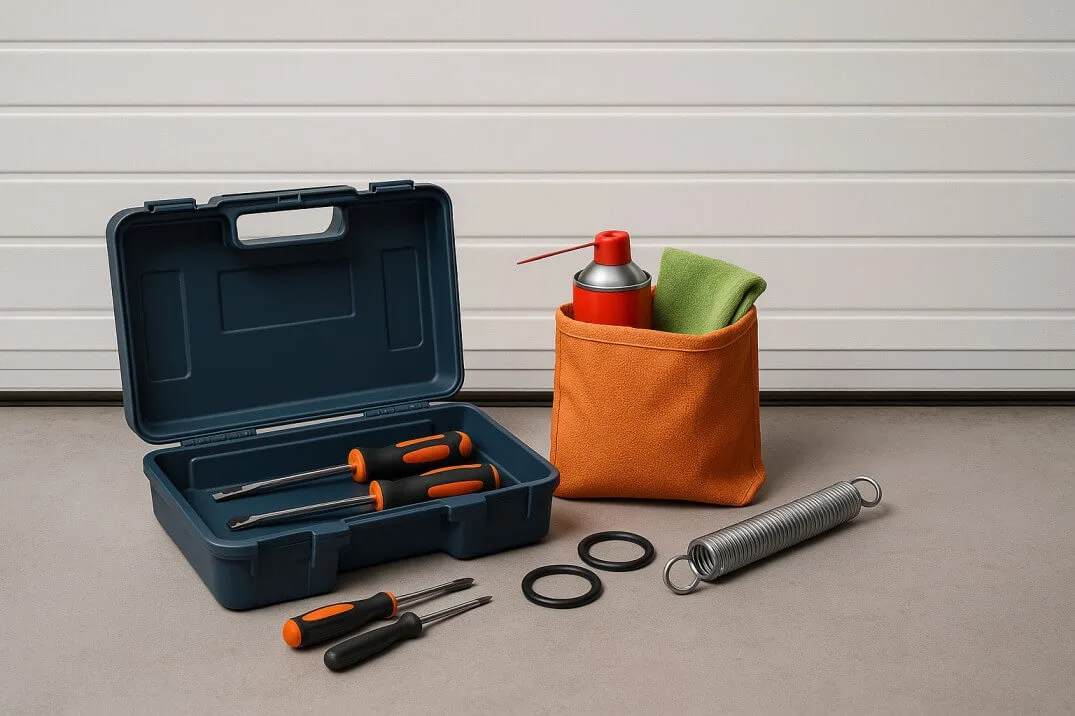
Introduction: Why NYC Homeowners Need a Winter Garage Door Kit
Winter in New York means salt, moisture, and below-freezing mornings — all tough on garage doors.
Metal parts contract, seals freeze to the floor, and road brine causes hidden corrosion.
Instead of calling for emergency garage door repair in Queens & Brooklyn mid-storm, prepare a simple Winter Garage Door Maintenance Kit.
It helps you handle quick fixes, prevent damage, and extend the life of your system safely and affordably.
1. Core Items for Your Winter Garage Door Kit
| Category | Recommended Item | Purpose |
|---|---|---|
| Lubrication | Cold-rated lithium or synthetic garage door spray | Keeps rollers, hinges, and springs moving freely below freezing. |
| Cleaning | pH-neutral salt remover or mild detergent | Neutralizes winter brine and stops rust. |
| Protection | Silicone-based seal conditioner | Prevents the bottom seal from sticking to frozen concrete. |
| Hardware | Spare hinge bolts, cotter pins, roller screws | For minor tightening or quick replacement. |
| Weatherproofing | Replacement bottom seal & side weatherstrip | Quick patch for air leaks or brittle rubber. |
| Tools | Adjustable wrench, flashlight, gloves | Safe handling of minor maintenance tasks. |
| Safety gear | Safety glasses, anti-slip stool | Prevent injury during overhead inspection. |
Store everything in a labeled plastic bin with a tight lid — moisture ruins metal tools quickly.
2. NYC Add-Ons for Harsh Winter Conditions
Because local roads use heavy salt and brine treatments, add a few extras:
Microfiber towels for wiping down tracks and panels after rinsing.
De-icing spray for the floor area only — never on springs or rollers.
Silica gel packs to prevent condensation inside the storage box.
A small space heater or heat gun for gentle thawing of seals (keep 6–8 inches away).
For brownstone and row-house garages, see
Weatherproofing for Brownstones & Row Houses.
3. 30-Minute Winter Maintenance Routine
Clean the door: rinse the bottom panels and tracks with warm water or salt remover.
Inspect cables and rollers: look for frays, rust, or grinding sounds.
Lubricate moving parts: one light burst per hinge, roller, and spring.
Treat seals: wipe a thin coat of silicone conditioner across the bottom rubber.
Tighten fasteners: use your wrench to snug up brackets and hinges.
Test manually: lift the door halfway — it should stay balanced and quiet.
If it feels heavy or uneven, stop and call a professional.
See Garage Door Safety Inspection in Long Island.
4. Store Your Kit the Smart Way
Keep it off the garage floor — salt water corrodes tools quickly.
Place it near an interior wall for stable temperature.
Replace lubricants yearly.
Add a calendar reminder every four weeks from November through March.
Need a full service instead of DIY? Schedule a
Garage Door Maintenance Tune-Up in Long Beach.
5. Expert Recommendations and E-E-A-T Support
At HO Garage Doors, our licensed technicians perform over a thousand winter service calls each year across NYC, Queens, Brooklyn, and Long Island.
This guide reflects real maintenance procedures and safety standards we apply in the field.
Every recommendation follows the same process we use in
Professional Garage Door Repair
and Emergency Service calls during cold weather.
6. When to Call a Technician
DIY maintenance helps with prevention, but some repairs require professional tools and safety training:
Frayed or bird-caged cables → Garage Door Broken Cable Replacement
Broken or fatigued springs → Garage Door Broken Spring Repair
Off-track movement or loud grinding → Garage Door Off-Track Repair
Repeated freezing or opener malfunctions → Electric Garage Opener Repair & Installation
7. Quick Checklist — Tape Inside Your Kit Lid
Lithium or synthetic lubricant
Silicone seal conditioner
Salt remover and microfiber cloth
Bottom seal and weatherstrip
Wrench and spare fasteners
Flashlight and gloves
Safety glasses
De-icing spray (floor only)
Checklist printout
FAQ
Q1: Can I use WD-40 as a garage door lubricant?
No. WD-40 is a cleaner and moisture displacer, not a long-term lubricant. Use a garage-rated lithium or synthetic spray designed for cold weather.
Q2: How often should I use my winter maintenance kit?
Perform a 30-minute check once a month from November through March, or after any major snow or salt event.
Q3: What’s the best temperature to apply lubricant?
Between 40°F and 60°F (4–15°C). If it’s colder, warm the can indoors before using it.
Q4: Can I thaw a frozen garage door with hot water?
Avoid it — hot water can refreeze into solid ice. Use a mild de-icer or a hairdryer on low heat instead.
Q5: Why schedule a professional inspection if I already maintain the door myself?
Technicians perform balance tests, spring tension checks, and electrical inspections that homeowners cannot safely do.
Book a yearly inspection here: Request a Service.
Call to Action
Your DIY kit keeps things running smoothly, but a professional tune-up ensures complete safety and long-term performance.
Schedule a 15-Point Winter Garage Door Inspection with our certified team today.
HO Garage Doors — Serving NYC, Queens, Brooklyn, Bronx & Long Island
Long Island: (516) 316-9880
Queens: (718) 224-8808
Brooklyn: (917) 361-4816
Bronx: (718) 224-8807
Emergency Services (24/7): (833) 464-2724
Request a Service Online
or visit our homepage: www.hogaragedoorrepair.com/