
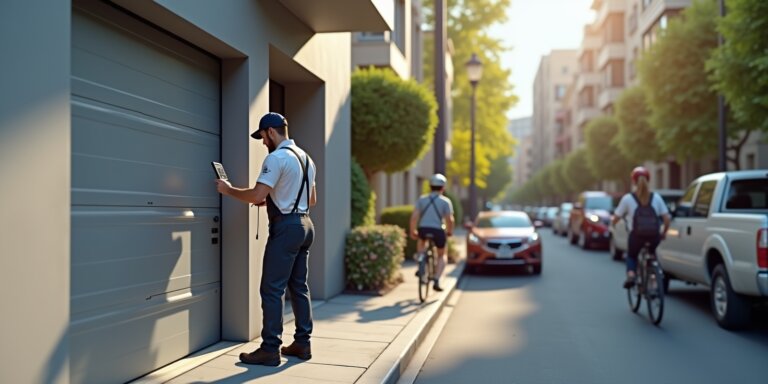
Your garage door opens onto a Brooklyn street where delivery trucks double-park, kids play stickball, and pedestrians cut through constantly. Or maybe you’re in Queens where the alley behind your garage sees more foot traffic than most sidewalks. This isn’t suburban America where garage doors face quiet cul-de-sacs. This is New York City, and your garage door operates in an environment where anything can happen.
I’ve worked on garage doors across NYC for years, and I can tell you that urban environments create safety challenges you won’t find anywhere else. The proximity to pedestrians, the constant traffic, the tight spaces, the old infrastructure—all of this means garage door safety tips for busy urban streets require a different approach than what you’ll find in generic maintenance guides.
A malfunctioning garage door in the city isn’t just inconvenient. When your door is 15 feet from a sidewalk where dozens of people pass hourly, when kids play right outside, when delivery people are constantly in and out—safety failures have immediate consequences. I’ve responded to too many calls where someone got hurt because safety features failed or weren’t properly maintained.
This guide covers practical garage door safety tips for busy urban streets based on real NYC conditions. We’re talking about strategies that work when your garage faces constant exposure to traffic, pedestrians, weather extremes, and the general chaos of city life. Some of this is basic maintenance everyone should do. Other tips address specific urban hazards most people don’t think about until something goes wrong.
Why Urban Garage Doors Face Unique Safety Challenges
Before diving into garage door safety tips for busy urban streets, let’s understand what makes urban environments particularly challenging for garage door safety.
Proximity to pedestrian traffic: In suburbs, garage doors typically face driveways with minimal foot traffic. In NYC, your door might be 10-15 feet from a public sidewalk. Every time you operate the door, pedestrians are nearby. Some are paying attention. Many aren’t—they’re on phones, wrangling kids, or just not looking.
This proximity means any safety system failure has immediate risk. A door that doesn’t auto-reverse when it should, sensors that don’t detect movement, a door that falls unexpectedly—these problems could injure a passerby who had no reason to think your garage door was a hazard.
Children in urban density: City kids play everywhere—stoops, sidewalks, alleys, and yes, near garage doors. Unlike suburban kids with yards, urban children use public spaces for play. Your garage door becomes part of that environment. Kids don’t understand the danger of automatic doors. They see moving objects and get curious.
According to the Consumer Product Safety Commission, thousands of garage door injuries happen annually, with children being disproportionately affected. The numbers are higher in urban areas where children have more exposure to garage doors in shared spaces.
Delivery and service vehicle chaos: NYC operates on deliveries. Amazon, FreshDirect, food delivery, contractors, postal service—your garage area sees constant commercial traffic. Delivery people are in a hurry, working under pressure, not always careful about obstacles. An operating garage door can easily be missed by someone focused on finding the right address or rushing to their next stop.
Tight spaces and blind spots: Urban garages often have limited approach visibility. Buildings, parked cars, walls, and fences create blind spots. You can’t always see who’s near your garage door before operating it. This makes functional safety sensors absolutely critical—they’re your electronic eyes when you can’t physically see the door’s path.
Old infrastructure: Many NYC garages are in buildings 50-100+ years old. Original garage doors and openers weren’t designed with modern safety standards. Even if doors have been replaced, mounting points, power supply, and structural supports might be antiquated. This can compromise the effectiveness of safety features.
Environmental stress: City pollution, road salt, constant vibration from traffic, temperature extremes in uninsulated garages—urban garage doors experience more stress than their suburban counterparts. Components wear faster. Safety features that rely on precise alignment (like photo-eye sensors) can drift out of position more quickly.
Multiple users and access: Urban properties often have multiple residents sharing garage access—apartment buildings, multi-family homes, or commercial spaces. More users means more opportunity for improper operation, more chance someone forgets to engage safety features, higher wear on components.
Understanding these unique challenges is essential for implementing effective garage door safety tips for busy urban streets. Your safety approach must account for factors that suburban homeowners never deal with.
Essential Safety Feature Check: What Your Door Must Have
The first step in garage door safety tips for busy urban streets is ensuring your door has properly functioning safety features. These aren’t optional in urban environments—they’re life-saving necessities.
Auto-reverse mechanism (mandatory):
Modern garage door openers are required by federal law to have auto-reverse capability. This works two ways:
Pressure sensors detect resistance when the door contacts an object. If the door hits something while closing, it should immediately reverse. This is your backup if other systems fail.
Photo-eye sensors create an invisible beam across the door opening about 6 inches off the ground. If anything breaks that beam while the door is closing, the door reverses instantly. These sensors have small LED indicator lights—both should be lit solid when aligned properly.
Testing auto-reverse monthly is critical: Place a 2×4 or similar object in the door’s path. Close the door. It should reverse immediately upon contact with the object. If it doesn’t—or if there’s any delay—your auto-reverse needs immediate professional adjustment. According to the International Door Association, regular testing of safety features prevents the majority of garage door accidents.
For photo-eye sensors: Wave your hand through the sensor beam while closing the door. It should reverse immediately. If sensors are dirty, misaligned, or damaged, they won’t work properly. This is especially important in urban environments where dirt, dust, and debris accumulate quickly.
Manual release mechanism:
Every automatic garage door needs a manual release—that red cord hanging from the opener trolley. This allows you to disconnect the opener and manually operate the door in emergencies (power outage, opener failure, etc.).
But here’s the urban safety consideration: that release cord can be accessed from outside if someone can reach it. Use a zip-tie through the release lever to prevent external fishing. You can still pull it in emergencies (the zip-tie will break), but casual tampering from outside won’t work.
Emergency stop/operate controls:
Your wall-mounted control should be positioned:
- At least 5 feet off the ground (out of children’s reach)
- Within sight of the door
- With a locking feature if children have access to the garage
Remote controls should be:
- Kept secure (not left in cars where they can be stolen)
- Disabled or removed when traveling
- Using rolling code technology (newer feature that prevents code copying)
Garage door edge sensors:
Some modern systems include additional edge sensors running along the bottom of the door. These provide extra detection capability beyond photo-eyes. If your door operates in a high-traffic urban area, consider this upgrade—it’s extra insurance against accidents.
Visual and audible alerts:
Urban garage doors benefit from:
- Warning lights or strobes that activate during operation
- Audible alarms that sound before door closes
- Motion-activated exterior lights that illuminate the door area
These warn nearby pedestrians that the door is operating, giving them time to move clear.
Secondary safety: Physical barriers
For urban garages opening directly onto sidewalks or heavily trafficked areas, consider:
- Painted safety zones on the ground marking door swing area
- Reflective tape on door edges for visibility
- Bollards or planters that prevent pedestrians from standing in the door path
- Signage warning “Automatic Door – Stand Clear”
These passive safety measures supplement active safety systems. If a sensor fails, physical barriers provide additional protection.
Red flags requiring immediate attention:
- Door doesn’t reverse when it contacts object
- Sensors constantly flashing or misaligned
- Door reverses randomly for no apparent reason (could indicate sensor issues)
- Unusual noises during operation
- Door operates without pressing controls (serious security and safety issue)
- Visible damage to sensors, cables, or hardware
Don’t operate your door if any safety feature isn’t working properly. In urban environments where pedestrian exposure is constant, operating a garage door with failed safety systems is asking for tragedy.
For professional safety inspection and repair, licensed technicians can verify all systems are functioning correctly and meet current safety standards.
Monthly Safety Inspection Routine for Urban Doors
Regular inspection is one of the most important garage door safety tips for busy urban streets. Urban conditions accelerate wear, so monthly checks catch problems before they become hazards.
Visual inspection (5 minutes):
Check the door’s balance. Disconnect the opener by pulling the manual release. Lift the door manually to waist height and let go. A properly balanced door stays in place or drifts slightly. If it drops quickly or shoots up, spring tension is off. This creates dangerous operating conditions where the opener strains and safety features may not function correctly.
Inspect cables. Look for fraying, rust, or damage. Cables under tension can snap without warning. If you see any wear, call a professional immediately—never attempt cable work yourself.
Examine rollers and tracks. Rollers should roll smoothly in tracks without binding or wobbling. Tracks should be firmly mounted and parallel. Loose tracks allow the door to shift during operation, potentially causing binding or dangerous sudden stops.
Check weatherstripping and seals. Beyond keeping out weather, intact seals prevent objects from sliding under the closing door. Replace any torn or missing seals.
Look for rust and corrosion. Urban environments—especially coastal areas and places with road salt—accelerate metal corrosion. Rust weakens components and can cause sudden failure. Address rust spots immediately.
Test operation (3 minutes):
Remote operation test. From your car, well clear of the door, operate it with remote. Door should move smoothly without jerking, hesitation, or unusual sounds.
Wall control test. Operate from wall button while watching the door. Any binding, uneven movement, or strange noises need investigation.
Emergency stop test. Press the wall button again while door is moving. It should stop immediately. If there’s delay or it continues moving, the stop function needs repair.
Safety feature testing (5 minutes):
Photo-eye sensor test. Start closing door, then wave hand through sensor beam. Door should reverse immediately. If there’s any delay or if door doesn’t reverse, sensors need realignment or replacement.
Pressure sensor test. Place 2×4 on ground in door path. Close door onto board. Door should reverse upon contact. If it doesn’t, or if it pushes the board before reversing, pressure sensor needs adjustment.
Force setting test. Door should operate smoothly without excessive force. If opener strains or door moves sluggishly, force settings may be off or mechanical resistance has developed.
Audio check (2 minutes):
Listen to operational sounds. You should hear:
- Smooth motor operation without grinding or laboring
- Rollers moving through tracks without squeaking (light squeaking is normal, loud grinding isn’t)
- Even spring tension without popping or snapping sounds
New sounds or changes in sound patterns indicate developing problems. Address these early.
Hardware check (3 minutes):
Tighten all accessible hardware. Vibration from operation and urban traffic loosens bolts and screws. Check:
- Hinge bolts
- Track mounting brackets
- Roller brackets
- Opener mounting hardware
Don’t overtighten—snug is good, stripped threads are bad.
Documentation:
Keep a simple log: date, what you checked, anything unusual noted, any maintenance performed. This record helps you notice patterns and provides documentation if warranty issues arise.
When to call professionals:
- Any safety feature not functioning correctly
- Balance issues (spring-related)
- Cable wear or damage
- Unusual sounds you can’t identify
- Door binding or operating unevenly
- Anything you’re uncomfortable checking yourself
The 15-20 minutes monthly for this inspection routine is cheap insurance. In busy urban environments, preventing safety failures isn’t just about protecting property—it’s about protecting people who live and work around your garage door daily.
Child and Pet Safety in Urban Garage Environments
Urban children and pets face unique garage door risks. Implementing specific garage door safety tips for busy urban streets means addressing these vulnerable populations directly.
Why urban kids face more risk:
City kids play in shared spaces—alleys, driveways, sidewalks near garages. Unlike suburban kids with fenced yards, urban children have less defined “safe” play areas. Your garage door becomes part of their environment whether you want it to or not.
Education is the foundation:
Teach children (and remind them constantly):
- Never play near garage doors
- Never run under moving doors
- Never touch garage door controls
- Never hang on doors or ride them
- Alert adults immediately if they see other kids near garage doors
This isn’t one-time teaching. Urban children encounter garage doors constantly, so safety messages need regular reinforcement.
Physical safety measures:
Wall control placement. Mount at least 5 feet high, within sight of the door but not accessible to children. Use controls with lockout features that require key or combination to operate.
Remote security. Keep remotes:
- In secure locations, never within children’s reach
- Out of vehicles where kids might access them
- Password-protected if using smartphone controls
Kids are clever—they’ll find remotes if you leave them accessible.
Sensor verification. With urban foot traffic including children, verify sensors work perfectly. Test at child height—place an object 3 feet high in the door path and verify the door reverses.
Visual warnings. Consider:
- Flashing lights that activate during operation
- Audible alarms (beeping before door moves)
- Painted zones marking “stay clear” areas
- Reflective tape on door edges for visibility
These warn children the door is operating even if they’re not paying attention.
Pet safety considerations:
Urban pets face garage door risks too. Dogs and cats dart unexpectedly. They don’t understand door operation.
Protection strategies:
Never operate door if pets are loose in garage area. Period. Ensure pets are secured before operating door.
Install additional sensors. Photo-eyes catch larger objects, but small pets might slip through. Additional edge sensors or motion detectors provide extra protection.
Create pet barriers. Use gates or barriers to keep pets away from door operation areas when garage is in use.
Slow closing speed. Adjust opener settings for slower door operation if pets regularly access garage. This gives more time for pets (and people) to clear the area.
Neighborhood children considerations:
In dense urban areas, neighborhood kids may play near your garage even when your children aren’t involved.
Additional precautions:
Clear sightlines. Before operating door, visually verify no children are nearby. Check both directions on the street.
Predictable schedule. Operating your door at consistent times helps neighborhood parents and kids anticipate when the door might be active.
Community awareness. Talk to neighbors with children about garage door safety. Collective awareness protects everyone’s kids.
Physical barriers. Planters, bollards, or other obstacles that keep children away from the immediate door area without being unfriendly barriers.
Teaching moments:
When you see children near your garage, take a moment to explain safety. Most kids respond well to gentle education from adults in their community. A 30-second conversation could prevent injury.
Signs of kids playing near garage:
- Toys or play equipment near door area
- Chalk drawings in door zone
- Scuff marks at child height on door
- Children you see regularly in the area
These indicate children consider your garage area part of their play space. Extra vigilance needed.
Emergency preparedness:
Know pediatric first aid. Keep emergency numbers accessible. In urban areas, ambulance response is usually fast, but knowing what to do immediately after injury matters.
Have a plan: If a child is injured by your garage door, do you know exactly what to do in the first critical minutes?
Child and pet safety around garage doors in urban environments requires constant awareness. The density of city life means your garage door affects more than just your household—implementing these garage door safety tips for busy urban streets protects the entire community around you.
Smart Technology for Enhanced Urban Garage Door Safety
Modern technology provides additional layers of safety particularly valuable in urban environments. These garage door safety tips for busy urban streets incorporate smart features that address specific city challenges.
Smart opener capabilities:
Smartphone control and monitoring. Modern openers with WiFi connectivity let you:
- Check if door is open or closed from anywhere
- Receive alerts when door operates
- Close door remotely if left open
- Review operation history (when door opened/closed)
For urban residents who often leave home during busy morning rushes, remote monitoring ensures you didn’t accidentally leave your garage exposed. You can check and close your door from work or while traveling.
Integration with home security systems. Connected garage doors integrate with:
- Security cameras (automatic recording when door operates)
- Motion sensors (alerts if movement detected in garage)
- Smart lighting (automatic illumination during operation)
- Home automation systems (coordinated actions—lights on when door opens, etc.)
This integration creates comprehensive awareness of garage activity.
Geofencing capability. Advanced systems detect your phone’s location:
- Auto-open door when you arrive home
- Send alert if door left open when you leave
- Close door automatically after you depart
This prevents the common urban problem of forgetting to close garage in morning chaos.
Camera systems:
Interior cameras monitor:
- Who accesses garage
- What’s stored in garage
- Any unusual activity
Exterior cameras provide:
- Record of vehicles/people near door during operation
- Evidence if accidents occur
- Deterrent against vandalism or break-in attempts
Position cameras to capture:
- Door operation zone
- Approach areas (sidewalk, alley, street)
- Control access points
Battery backup systems:
Urban areas experience power outages from:
- Summer storms
- Infrastructure failures
- Transformer issues in old neighborhoods
Battery backup ensures:
- Door remains operable during outages
- Safety features stay functional
- Remote monitoring continues working
For security and safety, maintaining door operation during power failures matters in urban environments where increased foot traffic during outages creates additional risk.
Advanced sensor systems:
Laser sensors provide more precise detection than photo-eyes:
- Create detailed scan of door path
- Detect smaller objects
- Less affected by dirt or misalignment
- Provide redundant safety beyond standard sensors
Radar or ultrasonic sensors detect motion and proximity:
- Sense movement near door
- Can trigger warnings before door operates
- Provide coverage beyond photo-eye beam
Pressure-sensitive edges run along door bottom:
- Detect any contact along entire door edge
- Supplement photo-eye protection
- Provide last-line safety if other sensors fail
Smart lighting features:
Motion-activated lights that:
- Illuminate door area when motion detected
- Deter prowlers
- Help you see obstacles before operating door
- Warn pedestrians that someone is accessing garage
Synchronized lighting that:
- Turns on automatically when door operates
- Different colors for opening vs closing
- Flashes during operation for attention
- Times-out after door closes
Alert and notification systems:
Set up notifications for:
- Door left open beyond set time
- Door operated outside normal hours
- Multiple operations in short period (unusual activity)
- Safety sensor triggered
- Attempt to operate door when disabled
These alerts provide real-time awareness of garage door activity especially valuable when you’re away from home.
Access control features:
Temporary access codes allow:
- Delivery people one-time access
- Service providers scheduled entry
- Guest parking without permanent access
- Codes that expire automatically
Activity logging tracks:
- Which code/device accessed door
- Time of access
- How long door remained open
This is particularly valuable in urban settings where multiple people might need occasional garage access.
Voice control integration:
Integration with Alexa, Google Assistant, or Siri:
- “Alexa, close the garage door”
- “Hey Google, is the garage door open?”
- Voice alerts when door opens/closes
Hands-free operation is convenient but ensure voice commands require authentication to prevent unauthorized access.
Upgrade considerations:
Not all smart features work with all opener systems. Before purchasing:
- Verify compatibility with your existing opener
- Understand installation requirements
- Consider whether features address your specific needs
- Calculate ongoing costs (subscriptions, battery replacement, etc.)
For professional smart system installation and integration, experienced technicians ensure features work correctly and safely with your existing garage door system.
Smart technology doesn’t replace basic safety features and maintenance—it enhances them. The combination of traditional safety systems and modern smart features provides comprehensive protection particularly valuable in the complex environment of busy urban streets.
Weather and Environmental Hazards in NYC
Urban weather creates specific safety challenges. These garage door safety tips for busy urban streets address environmental conditions that affect door operation and safety.
Winter ice and snow:
Ice formation creates multiple hazards:
- Door bottom freezes to ground (creates stress when door tries to open)
- Tracks fill with ice (door binds or derails)
- Sensors coated with ice (safety features fail)
- Opener strains against ice (motor damage, broken parts)
Prevention:
- Clear snow away from door immediately after storms
- Apply ice melt around door perimeter
- Never force frozen door open—warm it first or clear ice manually
- Ensure sensors are clear and dry before operation
- Check weatherstripping—worn seals let water under door where it freezes
Snow loading: Heavy snow against door creates pressure. If door is open during snow, accumulated weight can prevent closing or damage tracks. Close door before heavy snow when possible.
Summer heat extremes:
NYC summers bring high heat and humidity creating issues:
Metal expansion: Door panels, tracks, and hardware expand in extreme heat. This can cause:
- Binding in tracks
- Warped panels
- Hardware loosening
- Sensor misalignment
Check door operation during hottest part of day. If binding occurs, professional adjustment of track spacing or spring tension may be needed.
Humidity and rust: Coastal areas and humid NYC summers accelerate rust formation. Rust compromises:
- Spring integrity (dangerous—springs can snap)
- Cable strength
- Track smooth operation
- Hardware hold
Combat humidity through:
- Regular lubrication
- Rust treatment on first signs
- Dehumidification in garage if possible
- More frequent inspection during humid months
Storm preparation:
High winds can:
- Blow debris against door (damaging sensors or panels)
- Push door open if not secured
- Damage door if it’s open during gusts
Before storms:
- Close and secure door
- Disconnect opener if extended power outage expected
- Clear area around door of objects wind might blow
- Verify manual operation works (in case you need it during outage)
Heavy rain and flooding: Urban drainage is imperfect. Heavy rain can cause:
- Water pooling against door
- Basement garage flooding
- Electrical system water exposure
Flood protection:
- Ensure garage floor drains properly
- Install water barriers for basement garages
- Never operate electric opener if water is present (electrocution risk)
- Keep door closed during heavy rain unless flooding necessitates opening
Salt and corrosion:
NYC winters mean road salt. Salt accelerates corrosion of:
- Metal door panels
- Springs
- Cables
- Tracks
- All hardware
Protection strategies:
- Rinse door with fresh water monthly in winter
- Apply protective lubricant more frequently
- Inspect hardware for corrosion weekly during winter
- Replace corroded parts promptly—don’t wait
Urban pollution effects:
City air carries:
- Particulates that gum up mechanisms
- Chemicals that degrade seals and weatherstripping
- Soot that coats sensors
Protection:
- More frequent cleaning of sensors
- Regular track cleaning
- Protective coatings on metal parts
- Earlier replacement of weatherstripping (city conditions degrade it faster)
Temperature cycling stress:
NYC’s temperature swings (potentially 100+ degrees between winter lows and summer highs) create expansion-contraction cycling that:
- Loosens hardware
- Fatigues metal
- Degrades lubricants
- Affects electronic components
Account for this through:
- More frequent hardware checks
- Use all-weather lubricants
- Annual professional inspection to catch wear before failure
Emergency weather protocols:
Before severe weather:
- Verify manual operation works
- Test safety features
- Clear door area
- Have emergency contact information accessible
During severe weather:
- Avoid operating door if possible
- Never operate if conditions make visibility poor
- Keep people away from door area during operation
After severe weather:
- Inspect for damage before operation
- Clear debris from tracks and sensors
- Test all safety features
- Look for water intrusion or ice formation
Urban weather is unpredictable and often severe. Building weather-response protocols into your garage door safety routine protects both the door system and anyone around it during adverse conditions.
When to Call Professionals: Safety Issues That Need Experts
Some garage door problems go beyond DIY maintenance. Knowing when to call professionals is critical garage door safety tips for busy urban streets.
Never DIY these issues:
Spring repair or replacement. Garage door springs are under hundreds of pounds of tension. When they break, they can cause severe injury or death. Signs springs need attention:
- Door feels extremely heavy when lifting manually
- Door opens very slowly or not at all
- Visible gaps in spring coil
- Loud bang heard recently (sound of spring snapping)
Never attempt spring work yourself. Call licensed professionals immediately.
Cable repair. Cables are under tension and frayed cables can snap unexpectedly. Cable work requires special tools and knowledge. Don’t attempt cable replacement or repair.
Track realignment. While you can clean tracks, realigning them properly requires precision tools and understanding of how door weight distributes. Incorrect realignment creates dangerous binding.
Opener motor issues. Unless you’re qualified electrician, opener motor work should be done by professionals. Internal components are under warranty only if serviced correctly.
Safety feature installation or adjustment. While you can test safety features, installing new sensors or adjusting pressure settings requires technical knowledge. Improper adjustment could disable safety features completely.
Signs you need immediate professional service:
Door won’t open at all. Could be spring failure, opener malfunction, or serious binding. Don’t force it—call professionals.
Door opens partially then stops or reverses for no apparent reason. Could be sensor issues, track problems, or spring tension issues. Needs diagnosis.
Unusual sounds—grinding, scraping, squealing. While some sounds are normal wear, new or loud sounds indicate problems developing that need professional assessment.
Visible damage to springs, cables, or structural components. Don’t operate door until professional evaluates safety.
Safety features not working. If auto-reverse doesn’t work, if sensors are constantly misaligned, if door doesn’t stop when commanded—these are safety failures requiring immediate professional attention.
Door off track. This is both immediate safety issue and indicator of underlying problems. Never operate off-track door and don’t attempt to force it back on track.
Choosing professional service in NYC:
Look for providers who:
- Are licensed, bonded, and insured
- Offer emergency service (safety failures don’t wait for business hours)
- Guarantee parts and labor
- Have experience with urban installations
- Understand NYC building codes and requirements
- Provide same-day service for urgent safety issues
For comprehensive professional service, licensed NYC garage door technicians understand unique urban challenges and can address safety issues quickly.
Preventive professional service:
Beyond emergency repairs, schedule professional service:
- Annually minimum for complete safety inspection and tune-up
- After any storm or impact damage
- Before winter to ensure safe operation in harsh conditions
- When moving into new property to verify previous owner maintained safety features
Professional inspections catch problems you’ll miss. Technicians have tools to measure spring tension, test electrical systems, verify sensor precision, and check components not accessible to homeowners.
Emergency preparedness:
Have professional service contact information readily available:
- Program into phone
- Post in garage
- Share with family members
In urban environments where garage doors see heavy use and face constant exposure, immediate response to safety failures matters.
The cost of professional service vs risk of DIY:
Professional service costs seem expensive until you consider:
- Injury from spring failure: medical costs, pain, recovery time
- Damage from failed DIY repair: door replacement, property damage
- Liability if your garage door injures someone due to improper repair
- Time and frustration of failed DIY attempts
For safety-critical components, professional service is the only responsible choice. In busy urban environments where your garage door affects numerous people daily, that responsibility matters even more.
Bottom Line: Urban Garage Door Safety
After covering all these garage door safety tips for busy urban streets, here’s what matters most:
Safety features must function perfectly. In urban environments, you can’t accept “mostly working” safety systems. Test monthly, repair immediately, never operate with failed safety features.
Regular maintenance prevents safety failures. Monthly inspections, quarterly service, annual professional assessment—this routine catches problems before they become dangers.
Urban conditions require extra vigilance. Pedestrian proximity, children playing nearby, weather extremes, environmental stress—NYC garage doors face challenges suburban doors never see. Your safety approach must account for these.
Technology enhances but doesn’t replace basic safety. Smart features provide valuable monitoring and control, but they supplement—not substitute for—fundamental safety systems and maintenance.
Know your limits with repairs. Spring work, cable repairs, major adjustments—these require professionals. Attempting DIY on safety-critical components risks injury and liability.
Teach safety to everyone in your household. Children, guests, service people—everyone who might be near your garage door needs to understand basic safety practices.
Environmental awareness matters. Before operating door, quickly assess: weather conditions, pedestrian traffic, obstacles, unusual circumstances. Two seconds of awareness prevents accidents.
Have professional relationships established before emergencies. Know who you’ll call for emergency service. Have contact information accessible. Don’t wait until door fails to search for qualified technicians.
Start with safety feature verification. Right now, go test your auto-reverse. Test your sensors. If anything doesn’t work perfectly, get it fixed before using the door again.
Then establish monthly inspection routine. Put it on your calendar. Make it non-negotiable. Fifteen minutes monthly prevents accidents.
Finally, educate your household and create emergency protocols. Everyone should know what to do if door fails, how to operate manually, when to call for help.
Your garage door in urban NYC isn’t like garage doors elsewhere. The density, the traffic, the exposure to pedestrians and children—this creates unique safety responsibilities. Taking them seriously isn’t paranoia. It’s being a responsible member of an urban community where your property affects everyone around you.