
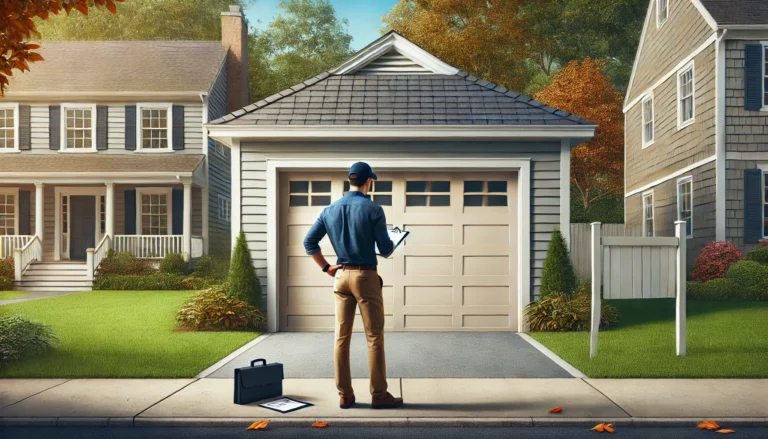
Choosing whether to repair or replace your garage door is not just a cost question. It determines safety, long-term reliability, and in areas like Long Island, Queens, Brooklyn, and the Bronx — it often reflects the local environment. High daily usage, coastal humidity, and tight urban driveways accelerate wear on doors and hardware, making this decision particularly relevant. Many homeowners first turn to garage door repair in Queens and Brooklyn to evaluate the situation before committing to either path.
Step 1 — Evaluate the Age and Overall Condition
Age remains the strongest indicator of whether a repair will hold up. Doors under ten years old, especially if regularly maintained, are usually excellent candidates for repair. Systems older than fifteen years, especially those showing rust, panel fatigue, or misalignment, tend to develop problems in clusters. Even if one component fails today, others may follow soon. This is particularly true in coastal zones of Long Island where humidity and salt accelerate metal corrosion.
Maintenance history matters just as much as physical age. Homeowners who rely on scheduled garage door maintenance programs typically extend the life of their system by years. If a door is older, already repaired multiple times, or visibly deteriorating, replacement becomes the more cost-effective and safer option. In such situations, browsing options for new garage door installation in NY is a logical next step.
Step 2 — Look Closely at Damage and Structural Integrity
Not all damage is the same. Cosmetic dents, surface rust, and loose hardware can typically be corrected quickly. A single damaged panel can often be replaced if the manufacturer still supports that model. Similarly, issues like worn rollers or malfunctioning sensors are straightforward to address through targeted services such as roller replacement or sensor repair.
More severe issues point in the opposite direction. Multiple bent panels, significant corrosion on the tracks or torsion bar, or a door that no longer stays aligned in its frame indicate structural fatigue. When damage affects the frame or when the door has already required extensive repairs, it becomes more economical and safer to replace it entirely. Door derailments — a common issue in older systems — often require off-track repair, but if the door is already past its prime, replacement may be the more reliable solution.
Step 3 — Evaluate Safety and Daily Reliability
Doors can appear intact while critical components are failing. Springs showing gaps, frayed cables, or an opener straining under load are all warning signs that the system may no longer be safe. The good news is that many of these issues are repairable. Spring replacement, cable repairs, and opener servicing are standard procedures handled through spring repair and cable replacement services.
The turning point comes when these problems begin happening frequently, especially within an eighteen-month window. Frequent failures suggest the system is in decline. Older doors also lack modern safety features, such as advanced photo-eye sensors or rolling code technology for openers, which have become standard. When reliability and safety repeatedly become concerns, most homeowners transition from ongoing repairs to planning a full replacement supported by a professional safety inspection.
Step 4 — Compare Financial Logic: Short-Term vs Long-Term Value
In NYC and Long Island, repair pricing typically aligns with predictable ranges. Minor fixes cost a small fraction of a new door, while larger repairs — such as multi-panel replacements or opener replacements — quickly reach a point where investing further no longer makes sense. A practical benchmark used in the industry is simple: if a repair approaches half the cost of a new door and the existing one is already a decade or more old, replacement almost always yields better long-term value.
Replacing a door also allows homeowners to modernize insulation, improve noise control, and upgrade security. Insulated doors with higher R-values deliver measurable improvements in comfort and energy efficiency, especially for attached garages. Many homeowners use this opportunity to combine the new door with an updated opener through opener replacement services.
Step 5 — Think About Comfort, Performance, and Modern Features
New garage doors offer considerable advantages over older models. Smart openers, quieter operation, improved insulation, and sleeker designs all make daily use more comfortable. In dense areas like Queens and Brooklyn, noise reduction alone is often a compelling reason to upgrade. Meanwhile, attached garages in Long Island benefit from the enhanced climate control modern insulated doors provide. When a door is already aging or unreliable, these added benefits often tip the decision toward replacement.
Step 6 — Consider the Visual Impact and Property Value
Garage doors dominate the façade of many NYC-area homes. A modern, attractive door can dramatically improve curb appeal and resale value. Real estate professionals consistently note that updated garage doors help homes sell faster and signal proper maintenance. For homeowners exploring style options or considering a facelift, browsing available door types can help narrow the choice.
Step 7 — Know When Professional Help Is Necessary
Homeowners can handle simple tasks like lubrication or basic visual checks. However, anything involving springs, cables, or track realignment requires professional tools and training. Improper handling of high-tension components is one of the most common causes of garage door injuries.
Reputable technicians provide a full-system evaluation, explain the findings clearly, and outline both repair and replacement options. Companies offering complete garage door services typically perform multi-point inspections to prevent oversight and ensure safety.
Avoiding Dishonest Contractors
Some homeowners encounter pressure tactics or unclear pricing in this industry. Warning signs include urgency claims such as “replace immediately,” inflated repair quotes, vague explanations, and refusal to provide a written estimate. Trustworthy companies present transparent pricing, itemized breakdowns, and multiple options, and they maintain a consistent reputation backed by real customer feedback, such as the HO Garage Door Repair testimonials page.
Local Support in Long Island, Queens, Brooklyn, and the Bronx
If you're uncertain after reviewing the guidance above, scheduling a professional evaluation is the most reliable way to make the correct decision. You can request service through our online form or call directly:
Long Island: (516) 316-9880
Queens: (718) 224-8808
Brooklyn: (917) 361-4816
Bronx: (718) 224-8807
Emergency 24/7: (833) 464-2724
Technicians familiar with local climate and urban driveway conditions can quickly determine whether repair or replacement is the smarter investment for your specific home.
FAQ: Garage Door Repair vs Replacement
How do I know if my garage door needs to be replaced instead of repaired?
Replacement is usually recommended when the door has multiple damaged panels, widespread corrosion, repeated malfunctions, or is more than 15–20 years old. If repair costs approach 40–50% of the price of a new door, replacement typically offers better long-term value.
Is it worth repairing a 20-year-old garage door?
Most 20-year-old doors suffer from fatigue, outdated safety features, and discontinued parts. In these cases, replacement is usually the safer and more cost-effective option because repairs often lead to ongoing issues.
What are the signs that a garage door is beyond repair?
Severe misalignment, structural damage to the frame, multiple bent or buckled panels, corroded tracks or springs, and persistent operational failures typically indicate that the door is no longer a good candidate for repair.
Can I keep my current opener if I replace the garage door?
Yes, if the opener is under ten years old and compatible with the new door’s weight and size. Older units, especially pre-2005 models, may lack modern safety features and are often upgraded at the same time as the door.
How long do garage doors last in NYC and Long Island?
With regular maintenance, most doors last 15–20 years. Coastal areas like Long Island often see earlier wear due to humidity and salt exposure, while high-traffic garages in NYC neighborhoods may require replacement sooner due to mechanical fatigue.
Is it safe to keep using a damaged garage door?
If springs, cables, or safety sensors are compromised, the door can fall unexpectedly and cause serious injury. Only cosmetic issues should be ignored temporarily. All mechanical or safety-related problems require immediate attention.
Does replacing a garage door improve home value?
Yes. Garage door replacement consistently delivers one of the highest returns on investment, improves curb appeal, enhances security, and is often noticeable to buyers in competitive NYC and Long Island markets.
How do I decide between repair and replacement?
Repairs are practical for newer doors with isolated issues. Replacement is usually the better choice for older systems, repeated failures, structural damage, or when repair costs become excessive relative to a new door.
Who should I call in an emergency?
For urgent situations such as a broken spring or a door that won’t close, call the 24/7 emergency line at (833) 464-2724. For non-emergency service, contact your local office in Long Island, Queens, Brooklyn, or the Bronx.
Can a professional inspection help me decide?
Yes. A full system inspection evaluates springs, cables, rollers, sensors, tracks, the opener, and structural components. Technicians provide an objective recommendation and cost comparison to help you choose the best option.
Summary
Repairs make sense when the door is relatively young, the issue is isolated, and the rest of the system shows no signs of decline. Replacement becomes the better choice when the door is older, has recurring failures, or shows structural deterioration. The best path forward depends on the condition of your door today and your long-term priorities for safety, comfort, and property value.