
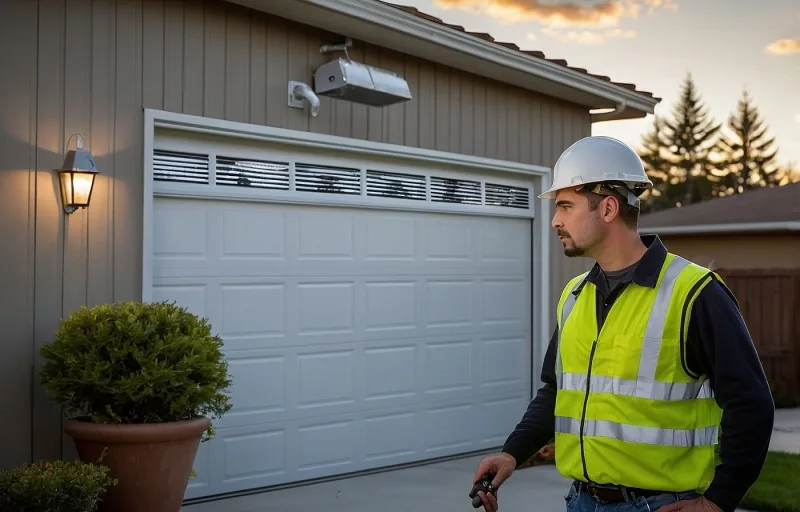
Your garage door just made that scraping sound again. You know the one—metal grinding against metal as the door struggles to open. Maybe it’s getting stuck halfway, or you’ve noticed the door sitting crooked when it’s closed. Chances are, your tracks are taking a beating.
After working on garage doors across NYC for years, I can tell you that track damage is one of the most preventable problems homeowners face. Yet it’s also one of the most ignored until the door won’t move at all. The thing is, learning how to prevent garage door track damage isn’t complicated or expensive. It just requires understanding what causes tracks to fail and staying ahead of the problem.
This guide covers practical strategies to prevent garage door track damage using techniques that actually work in real-world conditions. We’re talking about NYC garages where salt, moisture, and daily use create the perfect storm for track problems. Some of this maintenance you can handle yourself. Other issues need professional attention, and I’ll be straight about which is which.
Why Garage Door Tracks Get Damaged
Before we get into how to prevent garage door track damage, let’s understand what’s actually happening when tracks fail. Tracks don’t just randomly bend or break—they deteriorate through specific mechanisms.
Misalignment from settling. Your house settles over time. Even minor foundation movement can pull tracks out of alignment. When tracks aren’t parallel and properly spaced, the rollers bind and put lateral stress on the tracks. This gradually bends them.
Impact damage. Someone backs into the door, a ladder falls against it, or kids are playing too close. Direct impact to the door transfers force to the tracks, bending or denting them. Even minor dents create binding points that accelerate wear.
Rust and corrosion. This is huge in NYC. Road salt in winter, coastal humidity, water seeping in from outside—all create conditions where tracks rust. Rust weakens the metal and creates rough surfaces that damage rollers and create friction.
Debris accumulation. Dirt, dust, leaves, and grime build up in the track channel. This forces rollers to ride over debris instead of smooth metal. Over time, debris either jams the system or causes rollers to wear grooves into the tracks.
Loose mounting hardware. The brackets holding tracks to the wall work loose from vibration. Loose tracks shift position, causing misalignment and allowing the door to stress the tracks in ways they weren’t designed for.
Wrong roller type or worn rollers. Cheap steel rollers or worn-out rollers with damaged bearings don’t roll smoothly. They drag through tracks, creating friction and heat that damages both components. This is especially problematic when you’re trying to prevent garage door track damage long-term.
Excessive force from the opener. If your opener’s force settings are too high, it pushes or pulls harder than necessary. This creates unnecessary stress on tracks, especially at the curves where vertical tracks transition to horizontal.
Understanding these causes is the foundation for learning how to prevent garage door track damage effectively. Now let’s get into what you actually do about it.
Monthly Visual Inspections Prevent Track Damage
The simplest way to prevent garage door track damage is catching problems early. A monthly five-minute inspection spots issues before they become expensive repairs.
What to look for during inspection:
Start with the door closed. Look at both vertical tracks to verify they’re parallel and plumb. If one side looks off, you’ve got alignment issues developing.
Check for visible damage—dents, bends, or warping in the track metal. Even small deformations can cause binding as rollers pass over them.
Look for rust. Surface rust is manageable, but if you see flaking or pitting where rust has eaten into the metal, that track section is compromised. According to the International Door Association, rust is the leading cause of track failure in coastal and winter climates.
Inspect mounting brackets. Make sure bolts are tight and brackets aren’t pulling away from the wall. Loose brackets let tracks shift, which accelerates misalignment.
With the door closed, look at the gap between the door and tracks. It should be consistent top to bottom. Inconsistent gaps indicate misalignment or door balance issues that are stressing the tracks.
Test operation while watching the tracks:
Open and close the door slowly using the wall button. Watch the rollers as they move through the tracks. They should roll smoothly without binding, jumping, or making scraping sounds.
If you see rollers hesitate, jump, or the door shudders during operation, something’s wrong. This could be debris in tracks, damaged rollers, or track alignment issues—all of which accelerate damage if not addressed.
Listen for unusual sounds. Grinding, scraping, or squealing indicates metal-on-metal contact somewhere. That friction is wearing down components and will lead to failure.
Why monthly inspections matter:
Track damage develops gradually. Catching a small misalignment or minor rust spot now prevents a bent track or complete door failure later. Five minutes of inspection monthly saves hundreds in repair costs and the inconvenience of a non-functional door.
This is your first line of defense to prevent garage door track damage effectively.
How to Prevent Garage Door Track Damage Through Proper Cleaning
Keeping tracks clean sounds obvious, but most people either skip this entirely or do it wrong. Proper track cleaning is critical to prevent garage door track damage from debris buildup and corrosion.
The right cleaning technique:
Start with the door closed for safety and easier access to the full track length.
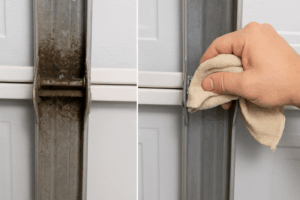
Use a damp cloth or sponge to wipe down the inside of both tracks. You’re removing dirt, dust, spider webs, and any other crud that’s accumulated. Pay special attention to the curves where vertical tracks transition to horizontal—debris loves to collect there.
For stubborn buildup, use a mild household cleaner or degreaser. Spray it on a cloth rather than directly into the track (you don’t want cleaner dripping into wall cavities). Scrub any stuck-on grime.
For heavy rust or corrosion, you might need a wire brush to remove loose rust. Be gentle—you’re removing corrosion, not grinding away good metal. After wire brushing, wipe the area clean.
Critical step most people skip: Dry the tracks thoroughly after cleaning. Leaving moisture in tracks promotes rust formation. Use a dry cloth to remove all moisture before operating the door.
How often to clean:
Minimum quarterly. That’s every three months—mark it on your calendar.
More frequently if you’re in a dusty area, near construction, or if you keep your garage door open regularly (which lets in more debris).
After winter, always do a thorough cleaning. Road salt and winter grime are particularly damaging to tracks.
Why cleaning prevents track damage:
Debris acts like sandpaper between rollers and tracks. Every time the door operates, that debris grinds away at the metal. Over time, this wears grooves into tracks. Grooved tracks don’t guide rollers properly, leading to binding and additional stress.
Dirt also traps moisture against metal surfaces, accelerating rust formation. Clean tracks dry faster and resist corrosion better.
This simple maintenance task is one of the most effective ways to prevent garage door track damage over the long term.
Lubrication Strategy to Prevent Track Damage
Proper lubrication reduces friction between rollers and tracks, preventing wear and helping everything operate smoothly. But here’s where many people mess up—they either don’t lubricate at all, or they use the wrong products.
What to use:
You want a light coating of proper garage door lubricant. Silicone-based spray works well. Some manufacturers make track-specific lubricants.
What NOT to use: WD-40 (it’s a solvent, not a lubricant and will attract dirt), regular grease (too thick and attracts grime), motor oil (same problem).
How to lubricate tracks correctly:
Here’s the thing—you don’t actually want to lubricate the track surface itself heavily. A common mistake is spraying lubricant all over the inside of tracks. This just creates a sticky surface that attracts and holds dirt.
Instead, focus on lubricating the rollers. Apply lubricant to the roller bearings and stems. Well-lubricated rollers that spin freely create minimal friction as they move through tracks.
For the tracks themselves, just a light wipe with a cloth that has lubricant on it is enough. You’re creating a thin protective barrier, not coating them heavily.
What else to lubricate while you’re at it:
Hinges—2-3 drops at each pivot point Roller stems where they connect to brackets Spring (carefully—springs are under tension) Any moving metal-on-metal contact points
Frequency:
Quarterly lubrication is standard. That’s every 3-4 months.
In NYC, consider increasing to monthly during winter. Salt exposure requires more frequent lubrication to prevent corrosion.
After cleaning tracks, always reapply light lubrication.
Why this helps prevent garage door track damage:
Smooth-rolling rollers put less stress on tracks. They glide through rather than dragging, reducing friction and heat that can damage track surfaces.
The light protective coating from proper lubrication also helps prevent rust formation on track surfaces, particularly in our humid NYC climate.
This is maintenance you can do yourself that makes a real difference in track longevity.
Alignment Checks and Adjustment
Misaligned tracks are one of the top causes of garage door problems. Learning how to prevent garage door track damage requires understanding alignment and catching problems early.
How to check track alignment:
You need a level for this—a 4-foot level works best for accuracy.
With the door closed, place the level vertically against each track. The track should be perfectly plumb (vertical). If the level shows the track leaning in or out, you have alignment issues.
Check that both tracks are the same distance from the door edge at multiple points—top, middle, bottom. Measure with a tape measure. The distance should be consistent and equal on both sides.
Look at the horizontal track sections (the parts running along the ceiling). These should be level or have a very slight downward slope toward the back of the garage. Too much slope or upward slope causes problems.
Check the spacing between left and right tracks. Measure at several points along the track run. The measurement should be consistent. If spacing varies, tracks have shifted.
What causes misalignment:
Foundation settling (common in older NYC buildings) Loose mounting brackets allowing tracks to shift Impact damage knocking tracks out of position Improper initial installation
Warning about DIY alignment adjustment:
Here’s where I need to be clear—track realignment is NOT a DIY job for most homeowners. Tracks are under stress from the door weight and spring tension. Loosening mounting brackets while the door is assembled can cause the door to fall or tracks to snap out of position violently.
If you identify alignment problems during inspection, call a professional. We have the tools and knowledge to safely adjust tracks. Attempting this yourself can cause injury or make the problem worse.
Why alignment matters:
Misaligned tracks force rollers to work harder, binding and creating friction. This friction generates heat and wears down both rollers and track surfaces. Over time, this leads to grooves in tracks, damaged rollers, and ultimately track failure.
Proper alignment distributes door weight evenly across the track system. This is essential to prevent garage door track damage from uneven stress.
Professional alignment adjustment typically costs $100-200 and prevents thousands in future repairs from bent tracks or complete door failure.
The Role of Quality Rollers in Track Protection
Your rollers and tracks work together—you can’t protect tracks without considering roller condition. To effectively prevent garage door track damage, you need to understand roller selection and maintenance.
Roller types and their impact on tracks:
Cheap steel rollers are the enemy of track longevity. They’re loud, wear quickly, and when bearings fail, they don’t roll—they drag. Dragging steel through your tracks is like running sandpaper over them constantly. This causes grooves, heat damage, and accelerated track wear.
Steel rollers with sealed bearings are better. The sealed bearings last longer and roll more smoothly. Less friction means less track wear. But they’re still metal-on-metal contact with tracks, creating noise and some wear.
Nylon rollers with sealed bearings are the best choice for track protection. The nylon wheel creates less friction and noise. They’re gentler on tracks and last longer—typically 15-20 years versus 5-7 for cheap steel rollers.
When to replace rollers:
Look for these signs during monthly inspections:
- Rollers don’t spin freely when you rotate them by hand
- Visible wear on the roller wheel (flat spots, chips, cracks)
- Excessive play or wobble in the roller
- Loud grinding or squealing during door operation
Why roller condition affects track life:
Damaged or worn rollers don’t roll smoothly. They drag, bind, and create uneven stress on tracks. A roller with a failed bearing essentially becomes a brake pad grinding through your track.
Even minor roller damage—a small chip or crack—creates vibration and impact as it cycles through the track. This impact stress fatigues track metal, creating weak points that eventually bend or crack.
Upgrading to quality nylon rollers when you need replacement is one of the smartest investments to prevent garage door track damage long-term. Yes, they cost more upfront ($5-8 per roller versus $2-3 for cheap steel), but they protect your tracks and last 3x longer.
Most residential doors have 10-12 rollers. Replacing all of them runs $60-100 in materials. Compare that to $300-600 for track replacement when worn steel rollers destroy your tracks.
Tighten Mounting Hardware Regularly
Loose mounting hardware is a sneaky cause of track problems that most people overlook. Vibration from daily door operation gradually loosens bolts and screws. Once hardware is loose, tracks can shift, creating the misalignment that leads to damage.
What to check and tighten:
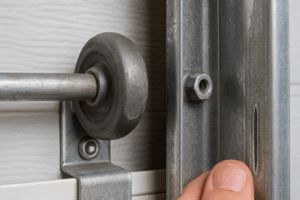
Track mounting brackets: These attach tracks to the wall studs or ceiling. Check every bolt and screw. They should be snug but not overtightened (which can strip threads or crack brackets).
Angle bracket connections: Where tracks connect to brackets, there are usually bolts holding them together. These work loose from vibration and need regular checking.
Roller bracket bolts: Where rollers attach to the door, bolts can loosen. Loose rollers wobble, creating uneven stress on tracks.
Hinge hardware: Loose hinges cause the door to flex and twist during operation, transferring stress to tracks.
How to tighten properly:
Use the right size socket or wrench. Don’t round off bolt heads by using the wrong tool.
Tighten firmly but don’t overtighten. You want snug contact, not stripped threads. If you’re unsure about proper torque, err on the side of slightly loose rather than risk stripping.
Check all hardware on both sides of the door. Don’t just tighten one side and assume the other is fine.
How often:
Check quarterly at minimum. Every three months, go through and verify all hardware is tight.
If you notice the door operating more roughly or hear new rattling sounds, do an immediate hardware check. Those sounds often indicate something has worked loose.
After any significant temperature swing (like our NYC winter-to-spring transitions), check hardware. Temperature changes cause metal expansion and contraction that can loosen fasteners.
Why this matters for track protection:
Loose tracks shift position. Even minor shifting creates misalignment that forces rollers to work against the track rather than rolling smoothly through it.
Loose brackets also allow tracks to flex during door operation. Tracks aren’t designed to flex—they’re designed to be rigid guides. Flexing creates stress points that lead to bending or cracking.
Spending 10 minutes quarterly checking and tightening hardware is cheap insurance to prevent garage door track damage from loose components. According to garage door safety data, loose hardware contributes to thousands of door failures and injuries annually.
Weather Protection and Track Longevity
NYC weather is brutal on garage door tracks. Between winter salt, coastal humidity, temperature swings, and summer heat, our tracks face conditions that accelerate deterioration. Effective weather protection is essential to prevent garage door track damage in our climate.
Winter salt damage:
Road salt is incredibly corrosive to metal. Salt spray from passing cars, salt tracking in on your vehicle, or salt blown into your garage all attack tracks.
After snow events, wipe down your tracks. Don’t let salt sit on the metal. A damp cloth to remove salt residue, followed by drying and light lubrication, prevents corrosion.
Consider installing a threshold seal or garage door threshold. This creates a barrier that reduces how much salt and moisture enters your garage when the door is closed.
Humidity and coastal moisture:
If you’re in coastal areas like Rockaway or near the water in Brooklyn, salt air is constantly attacking your tracks. You can’t eliminate this exposure, but you can mitigate it.
More frequent lubrication (monthly instead of quarterly) creates a protective barrier against moisture. Keep up with cleaning to remove any salt deposits before they cause corrosion.
Consider upgrading to galvanized or powder-coated tracks when replacement time comes. These have protective coatings that resist rust better than bare steel.
Temperature extremes:
Metal expands in heat and contracts in cold. Our 90-degree summers and sub-freezing winters create constant expansion-contraction cycles. This fatigues metal over time, creating weak points.
You can’t prevent temperature swings, but maintaining proper door balance and operation reduces stress on tracks. An unbalanced door puts extra stress on tracks as metal expands and contracts.
Insulating your garage helps moderate temperature swings. Even basic insulation reduces extreme temperature exposure that accelerates track fatigue.
Moisture control:
Beyond salt and humidity, basic moisture control matters. Fix any roof leaks that drip onto tracks. Ensure gutters direct water away from the garage entrance.
Install weather stripping around the door perimeter. This keeps rain and snow from blowing in when the door is closed, reducing moisture exposure to tracks.
After heavy rain or snow, check tracks for standing water. Wipe them dry if you find moisture accumulation.
Why weather protection prevents track damage:
Rust is the number one track killer in NYC. Every rust prevention measure you take extends track life. Surface rust can be cleaned off, but once rust eats through the metal, that track is compromised and needs replacement.
Temperature-induced fatigue creates cracks and weak points. While you can’t eliminate this entirely, reducing stress through proper maintenance helps tracks withstand the constant expansion-contraction cycles.
This isn’t glamorous maintenance, but it’s critical for track longevity in our harsh climate.
Professional Maintenance and Inspection
You can do a lot to prevent garage door track damage through DIY maintenance, but professional inspections catch problems you’ll miss. Trained technicians have the tools and experience to identify issues before they cause track failure.
What professionals check that you can’t:
Precise alignment measurement. Pros have laser levels and specialized tools to measure track alignment to within 1/16 inch. Your eye can’t catch subtle misalignment that will cause problems over time.
Stress analysis. Experienced techs can identify areas of abnormal wear that indicate where tracks are experiencing excessive stress. This helps predict where failure will occur.
Structural mounting assessment. Professionals verify that track mounting points are secure and attached to proper framing. Sometimes the issue isn’t the tracks themselves but inadequate mounting that allows movement.
Complete system evaluation. Tracks don’t operate in isolation. Springs, cables, rollers, hinges, and the opener all affect track stress. Pros evaluate the entire system to identify issues that indirectly cause track damage.
How often for professional inspection:
Annual minimum for residential doors. Schedule this in fall before winter stress hits your system.
Bi-annual for high-use doors (8+ cycles daily) or commercial installations. More frequent use means faster wear and more frequent inspection needs.
After any significant door problem. If your door went off-track, had a spring break, or experienced any major malfunction, have a professional inspect tracks and mounting before resuming normal use.
The track adjustment issue:
Here’s something I need to emphasize—if a professional inspection identifies misalignment or mounting issues, don’t ignore it. These problems only get worse, never better.
Track adjustment typically costs $100-200. Track replacement costs $300-600 or more. The math is obvious—fixing alignment issues now prevents expensive replacement later.
For NYC residents, H&O New York Garage Door Repair offers comprehensive inspections that include track assessment, alignment verification, and adjustment if needed. Licensed technicians catch problems early, helping you prevent garage door track damage through professional-grade care.
Impact Damage Prevention
Physical impacts—someone backing into the door, equipment falling against it, kids playing too close—cause immediate track damage. While you can’t prevent every accident, you can reduce the risk.
Parking awareness:
Mark parking positions clearly. Use tennis balls hanging from the ceiling or parking guides on the floor to help drivers know exactly where to stop.
If you have a tight garage, consider installing convex safety mirrors that let you see both sides of your vehicle while parking. This reduces the chance of hitting the door or tracks while maneuvering.
Storage organization:
Don’t store ladders, tools, or equipment where they can fall against the door. A falling ladder can bend tracks or damage the door, transferring stress to tracks.
Use wall-mounted storage systems to keep items secure and away from the door’s operational area.
Kid safety:
Teach children that the garage door area is not a play space. Don’t let kids hang on doors, climb on tracks, or play near the door while it operates.
Consider installing motion sensors or photo-eye sensors if your door doesn’t have them. These stop the door if someone or something is in the path.
Weather considerations:
During high winds, close your garage door. Wind can blow debris against the door or, if the door is open, create stress on tracks from wind pressure.
In winter, clear ice and snow from around the door. Ice buildup can force the door off-track if you try to operate it before clearing the obstruction.
Why this matters:
Even minor impacts can bend tracks. A small bend creates a binding point that causes rollers to wear unevenly and puts stress on the track at that location. Over time, this weak point can lead to track failure.
Major impacts can bend tracks severely enough to prevent door operation entirely. Emergency track repair is expensive and inconvenient—prevention is much smarter.
When to Replace Rather Than Repair Tracks
Sometimes the best way to prevent garage door track damage from causing a complete door failure is recognizing when tracks need replacement rather than continued repair attempts.
Signs tracks need replacement:
Heavy rust with pitting. If rust has eaten into the metal creating pits and rough surfaces, that track has lost structural integrity. Continuing to use it risks sudden failure.
Multiple bends or kinks. One small bend might be repairable. Multiple damaged areas indicate the track has been stressed beyond its designed capability.
Cracking or splitting. If you see cracks in the track metal, especially near mounting points, that track is failing. Cracks will spread under continued stress.
Worn grooves from roller damage. If previous roller problems wore grooves into your tracks, the damage is permanent. Grooved tracks don’t guide rollers properly and will continue causing problems.
Age and obsolescence. Tracks older than 20 years may not meet current safety standards. If you’re doing major door work anyway, upgrading tracks to modern standards makes sense.
The economics of replacement:
Track replacement runs $300-600 typically, depending on door size and track type. Compared to constantly adjusting, repairing, and fighting with damaged tracks, replacement often makes financial sense.
New tracks give you a fresh start with proper alignment, no wear, and modern materials designed to last 20+ years with proper maintenance.
Upgrade considerations:
When replacing tracks, consider upgrades:
- Galvanized or powder-coated tracks resist rust better
- Heavy-gauge tracks (for commercial or high-use doors) provide extra durability
- Tracks with reinforced mounting points handle stress better
The upfront cost difference is usually modest ($50-100) but delivers significantly better long-term performance.
Prevention through proactive replacement:
If your tracks are 15+ years old and showing wear, consider proactive replacement before failure. This gives you control over timing rather than dealing with emergency replacement when tracks fail completely.
Schedule replacement during moderate weather when you can leave the door inoperable for a day without major inconvenience.
Bottom Line: Preventing Track Damage
After covering everything about how to prevent garage door track damage, here’s what actually matters:
Monthly inspections catch problems early. Five minutes of visual checking stops minor issues from becoming major repairs. This is your foundation.
Keep tracks clean and properly lubricated. Quarterly cleaning and lubrication prevents most wear-related track damage. This is simple maintenance that makes a huge difference.
Address alignment issues immediately. Misaligned tracks only get worse, never better. If you spot alignment problems, call a professional before continuing to use the door.
Quality components matter. Cheap rollers destroy tracks. Invest in proper rollers, keep hardware tight, and use quality replacement parts when needed.
Environmental protection extends track life. In NYC’s harsh climate, weather protection and rust prevention aren’t optional—they’re essential for track longevity.
Professional inspections catch what you miss. Annual professional service identifies subtle problems before they cause expensive damage.
Know your limits. DIY maintenance is great. DIY track adjustment or replacement is dangerous and often makes problems worse. Leave complex repairs to licensed professionals.
The effort to prevent garage door track damage isn’t huge—maybe an hour quarterly plus annual professional service. But the payoff in reliability, safety, and avoiding expensive track replacement makes this some of the best time you’ll invest in home maintenance.
Start by inspecting your tracks right now. Take five minutes to look for rust, damage, or alignment issues. Clean them if needed. Tighten any loose hardware you find. That’s your baseline.
From there, establish a quarterly maintenance routine: clean, lubricate, inspect, tighten. Mark it on your calendar so it becomes automatic.
And schedule that annual professional inspection. The small cost now prevents the large cost later when ignored problems turn into track failure.
Your garage door operates smoothly and safely when tracks are in good condition. Taking care of them isn’t complicated—it just requires consistency and attention to detail.