
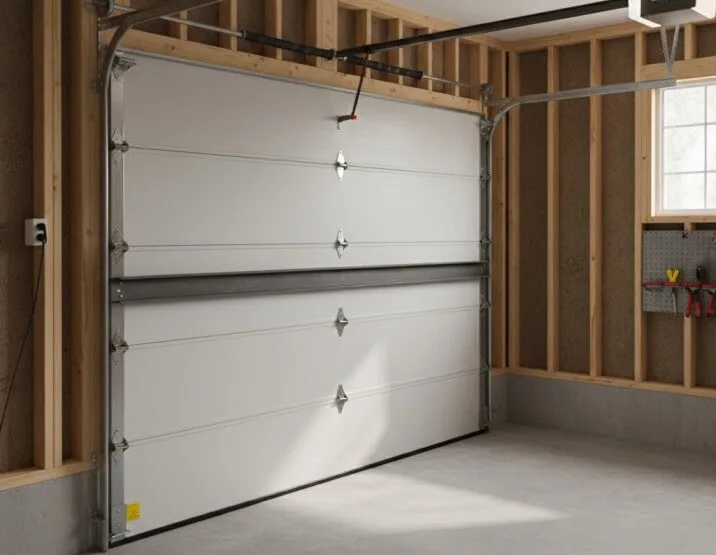
but because most owners don’t know what vulnerabilities exist or how to fix them.
NYC-focused
Break-in methods + fixes
ROI-ranked upgrades
30-minute DIY checklist
Emergency protocols
Need service now?
Use Request a Service or contact our office:
Contact Our Office.
For urgent issues (door stuck open/off-track/spring break), see:
Off-Track Repair and
Broken Spring Repair.
Jump to:
- What You’ll Learn
- 5 Common Break-In Methods
- Top 10 Security Upgrades (Ranked by ROI)
- DIY Security Checklist (30 Minutes)
- NYC Urban Constraints & Solutions
- Smart Garage Security Integration
- Material & Construction Security Features
- Maintenance as Security
- Emergency Response Protocol
- Cost Ranges for Common Upgrades
- Frequently Asked Questions
- Final Checklist
What You’ll Learn
This guide covers:
- 5 most common break-in methods criminals use on garage doors
- Top 10 security upgrades ranked by cost vs. protection value
- DIY security checklist you can complete in 30 minutes
- NYC-specific challenges: shared driveways, brownstones, mixed-use buildings, co-op rules
- Emergency protocols when your door won’t close
Recommended next step
If you want a security-focused inspection, book a safety inspection:
Bronx Safety Inspection or
Long Island Safety Inspection.
You can also review our full Garage Door Services.
Learn more about our company here:
About HO Garage Doors and see real results in
Our Work.
How Criminals Actually Break In: 5 Common Methods
1. Emergency Release Fishing
Thieves use a wire through the top seal to pull the emergency release cord.
Solution
Secure the release so it isn’t reachable from outside and improve the top seal.
If your door won’t close afterward, request service here:
Request a Service.
2. Fixed-Code Remote Theft
Older openers may use fixed codes that can be captured and replayed with inexpensive devices.
Solution
Upgrade to a rolling-code opener and enable alerts. If you need help, see:
Opener Repair & Installation or
Opener Replacement.
Lost/failed remotes? Use:
Remote Control Replacement.
3. Forced Side Door Entry
Many garages have a side door with a basic lock. Once inside, criminals can trigger the wall button.
Solution
Add a Grade 1/2 deadbolt, use a security bar, and install an alarm sensor on the side door.
4. Bottom Gap Exploitation
Worn weather seals create gaps large enough to see (and sometimes reach) inside.
Solution
Replace weather stripping, install a threshold seal, and ensure the door closes flush with no visible light.
5. Shared Garage Tailgating
In multi-unit buildings, criminals may follow residents through an open door.
Solution
Use timed auto-close, cameras at entry points, clear signage, and an access policy with building management.
Top 10 Security Upgrades (Ranked by ROI)
Low Cost ($0–$150)
- Disable or shield emergency release – blocks fishing attacks
- Add manual slide lock / vacation lock – physical backup when away
- Replace weather stripping – eliminates visibility/access gaps
- Test auto-reverse monthly – confirms safe stop/reverse behavior
- Motion-activated exterior lighting – deters approach attempts
Medium Cost ($150–$500)
- Upgrade to rolling-code smart opener – blocks signal theft, adds alerts
- Add keypad with rotating PIN – no remotes to steal, easy to rotate codes
- Install door/window sensor – ties into alarm monitoring
- Reinforce door with a horizontal strut – increases resistance to kick-in
For opener work, see Opener Repair & Installation.
High Cost ($500+)
- Door + modern encrypted opener system – rolling-code encryption (Security+ 2.0 or equivalent), reinforced construction, monitoring
Considering a replacement or upgrade? See:
New Garage Door Installation and
Door Types.
Local service pages (NYC boroughs)
DIY Security Checklist (30 Minutes)
You can safely inspect:
- Weather stripping condition (cracks/gaps visible)
- Auto-reverse function (2×4 test: door should reverse on contact)
- Emergency release accessibility (should not be reachable from outside)
- Bottom seal closure (no light/gaps when fully closed)
- Manual locks engage properly
- Remote code type (look for “rolling code” in your opener documentation)
- Side door deadbolt (Grade 1 or 2 recommended)
- Track bolt tightness (loose bolts can lead to misalignment)
DO NOT attempt yourself:
- Spring adjustments or replacements (extreme tension)
- Cable repairs (snap risk)
- Track realignment if the door is off-track (call a professional)
If you suspect spring/cable issues, use:
Broken Spring Repair,
Broken Cable Replacement, or
Off-Track Repair.
Signs of a security threat:
- Door won’t close completely or reverses randomly
- Visible gaps at sides or bottom when closed
- Loose track bolts or bent brackets
- Frayed cables or rusted/broken springs
- Opener runs but the door doesn’t move smoothly
Want a professional check? Book:
Safety Inspection (Long Island) or
Safety Inspection (Bronx).
NYC Urban Constraints & Solutions
Shared Driveways (Common in Queens/Brooklyn)
- Use individual keypads per unit
- Enable timed auto-close (45–60 seconds)
- Add cameras covering shared entry zones
- Establish an access policy with building management
Brownstones & Attached Homes
- Coordinate alley lighting with neighbors
- Secure side/rear access with Grade 1 deadbolts
- Consider shared camera coverage for common access points
Co-op / Condo Rules
- Review bylaws before adding cameras/alarms
- Many buildings restrict exterior modifications
- Work with the property manager on approved hardware lists
- Smart opener upgrades are often allowed if appearance is unchanged
Mixed-Use Buildings
- High foot traffic increases tailgating risk
- Prefer keypads vs. remotes (remotes get lost)
- Post signage: “Residents Only / Under Surveillance”
- Coordinate access protocols with on-site security
Smart Garage Security Integration
Basic Smart Setup
- WiFi-enabled opener
- Push alerts on open/close events
- Remote control via smartphone
- Activity log (who accessed, when)
Advanced Integration
- Geofence reminders (alert if you leave with door open)
- Camera motion zones inside/at the approach
- Lighting automation after dark
- Alarm integration rules
Privacy note
Cloud-connected systems may store access logs on provider servers. Review privacy policies before enabling cloud features.
See also our Privacy Policy.
Material & Construction Security Features
What Actually Matters
- Door construction: reinforced stiles, multi-layer build, rigid panels
- Hardware quality: reinforced hinges, strong brackets, anti-lift features
- Locking systems: internal slide lock, motorized lock, keyed override (where allowed)
Considering a new door? See Door Types and
New Garage Door Installation.
What Doesn’t Help Security
- Window panels (increase visibility)
- Decorative hardware that creates pry points
- Very thin-gauge construction in high-risk settings
Maintenance as Security
Monthly Checks (5 Minutes)
- Visual check for rust, frayed cables, worn rollers
- Test auto-reverse with an obstruction
- Listen for grinding/scraping
- Check seal and threshold contact
Quarterly Tasks (15 Minutes)
- Lubricate moving parts (follow manufacturer guidance)
- Tighten track bolts and bracket hardware
- Test manual release and re-engage
- Rotate keypad codes for shared access
Annual Professional Inspection
- Balance and spring system evaluation
- Cable wear assessment
- Opener force calibration
- Track alignment verification
- Sensor testing and calibration
Explore maintenance service:
Maintenance (Five Towns) and
Garage Door Repair.
Call immediately if:
Door won’t close/stay closed, cable fraying or spring damage is visible, door is binding/off-track, opener overheats or grinds, auto-reverse fails.
Start here: Request a Service.
Emergency Response Protocol
Door Stuck Open (Security Risk)
- If safe, pull the emergency release and lower the door manually.
- Engage the manual slide lock (if present).
- Do not leave the property unattended with the door open.
- Call an emergency garage door service provider.
Emergency service options
Temporary securing
Use C-clamps on the track below the bottom roller to prevent lifting (only if you can do so safely), and lock side/rear access doors.
Door Won’t Close at Night
- Check for obstructions blocking safety sensors.
- Wipe sensor lenses with a clean cloth.
- Verify alignment (indicator lights should be solid).
- Use manual mode (release and lower door by hand).
- If it closes, lock it and schedule service.
Related repair pages
- Garage Door Sensor Replacement
- Garage Door Off-Track Repair
- Garage Door Broken Spring Repair
- Garage Door Broken Cable Replacement
- Electric Garage Opener Repair & Installation
Call emergency services (911) if:
Someone is trapped/injured, the door fell suddenly, or you smell burning / see electrical sparking from the opener.
Cost Ranges for Common Upgrades
Budget Fixes ($50–$150)
- Weather stripping kit
- Manual locks / reinforcement brackets
- Motion sensor lights
- Emergency release shield
Mid-Range Security ($200–$500)
- Smart rolling-code opener upgrade
- Keypad installation
- Reinforcement strut kit
- Annual professional maintenance
Check current offers:
Special Discounts.
High-Security Investment ($600–$2,000)
- Complete steel door replacement (insulated, reinforced)
- Smart opener + camera integration
- Multi-point locking system
- Professional consultation + installation
For installation options:
New Garage Door Installation.
Note: Prices vary by location and door size. NYC metro is often higher than national averages due to labor and logistics.
Frequently Asked Questions
What’s the greatest security risk with garage doors?
Three scenarios dominate: emergency release fishing, outdated opener access vulnerabilities, and unsecured side doors. Addressing all three closes most common exposure points.
How often should I do maintenance?
Homeowner checks monthly and quarterly. Professional service annually minimum; twice yearly for high-cycle use, salt exposure, humidity, or multi-user installations. See Garage Door Services.
Can I retrofit security features to my existing door?
Most upgrades are retrofittable: rolling-code smart opener, manual locks, keypad, weather seals, motion lighting, release shields, and camera coverage. Opener help: Opener Repair & Installation.
What should I do immediately after a security failure?
Secure the opening if possible, call emergency service, document the issue, and don’t leave the property unattended until the door is secured. Start here: Request a Service.
Where can I find more garage door answers?
Visit our FAQs or contact us:
Contact Our Office.
Final Checklist: Schedule Your Security Inspection
- Opener uses rolling-code technology (consider opener service)
- Emergency release not accessible from outside
- Weather stripping creates a complete seal
- Auto-reverse tested and functioning
- Manual lock / vacation lock installed
- Side door has Grade 1/2 deadbolt
- Motion lighting covers approach zones
- Smart alerts enabled for open/close events
- Annual professional maintenance scheduled (see services)
- Emergency service number saved (start with Request a Service)
Vulnerability Score
- 8–10 checked: Strong security posture
- 5–7 checked: Moderate risk; prioritize the top 3 upgrades
- 0–4 checked: High risk; schedule a professional assessment
Ready to secure your garage?
Book service here: Request a Service.
Prefer to speak with someone first? Contact Our Office.
Company details: About •
Portfolio: Our Work •
Offers: Discounts •
General repair hub: Garage Door Repair