
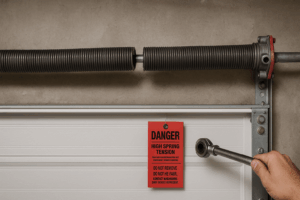
That loud bang you heard from the garage at 2 AM? Yeah, that was probably your spring snapping. And now your 200-pound garage door is stuck, you can’t get your car out, and you’re looking at an emergency repair bill. I’ve seen this scenario play out hundreds of times over the years, and here’s the frustrating part—most spring failures are preventable.
After two decades of working on garage doors across NYC, I can tell you that learning how to prevent garage door springs from breaking isn’t complicated. It doesn’t require special tools or technical expertise. What it does require is understanding how springs actually fail and staying ahead of the problem with some basic maintenance.
This guide covers the practical stuff that extends spring life—not the theoretical nonsense you’ll find in most articles. We’re talking about real techniques that work in real NYC conditions, where salt, humidity, and constant use accelerate spring wear. Some of this you can handle yourself. Other parts need professional attention, and I’ll be clear about which is which.
Why Garage Door Springs Break (The Real Reasons)
Before we get into how to prevent garage door springs from breaking, let’s talk about why they fail in the first place. Understanding the cause helps you address the right problems.
Springs don’t just break randomly. They fail because of accumulated stress over thousands of cycles. Every time your door opens and closes, the springs wind and unwind under tremendous tension. Eventually, the metal fatigues and develops microscopic cracks that grow until—snap.
Here’s what accelerates spring failure:
Rust and corrosion eat away at the metal, creating weak points. This is huge in NYC with our winters bringing road salt and coastal humidity. A rusty spring can fail years before its expected lifespan.
Lack of lubrication causes friction between the coils, wearing down the metal faster. Springs need to move smoothly. Dry springs work harder and die sooner.
Extreme temperatures affect spring tension. Cold makes metal brittle; heat makes it expand. The constant cycling between NYC’s freezing winters and hot summers is hard on springs.
Improper installation creates uneven tension from day one. If springs weren’t installed correctly, they’ll wear unevenly and fail prematurely.
Wrong spring size means the springs are either overworked (too small) or not tensioned properly (too large). Either way, they won’t last their expected lifespan.
Excessive use simply means more cycles. If your door opens 8-10 times daily instead of 3-4, you’re burning through cycles faster. Springs rated for 10,000 cycles will reach that number sooner.
The good news? Most of these factors are controllable when you know how to prevent garage door springs from breaking through proper maintenance.
Understanding Your Spring Type Matters
Not all garage door springs are the same, and how you maintain them depends on what type you have.
Torsion springs mount horizontally above your garage door. They use torque (twisting force) to lift the door. These are the most common type in residential garages because they’re more durable, safer, and provide better balance. They typically last 15,000-20,000 cycles with good maintenance.
You’ll recognize torsion springs as the thick coil spring mounted on a rod above the door. There’s usually one or two of them. When they break, you’ll often see a visible gap in the coil where it snapped.
Extension springs run along the horizontal tracks on either side of your door. They stretch and contract to open and close the door. These are older technology, less safe (if they break, they can fly off with dangerous force), and typically last only 10,000 cycles.
Extension springs look like long, stretched-out coils running parallel to the tracks. If you have these, you should also have safety cables running through them—if you don’t, that’s a safety issue that needs addressing immediately.
Why does this matter for preventing garage door springs from breaking? Because the maintenance approach differs slightly. Torsion springs need careful lubrication along the coil. Extension springs need attention to the pulleys and cables as well as the springs themselves.
The Early Warning Signs Most People Miss
You want to prevent garage door springs from breaking? Start by catching problems early. Springs don’t usually fail without warning—they give you clues if you’re paying attention.
The door moves unevenly. If one side rises faster than the other or the door tilts as it opens, spring tension is uneven. This could mean one spring is wearing faster or losing tension. Don’t ignore this—uneven movement puts extra stress on the failing spring and accelerates breakage.
Opening takes longer than it used to. Springs lose tension gradually as they wear. If your door seems sluggish or your opener strains more than before, the springs are probably weakening. This is especially noticeable in cold weather when the issue gets worse.
You hear new noises. Squeaking, grinding, or popping sounds often indicate spring problems. A loud bang definitely means a spring just snapped. But earlier warning signs include creaking during operation or a high-pitched squeal as the door moves.
The door feels heavy. Disconnect your opener and manually lift the door halfway. It should stay in place on its own. If it feels extremely heavy or drops when you let go, spring tension is off. This is a clear sign springs are wearing out, and addressing it now helps prevent garage door springs from breaking completely.
Visible gaps in the spring. With torsion springs, you can sometimes see separation developing in the coil before it fully breaks. If you spot a gap, that spring is done—it’s just a matter of time before it fails completely.
Rust on the springs. Surface rust might seem minor, but it’s eating through the metal. Once rust takes hold, spring failure accelerates dramatically. This is where preventive maintenance makes the biggest difference.
According to Consumer Product Safety Commission data, garage door spring failures cause thousands of injuries annually. Most could be prevented with basic awareness and maintenance.
How to Prevent Garage Door Springs from Breaking: The Lubrication Protocol
This is the single most important thing you can do to prevent garage door springs from breaking. Proper lubrication reduces friction between coils, prevents rust, and extends spring life by years.
But here’s where most people mess up—they either don’t lubricate at all, or they use the wrong products and technique.
What to use: You need a lubricant designed for garage door springs. Silicone-based spray or white lithium grease both work well. Some companies make garage-door-specific lubricants that work great. What you absolutely should NOT use is WD-40 (it’s a solvent, not a lubricant) or regular motor oil (too thick and attracts dirt).
How often: Every three months minimum. If you’re in a coastal area dealing with salt air, or if your garage isn’t climate-controlled, do it monthly. After winter especially—road salt accelerates rust formation, so spring lubrication after winter is critical.
The technique for torsion springs:
First, make sure the door is closed. You want the spring under tension for proper coverage.
Spray the lubricant along the entire length of the spring coil. Don’t just hit a couple spots—coat the whole thing. The lubricant needs to work between all the coils.
As you spray, have someone slowly open and close the door (using the opener is fine for this). This works the lubricant into the spring, getting it between the coils where friction occurs.
Wipe off excess that drips. You want the spring coated but not dripping lubricant everywhere.
The technique for extension springs:
Close the door first.
Spray along the entire length of each spring. Extension springs have more surface area exposed, so coverage is easier but you still need to be thorough.
Also lubricate the pulley wheels at each end of the springs—these experience significant friction and wear.
Operate the door several times to work in the lubricant.
Critical safety note: Never attempt to adjust, remove, or work directly on springs yourself. Lubrication is safe because you’re just spraying the exterior. But the springs are under hundreds of pounds of tension. Attempting repairs without proper training and tools can cause severe injury or death. When I say this helps prevent garage door springs from breaking, I mean maintenance—not DIY replacement.
Rust Prevention: The NYC Spring Killer
In New York City, rust kills springs faster than anything else. Between winter road salt, coastal humidity, and temperature swings, our springs face conditions that accelerate corrosion. This section on how to prevent garage door springs from breaking focuses specifically on rust.
Start with lubrication. The lubricant we just discussed doesn’t just reduce friction—it also creates a protective barrier against moisture. That’s why quarterly lubrication is so important in our climate.
Address existing rust immediately. If you spot rust on your springs, don’t wait. Light surface rust can be treated. Use a wire brush to gently remove loose rust (don’t dig into the metal), then clean the area and apply lubricant. This isn’t a permanent fix, but it buys you time.
Heavy rust means replacement time. If the rust has eaten into the spring coils, creating pitting or visible metal degradation, that spring is compromised. Trying to extend its life further is just delaying the inevitable and risking sudden failure. Budget for replacement before it breaks.
Consider your garage environment. Is your garage climate-controlled? If not, humidity levels fluctuate dramatically, creating condensation on metal surfaces. This accelerates rust formation. Even basic weatherproofing—like weather stripping around the door and fixing leaks—reduces moisture exposure.
Coastal area considerations. If you’re near the water in areas like Rockaway or coastal Brooklyn, salt air is constantly attacking your springs. You need more frequent lubrication and should seriously consider upgrading to rust-resistant springs when replacement time comes. Some commercial-grade springs have protective coatings that last longer in these conditions.
Winter aftermath. Every spring (the season), inspect your springs (the hardware) carefully. Winter road salt tracking into your garage or blowing in creates a rust-promoting environment. April or May is a good time for thorough spring inspection and fresh lubrication to prevent garage door springs from breaking during the coming year.
Balance Testing: A Critical Prevention Tool
Door balance affects spring life more than most people realize. An unbalanced door means the springs (and opener) are working harder than they should. This accelerates wear and can lead to premature spring failure.
Testing balance is simple and something you should do quarterly:
Disconnect the opener. Pull the emergency release handle to disengage the trolley from the opener arm. This allows manual operation.
Lift the door manually. Raise it to about waist height (roughly 3-4 feet off the ground) and let go.
Observe what happens:
- Properly balanced door: Stays in place or drifts slightly up or down
- Spring tension too weak: Door drops toward closed position
- Spring tension too strong: Door rises toward open position
If your door isn’t balanced, the springs need adjustment. This is NOT a DIY job—spring tension adjustment requires special tools and can be dangerous. Call a professional to adjust the tension. This maintenance helps prevent garage door springs from breaking by ensuring they’re not over or under-worked.
Why balance matters: An unbalanced door puts uneven stress on the springs. If the door is too heavy, springs work harder with every cycle, burning through their lifespan faster. If the door is too light, springs are over-tensioned and can break prematurely. Either way, proper balance is critical for longevity.
When to test: After any repair work, if you replace any door components, or quarterly as part of routine maintenance. Also test if you notice the door operating differently than usual.
The Temperature Factor in NYC
Temperature extremes are hard on garage door springs, and NYC gives us plenty of both. Understanding this helps you prevent garage door springs from breaking during our harsh weather swings.
Cold weather problems: When temperatures drop below freezing, metal becomes brittle. Springs under tension in brittle conditions are more likely to snap suddenly. This is why most spring breaks happen in winter—you hear that loud bang on a freezing January morning.
Cold also affects lubricant. Standard lubricants can thicken in cold temperatures, reducing their effectiveness. This means more friction between spring coils, which accelerates wear.
What to do about cold:
- Use cold-weather-rated lubricants (check the temperature range on the bottle)
- Lubricate more frequently during winter months
- If possible, keep your garage temperature above freezing
- Never use your door if ice has formed on the springs—wait for it to thaw
Heat problems: Hot summers cause metal to expand. While less immediately dangerous than cold brittleness, constant expansion and contraction fatigues the metal over time. Combine summer heat with coastal humidity, and you’ve got ideal rust conditions.
What to do about heat:
- Maintain good ventilation in your garage to reduce heat buildup
- Keep up with lubrication—it provides some heat protection
- Inspect springs after heat waves for signs of stress
The freeze-thaw cycle: This is the real killer in NYC. Winter days when temperatures swing from 20°F at night to 45°F during the day create constant expansion-contraction cycles. Add moisture from snow melt, and you’ve got accelerated spring fatigue plus rust formation.
The best defense? Regular maintenance, proper lubrication, and having a professional inspect your springs annually before winter hits. Catching wear early lets you replace springs on your schedule rather than dealing with emergency failure on the coldest day of the year.
Professional Inspections: When DIY Isn’t Enough
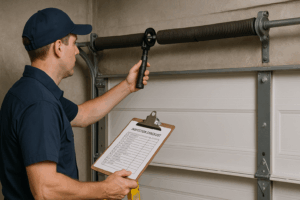
You can do a lot to prevent garage door springs from breaking through regular maintenance, but professional inspections catch problems you’ll miss. Springs are complex, and subtle signs of impending failure require trained eyes.
What professionals check that you can’t:
Spring tension measurement. Pros have specialized tools to measure exact spring tension and compare it to manufacturer specifications. They can tell when tension has dropped below safe operating range, even before you notice performance issues.
Cycle life estimation. Based on spring condition, rust level, and door usage, experienced techs can estimate remaining cycle life. This helps you plan for replacement before failure occurs.
Spring coating integrity. Some springs have protective coatings. Professionals know what coating breakdown looks like and when it signals increased failure risk.
Cable and pulley condition. Springs don’t work in isolation. Cables, pulleys, and drums all affect spring stress. Pros inspect the entire system, identifying issues that indirectly impact spring life.
Installation quality check. Were your springs installed correctly? Proper center bearing plate installation, correct wind direction, appropriate spring size—professionals verify all this. Poor installation is a common cause of premature failure.
How often for professional inspections:
Annual minimum. Schedule a comprehensive inspection every fall before winter stress hits your springs. This catches problems while they’re still manageable.
High-use doors. If you cycle your door 8+ times daily, consider bi-annual inspections. You’re burning through spring life faster.
After any major repair. If you’ve had the door off-track, replaced panels, or done any significant work, have a pro verify spring condition. Major repairs can affect spring stress.
Age matters. Springs over 5 years old (or past 7,000 cycles) need more frequent inspection. You’re entering the danger zone where failure risk increases significantly.
For NYC residents, H&O New York Garage Door Repair offers comprehensive spring inspections as part of maintenance service. Licensed techs catch issues early, helping you prevent garage door springs from breaking through professional-grade care.
When to Replace Springs (Even If They Haven’t Broken)
Sometimes the best way to prevent garage door springs from breaking is to replace them before they break. Waiting for failure means dealing with emergency repairs, possible secondary damage, and inconvenience. Proactive replacement gives you control.
Replace based on age and cycles:
Springs are rated for a specific number of cycles. Standard residential springs: 10,000 cycles. Mid-grade: 15,000 cycles. Commercial/high-cycle: 25,000+ cycles.
Do the math based on your usage. If you open your door 4 times daily, that’s roughly 1,500 cycles per year. A 10,000-cycle spring will last about 6-7 years. If your springs are approaching their rated lifespan, replacement makes sense even if they’re still working.
Replace based on condition:
Heavy rust, visible wear, or loss of tension all signal that springs are nearing end of life. Don’t wait for the bang—schedule replacement.
Replace both springs together:
Even if only one spring breaks, replace both. Here’s why: if one broke, the other experienced the same stress and has similar wear. It’ll likely fail soon anyway. Replacing both ensures even tension and prevents another service call in six months.
Also, mixing an old spring with a new one creates imbalanced tension, which shortens the life of the new spring. You’re trying to prevent garage door springs from breaking—mismatched springs work against that goal.
Consider upgrading:
When replacement time comes, think about upgrading to higher-cycle springs. The upfront cost difference is usually $50-100, but you’re buying significantly more lifespan. If you use your door heavily, high-cycle springs pay for themselves in extended time between replacements.
The economics of proactive replacement:
Emergency spring repair: $200-400 (often more for after-hours service) Scheduled spring replacement: $150-250 Potential damage from broken spring: $500+ if it damages door panels, opener, or vehicles
Proactive replacement during scheduled maintenance is always cheaper than emergency repair. Plus you avoid the inconvenience of being trapped in or out of your garage.
Extension Spring Safety Cables: Non-Negotiable
If you have extension springs and they don’t have safety cables running through them, stop reading and call a professional to install them immediately. This isn’t about preventing garage door springs from breaking—it’s about preventing serious injury when they do break.
What safety cables do:
Extension springs are under extreme tension. When they break, that energy releases explosively. Without safety cables, a broken spring can fly across your garage with enough force to go through a car windshield or cause serious injury.
Safety cables run through the center of extension springs and are anchored at both ends. When a spring breaks, the cable catches it, containing the broken pieces and preventing them from becoming projectiles.
Code requirements:
Many jurisdictions require safety cables on extension springs. If your door was installed or inspected recently and doesn’t have them, that’s a code violation. Beyond legal requirements, it’s a critical safety feature.
Installation:
This is a professional job because it requires handling springs under tension. The cables must be properly sized and anchored. Don’t attempt this yourself.
If you’re considering spring replacement:
This is an excellent time to switch from extension springs to torsion springs. Torsion systems are safer, last longer, and provide better door balance. The cost difference for replacement is usually only $100-150 more than replacing extension springs, and you get a superior system. It’s an investment in both safety and performance.
The Opener Settings That Affect Spring Life
Your garage door opener settings directly impact how hard your springs work. Incorrect settings mean springs experience unnecessary stress with every cycle, shortening their life. Getting this right helps prevent garage door springs from breaking prematurely.
Force settings:
Your opener has adjustable force settings for opening and closing. If these are set too high, the opener pulls harder than necessary. This doesn’t just strain the motor—it also means springs are fighting against excess force.
The door should open and close smoothly without the opener laboring. If you hear the motor straining or the door jerks during operation, force settings may be too high or springs may be failing.
Travel limit settings:
These determine how far the door moves before the opener stops. If limits are off, the door might crash into the ground or ceiling, creating shock that stresses springs. Proper limit adjustment ensures smooth stops that don’t jar the spring system.
Safety reverse settings:
The auto-reverse feature should trigger if the door encounters resistance. If this is set too insensitively, the door will try to force through obstructions, putting tremendous stress on springs. Test monthly by placing a 2×4 on the ground in the door’s path—the door should reverse immediately upon contact.
Who should adjust these:
Opener settings are homeowner-adjustable with proper instruction (check your owner’s manual). However, if you’re not confident or if the door still operates poorly after adjustment, have a professional check both the opener and springs.
According to the International Door Association, proper opener settings and regular maintenance can extend both opener and spring life by 30-40%. That’s significant when you’re trying to prevent garage door springs from breaking.
Commercial Doors and High-Cycle Springs
Commercial garage doors face different demands than residential doors. Higher usage, heavier doors, and often harsher environments mean standard residential spring maintenance isn’t enough. To prevent garage door springs from breaking on commercial doors requires more aggressive care.
The usage difference:
A residential door might cycle 4 times daily (1,500 cycles annually). Commercial doors—loading docks, service entrances, parking garages—can cycle 20+ times daily (7,000+ cycles annually). You’re burning through spring life at 4-5x residential rates.
Higher-cycle springs are essential:
Standard 10,000-cycle springs will fail in less than 2 years under heavy commercial use. You need springs rated for 25,000-50,000 cycles. Yes, they cost more upfront, but they’re the only springs that will hold up to commercial demands.
Maintenance frequency:
Commercial doors need monthly professional inspection, not annual. Lubrication should happen bi-weekly for high-use doors. This isn’t excessive—it’s necessary to prevent garage door springs from breaking under heavy load.
Environmental factors:
Loading dock doors deal with temperature extremes (constantly opening to outside weather), exhaust fumes from trucks, and often wet conditions. All these accelerate spring degradation. Industrial-grade lubricants and more frequent application are necessary.
The cost of failure:
A broken spring on a residential door is inconvenient. A broken spring on a commercial loading dock door can shut down business operations for hours or days, costing far more than proactive maintenance. Business owners should view spring maintenance as operational insurance.
DIY vs. Professional: Drawing the Line
There’s maintenance you can and should do yourself to prevent garage door springs from breaking. And there’s work that absolutely requires professionals. Getting this wrong doesn’t just mean failed repairs—it means serious injury risk.
DIY-appropriate tasks:
- Visual inspection for rust, wear, or damage
- Regular lubrication of springs and moving parts
- Testing door balance
- Cleaning tracks and removing debris
- Tightening accessible hardware (hinges, track brackets)
- Testing safety reverse features
These tasks require no special tools and don’t involve handling springs under tension. They’re the foundation of preventing garage door springs from breaking through owner maintenance.
Professional-only tasks:
- Spring replacement or repair
- Spring tension adjustment
- Cable replacement
- Any work requiring you to handle or adjust springs
- Installation of safety cables through extension springs
- Bearing plate work on torsion spring systems
These tasks involve components under extreme tension. The injury risk is real and severe. I’ve seen DIY attempts go horribly wrong—broken bones, crushed fingers, springs snapping and hitting people. It’s not worth it. Hire licensed professionals.
The “YouTube made it look easy” problem:
Yes, there are DIY spring replacement videos online. What they don’t show is the years of training professionals have, the specialized tools required, or the accidents that happen when things go wrong. The $150-250 you save attempting DIY spring work isn’t worth the injury risk or potential property damage.
When to call a pro:
- Any time you suspect spring problems beyond basic rust or need for lubrication
- If your door won’t operate or operates erratically
- If you hear grinding, popping, or other concerning sounds from the spring area
- For annual comprehensive inspections
- Anytime you’re uncomfortable or uncertain about a task
Emergency Preparedness: When Springs Break Anyway
Sometimes despite your best efforts to prevent garage door springs from breaking, they fail anyway. Knowing how to respond keeps you safe and minimizes damage.
When a spring breaks:
Don’t try to open the door. A door with broken springs is dead weight. Your opener can’t lift it (and trying will burn out the motor). Manual operation is extremely dangerous—the full door weight could drop on you.
Disconnect the opener. Pull the emergency release to prevent anyone from attempting to use the opener. A broken spring means the opener will just strain and potentially fail.
Clear the area. Keep people and pets away from the door. Broken springs can have sharp edges, and there’s risk of additional hardware failing.
Call for emergency repair. Most areas have same-day emergency spring repair available. The cost is higher than scheduled service, but you need your door functional and safe.
Document everything. Take photos of the broken spring and any associated damage for insurance purposes if applicable.
Learn from it. When was the last inspection? How old were the springs? Use spring failure as a reminder to stay on top of maintenance on your replacement springs.
For NYC emergency spring repair, H&O New York Garage Door Repair offers same-day service with licensed, bonded, and insured technicians available 24/7.
The Real Cost of Prevention vs. Repair
Let’s talk numbers, because understanding the economics helps motivate you to actually prevent garage door springs from breaking rather than dealing with failures.
Annual maintenance cost:
- DIY quarterly lubrication: $20-30 annually (lubricant cost)
- Professional annual inspection: $100-150
- Total prevention investment: $130-180 annually
Spring replacement cost (scheduled):
- Residential torsion springs: $150-250
- Commercial/high-cycle springs: $250-400
- Frequency: Every 7-10 years with maintenance
Emergency spring repair cost:
- After-hours service: $300-500
- Plus potential secondary damage: $200-1,000+
- Lost time and inconvenience: Priceless (but frustrating)
The math:
Over a 10-year period with proper maintenance:
- Maintenance investment: $1,300-1,800
- Planned spring replacement (once): $150-250
- Total: $1,450-2,050
Over 10 years with reactive/emergency approach:
- Emergency repairs (twice, as springs fail prematurely): $600-1,000
- Secondary damage from failure: $400-2,000
- Total: $1,000-3,000+
The reactive approach seems cheaper until you factor in inconvenience, potential damage, and the reality that neglected springs fail more often. Prevention isn’t just about avoiding repair costs—it’s about controlling when repairs happen and avoiding damage.
The intangible value:
- Never being stuck with a non-functional door
- No middle-of-night emergency calls
- Peace of mind that your door is safe
- Maximizing the life of all garage door components
When you frame it this way, the effort to prevent garage door springs from breaking becomes obviously worthwhile.
Bottom Line: Preventing Spring Failure
After everything we’ve covered about how to prevent garage door springs from breaking, here’s what actually matters:
The foundation is regular maintenance. Quarterly lubrication and annual professional inspection catch problems early and extend spring life significantly. This isn’t optional if you want to avoid emergency failures.
Pay attention to warning signs. Uneven operation, strange noises, visible rust—these tell you springs need attention before they break. Don’t ignore them.
Understand your limits. DIY maintenance is great and necessary. DIY spring repair is dangerous and foolish. Know the difference and respect it.
Environmental factors matter. NYC’s weather extremes, salt exposure, and humidity accelerate spring wear. Adjust your maintenance frequency accordingly.
Proactive replacement beats emergency repair. When springs approach their lifespan or show significant wear, replace them on your schedule rather than waiting for failure on theirs.
Balance, opener settings, and system condition all affect spring life. You can’t just focus on the springs themselves—the entire system needs attention.
The effort to prevent garage door springs from breaking isn’t huge—maybe 30 minutes quarterly plus annual professional service. But the payoff in reliability, safety, and avoiding expensive emergency repairs makes it one of the best investments you can make in home maintenance.
Start with a thorough inspection of your current springs. When were they installed? What condition are they in? When did you last lubricate them? From there, establish a maintenance routine and stick with it. Your future self—not stuck in the garage on a winter morning—will thank you.