
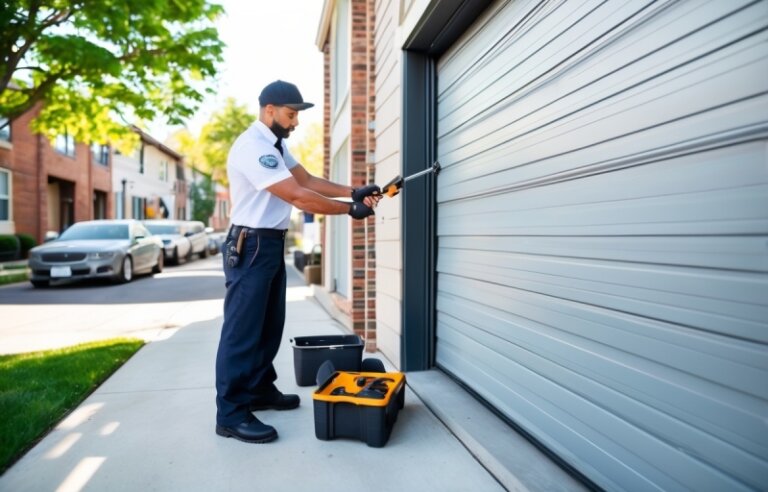
Your garage door opens and closes 15, 20, maybe 30 times a day. Employees arriving, deliveries coming through, residents constantly on the move. It's convenient—until it isn't.
Garage door wear in busy areas isn't like normal residential wear and tear. We're talking accelerated deterioration that can turn a 20-year door into a maintenance nightmare in just 5–7 years. Springs fail prematurely, rollers develop flat spots, cables fray, tracks misalign, and suddenly you're dealing with constant repairs, frustrated tenants, and operational downtime.
If you're managing commercial property in Queens, a multi-unit building in Brooklyn, a busy warehouse in the Bronx, or any high-traffic facility across Long Island, garage door wear is costing you money right now—either in maintenance expenses you're already paying or in catastrophic failures you're about to face.
I'm going to walk you through exactly how to prevent garage door wear in busy areas. We're talking materials that actually hold up, maintenance schedules that work for real-world high-traffic scenarios, component upgrades that extend lifespan dramatically, and smart technology that reduces unnecessary wear.
At H&O Garage Doors, we've maintained hundreds of high-traffic doors throughout NYC. We know what works, what doesn't, and what's worth investing in. Let's get into it.
⚠️ Noticed unusual garage door noise in Queens? That's often the first sign of accelerated wear in high-traffic doors. Call H&O Garage Doors at (833) 464-2724 for same-day inspection and repair.
Understanding Garage Door Wear and Tear in Busy Areas
Before we dive into prevention strategies, let's understand what we're actually dealing with when we talk about garage door wear in high-traffic environments.
What Causes Garage Door Wear?
Garage door wear comes from three primary sources:
1. Mechanical Cycles
Every time your garage door opens and closes, that's one cycle. Each cycle puts stress on every moving component:
- Springs: Torsion springs flex thousands of times, gradually losing tension
- Cables: Steel cables slide over pulleys and drums, experiencing friction
- Rollers: Wheels roll up and down tracks, wearing bearing surfaces
- Hinges: Pivot points flex with every cycle, slowly working loose
- Tracks: Guide wheels create wear grooves over time
- Opener motor: Starts and stops repeatedly, heating up and cooling down
A typical residential door sees 3–5 cycles daily—about 1,100–1,800 per year. That same door in a commercial setting might see 20–30 cycles daily—7,300–10,950 per year. That's 4–6× faster wear, meaning components rated for 10–15 years in residential use fail in 2–3 years under commercial loads.
2. Environmental Exposure
NYC's climate is particularly brutal on garage doors:
- Temperature extremes: Metal expansion/contraction loosens hardware
- Humidity: Accelerates rust on steel components
- Road salt: Causes severe corrosion on springs, cables, and tracks
- Coastal salt air: Worsens corrosion near waterfronts
- UV exposure: Degrades weather seals and finishes
3. Impact and Misuse
- Vehicle bumps during parking
- Forcing stuck doors
- Repeatedly pressing the close button
- Driving through before door is fully open
- Objects left in door path causing unexpected stops
Why NYC Doors Suffer More
Urban Density: Multi-unit buildings mean more users with varying levels of care. One careless tenant can cause damage affecting everyone.
Commercial Intensity: 24/7 operations drive cycle counts dramatically higher.
Deferred Maintenance Culture: Deferring service inflates emergency costs later.
Mixed-Use Complexity: Conflicting usage patterns and split responsibility.
Age of Building Stock: Older doors never designed for today's intensity.
Real Numbers: High-traffic doors without preventive plans average 3–4 emergency calls/year ($800–$1,500 each). With quarterly maintenance: 1–2 calls ($300–$500). Prevention pays for itself and extends lifespan 2–3×.
Common High-Traffic Scenarios
Commercial Garages & Warehouses
- 20–50+ cycles daily, heavy doors, minimal tolerance for downtime
Prevention: Commercial-grade components, 50k+ cycle springs, quarterly service, ¾–1 HP operators.
Shared Residential Complexes
- 10–25 cycles daily, multiple users, rush-hour spikes
Prevention: Usage rules, bi-annual service, smart monitoring, fast issue response.
Multi-Vehicle Households
- 8–15 cycles daily with mixed user behavior
Prevention: 25k springs, annual pro service, user education, smart opener analytics.
Book a garage door inspection in Brooklyn. Early detection saves thousands in emergency repairs. Call (833) 464-2724.
Choosing the Right Garage Door Materials for Durability
Steel: The Commercial Workhorse
- Gauge: 24–25 ga for high-traffic; galvanized + powder coat
- Best value and security; add insulation for efficiency
Composite: Modern Alternative
- Resists rust/dents, low maintenance, ideal for coastal NYC
Aluminum & Wood
- Aluminum: light, modern, but dents easily
- Wood: high maintenance; avoid in busy settings
Explore our Garage Door Installation NYC services. We'll spec materials for your usage, climate, and budget.
Why Professional Installation Matters
Common Mistakes That Accelerate Wear
- Incorrect spring tension → opener strain or spring failure
- Track misalignment → friction, roller wear, noise
- Under-rated hardware → quick burnout in busy use
- Poor cable winding → uneven lift, safety hazards
- Insufficient weatherproofing → corrosion, seal failure
What Pros Deliver
- Correct specification for real usage
- Precision alignment/tensioning & code compliance
- Warranty protection and safety
Get Expert Garage Door Installation in Queens & Long Island
Same-day consultations • Licensed, bonded & insured
📞 (833) 464-2724 • 🌐 Garage Door Installation Queens
Maintenance Practices to Extend Lifespan
Monthly Visual Inspections (15 Minutes)
Monthly Garage Door Inspection Checklist
- Watch door operate: smooth, no jerks/noise
- Listen for noise: grinding/squeaking/banging
- Check balance: manual half-lift should hold
- Inspect springs: coil gaps = wear
- Examine cables: fraying/rust
- Check rollers: spin freely; no flats/cracks
- Test sensors: must auto-reverse
- Inspect seals: gaps/cracks/dryness
- Tighten hardware and log findings
Lubrication (Every 3–6 Months)
- Lubricate: springs, roller bearings, hinges, pulleys, chain/belt (per manual)
- Use: silicone or white lithium (avoid WD-40 as a lubricant)
- Frequency: high-traffic: q3 months; moderate/shared: 4–6 months
Professional Service Schedule
| Usage Level | Annual Cycles | Service Frequency |
|---|---|---|
| High-Traffic Commercial | 15,000+ | Quarterly |
| Moderate Commercial | 8,000–15,000 | Bi-annual |
| Shared Residential | 5,000–8,000 | Bi-annual |
| High-Use Residential | 3,000–5,000 | Annual |
Schedule a garage door tune-up in the Bronx now. Prevent 70–80% of emergency failures with proactive service. Call (833) 464-2724 or visit our service page.
Seasonal Considerations for NYC
- Spring: remove salt residue; check rust & seals; refresh lube
- Summer: monitor opener heat; glare on sensors; insulation check
- Fall: pre-winter inspection; replace worn seals; cold-weather lube
- Winter: clear ice; don't force frozen doors; watch salt tracking
Upgrading Hardware for High-Use Durability
Heavy-Duty Springs
| Spring Type | Cycle Rating | High-Traffic Lifespan | Cost Premium |
|---|---|---|---|
| Standard Residential | 10,000 | 1–2 yrs | Base |
| High-Cycle Residential | 25,000 | 3–4 yrs | +30% |
| Commercial Standard | 50,000 | 5–7 yrs | +50% |
| Commercial Heavy-Duty | 100,000+ | 10+ yrs | +80–100% |
ROI: Higher-cycle springs reduce annualized cost and downtime.
Commercial-Grade Rollers
- Nylon with sealed bearings = quiet + 5–8 yrs (best value)
- Full set 10–14 rollers ≈ $150–300; big noise & wear reduction
Commercial Openers
- ½ HP residential (light use) → ¾–1 HP+ for high-traffic
- Better cooling, duty cycle, safety, warranty
Upgrade hardware with H&O Garage Door Repair in Brooklyn. Strategic upgrades often beat full replacements on cost and longevity.
Smart Technology for High-Traffic Efficiency
Usage Monitoring & Analytics
- Track total cycles, spikes, users, time-of-day patterns
- Plan maintenance by cycles, not guesswork
Auto-Close Features
- Timers, geofencing, schedules, sensor-triggered close
- Reduce exposure 30–50%, extend seal life, save energy
Access Control
- User codes, temporary access, schedules, usage alerts
- Remote revoke; accountability prevents misuse
Discover smart garage door solutions in Long Island. We install LiftMaster MyQ, Chamberlain, etc. Call (833) 464-2724 for a consult.
Weatherproofing & Environmental Protection
Moisture & Rust Prevention
- Quarterly seal checks; replace every 2–3 yrs
- Galvanized/powder-coated panels; stainless hardware near coasts
- Drainage: slope away, threshold drainage, keep bottom clear
Temperature Extremes
- Summer: insulated doors, light colors, ventilation
- Winter: cold-weather lube, never force frozen door, clear ice at bottom
Seasonal Inspections
- Spring: salt removal, rust check, seal inspection
- Summer: insulation & opener heat stress
- Fall: replace worn seals; protective coatings
- Winter: monitor ice/salt; full closure check
Protect your door year-round with our seasonal maintenance services. Serving Queens, Brooklyn, Bronx & Long Island.
Usage Guidelines for Shared & Commercial Spaces
Policies & Access
- Define hours, authorized users, reporting rules, penalties
- Keypads with unique codes; temporary access; logs
- App-based control: permissions, notifications, geofencing
Repair vs. Replace — Making the Right Choice
When Repair Makes Sense
- Door <10 yrs, single component failure, structure intact
- Repair cost <40% от замены; needs still met
When Replacement Makes Sense
- Door 15+ yrs, structural damage, multiple failures
- Repairs >50% стоимости новой; parts obsolete; poor efficiency
Lifespan Expectations
| Door Type / Usage | Expected Lifespan | With Proper Maintenance |
|---|---|---|
| Residential door, normal use | 15–20 yrs | 20–30 yrs |
| Residential door, high traffic | 8–12 yrs | 12–18 yrs |
| Commercial door, standard components | 5–8 yrs | 8–12 yrs |
| Commercial door, commercial-grade components | 10–15 yrs | 15–20+ yrs |
Key takeaway: Durable door + heavy-duty parts + quarterly service = realistic top-end lifespan in NYC conditions.
🚨 Tired of constant garage door repairs? It might be time to replace instead of patching. Free on-site consultation in Queens, Brooklyn, Bronx & Long Island. Call (833) 464-2724.
Final Thoughts
High-traffic environments in New York eat through garage doors fast. With the right strategy—durable materials, hardware upgrades, quarterly maintenance, weatherproofing, and smart access—you can double or even triple service life.
H&O Garage Doors has helped hundreds across Queens, Brooklyn, Bronx, and Long Island save thousands by preventing premature failures. Don't wait for an emergency—book a proactive inspection today.
📞 (833) 464-2724 • 🌐 Request Service Online
FAQs
How do I know if my garage door is wearing out too fast?
Grinding/squeaking, uneven travel, opener strain, frayed cables within 2–5 yrs in busy use are red flags for accelerated wear.
Can upgrading just the springs really make a difference?
Yes—moving from 10k to 25k–50k cycle springs often stretches replacement intervals from 1–2 yrs to 5–7 yrs in NYC high-traffic settings.
Is quarterly maintenance always necessary?
For 10k+ cycles/year (≈30/day)—да, quarterly. Ниже — можно 2 раза в год, но в загруженных местах пропуски быстро бьют по бюджету.
Do you service both residential and commercial properties?
Yes. From multi-unit residential garages in Brooklyn to busy loading docks in the Bronx—лицензировано, застраховано, укомплектованы под оба типа объектов.
How fast can you respond to an emergency breakdown?
Same-day across Queens, Brooklyn, Bronx & Long Island—обычно 2–4 часа с момента звонка.
🚪 Keep your high-traffic garage door running smoothly. Trust NYC's experts — H&O Garage Doors.